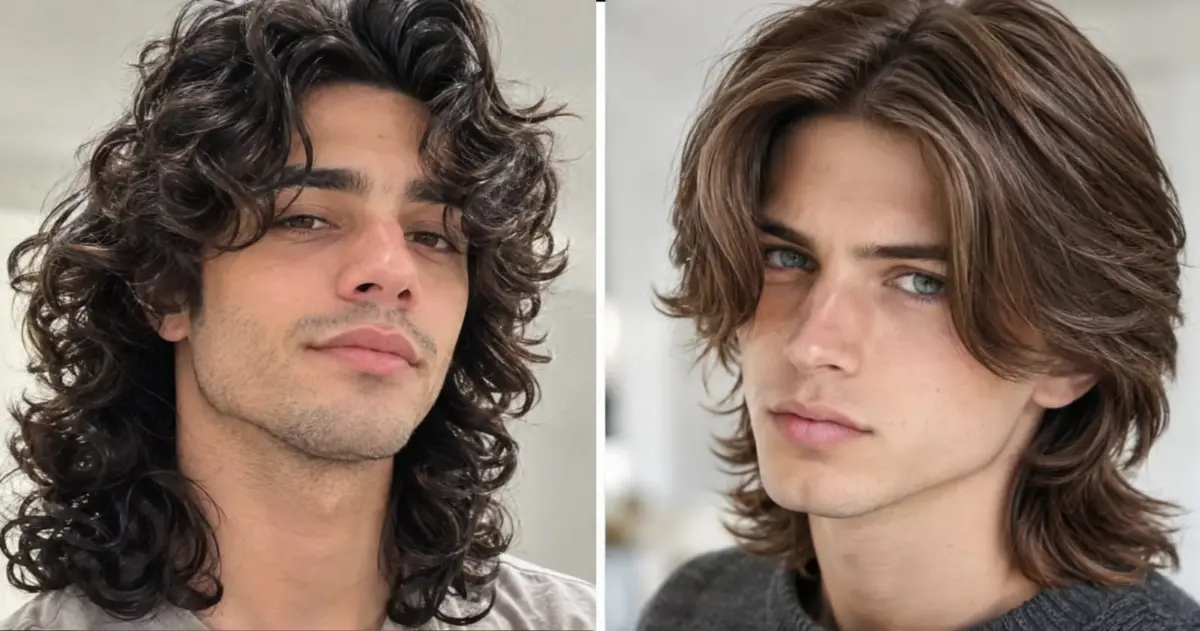
Long layered hair has become one of the most requested looks for men who want length without looking like they simply stopped getting haircuts. Done well, layering is the difference between hair that moves naturally and hair that sits like a heavy, shapeless mass. Done poorly, it can leave thick hair puffing outward or fine hair looking stringy and flat.
This guide breaks down long layered hair for men the way a barber actually thinks about it: by face shape, hair type, density, and lifestyle, rather than just by photo. It covers the most requested long layered styles, how each one is cut and styled, how often it needs a trim, what to say in the chair, and how the cut behaves as it grows out.
| Question | Quick Answer |
|---|---|
| What counts as long hair on men? | Generally shoulder length (about 8 to 10 inches) or longer, measured from the crown |
| Best hair type for long layers? | Wavy and thick hair benefit the most, but straight, curly, and coily hair all work with the right cutting technique |
| How often should you get a trim? | Every 8 to 12 weeks for most long layered styles, every 6 to 8 weeks for shaggier or more textured cuts |
| Is it high maintenance? | Low to moderate for most versions, once the initial cut is shaped correctly |
| Average cost in the US? | About $43 per barbershop visit nationally, though this varies by region |
| How long to grow it out? | Roughly one to two years to reach shoulder length or beyond from a short starting cut |
Table of Contents
What Long Layered Hair Actually Means for Men
Layering is a cutting technique, not a single haircut. A barber sections the hair and cuts it at varying lengths, shortest near the crown and gradually longer toward the ends, so the hair falls with shape and movement instead of one flat, blunt line. On long hair, this matters more than it does on short hair, because there is simply more weight for gravity to work against.
Three techniques come up again and again in a real barbershop:
- Slide cutting: the shears are run along an open section of hair to remove bulk gradually, which works especially well on thick or coarse hair.
- Point cutting: the tips of the shears chip into the ends at an angle, softening a hard blunt line without shortening the overall length.
- Thinning shears: a faster tool that removes weight evenly across a section. It can work in the right hands, but many barbers reach for it as a shortcut rather than a precise fix, which is why some layered cuts end up looking stringy instead of textured.
A well cut long layered style should still look intentional six to eight weeks later, not just on the day it was cut. That is the simplest way to judge whether a barber actually layered the hair or just thinned it out.
How Long Is “Long” for Men
| Length Category | Approximate Measurement | What It Looks Like |
|---|---|---|
| Medium | 4 to 6 inches | Falls around the ears to the neck |
| Long | 8 to 10 inches | Reaches the shoulders |
| Extra long | 12 inches or more | Falls past the shoulders toward the chest |
Long Layers vs No Layers (Blunt Cut)
| Factor | Long Layers | No Layers (Blunt Cut) |
|---|---|---|
| Best for | Thick, wavy, or curly hair | Fine or thin hair that needs the illusion of fullness |
| Movement | High, hair falls with shape | Low, hair falls as one uniform mass |
| Maintenance | Low to moderate | Low, but shows split ends sooner |
| Grow out behavior | Gradual and forgiving | Grows into an uneven, heavy edge |
| Styling effort | Minimal once cut correctly | Minimal, but limited versatility |
The Grow Out Roadmap: What to Expect Month by Month
Patience is the real cost of long layered hair, not money. According to research summarized by Live Science, healthy human scalp hair grows at an average rate of about half an inch per month, or roughly six inches per year. Growth rate does vary by ethnicity and genetics, with hair of Asian descent often growing somewhat faster and hair of African descent often growing somewhat slower on average, so these timelines are a general guide rather than a guarantee.
| Starting Point | Approximate Timeline to Shoulder Length |
|---|---|
| Buzz cut or very short crop | 18 to 24 months |
| Short back and sides with more length on top | 12 to 18 months |
| Medium length (ear to jaw) | 6 to 12 months |
Layers actually make this growing out period easier to live with. Because the ends are already broken up, an in between length rarely falls into the heavy, mushroom shaped stage that a single length cut tends to hit around the three to six month mark. Regular trims during the grow out phase, even small ones, keep the shape moving forward instead of just getting bushier.
Long Layered Haircuts for Men, By Style
These are the long layered styles men actually ask for in the chair, along with the honest details on who each one suits and what it takes to keep it looking sharp.
Classic Long Layers
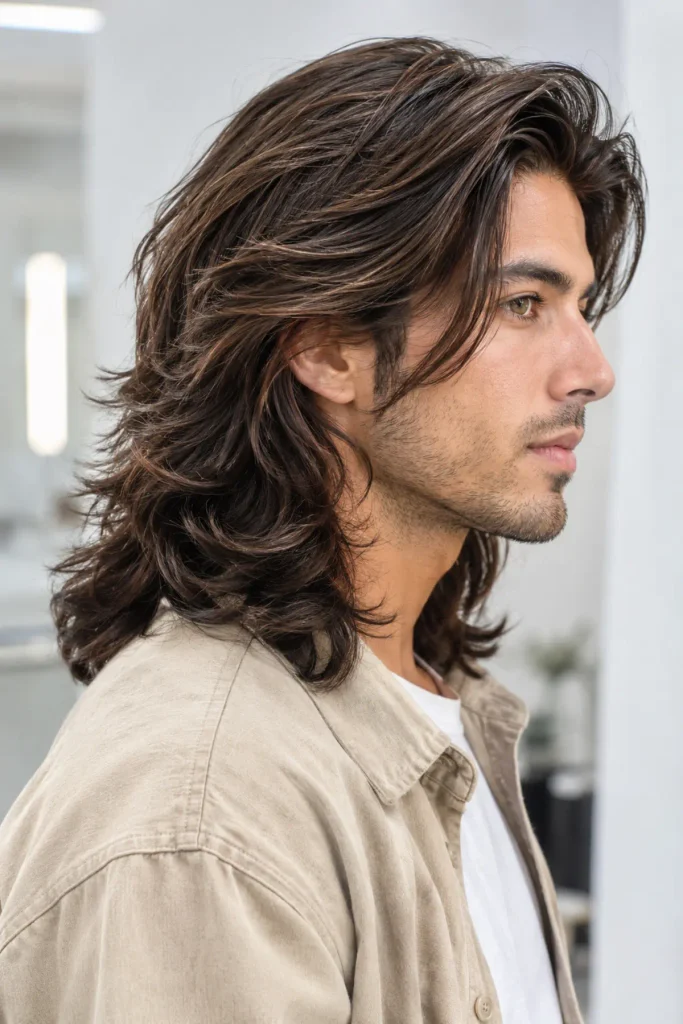
Men who want length without the heavy, single block look that untouched long hair often falls into. It tends to suit oval, square, heart face shapes best, works especially well on straight to wavy hair with medium to thick density, and sits at a low to moderate maintenance level. Styling it is generally easy: air dry for a natural fall, or blow dry with a round brush for extra movement. A light pomade or cream on the ends keeps flyaways controlled.
It is worth seeing a barber every 10 to 12 weeks, and the simplest way to describe it in the chair is to ask for long layers cut through the mid lengths and ends, with the top layers left slightly shorter than the bottom to create movement without losing overall length. Can look plain without some texture added through styling. Men who want a bold, high maintenance statement style. As for growing it out, grows out cleanly since the layers blend gradually into new length.
Long Shag

Men who want a textured, lived in look with real personality. It tends to suit oval, round, square face shapes best, works especially well on wavy to curly hair with medium to thick density, and sits at a moderate to high maintenance level. Styling it is generally moderate: texturizing spray or sea salt spray worked in with fingers while the hair is damp, then air dried or diffused for natural texture.
It is worth seeing a barber every 6 to 8 weeks, and the simplest way to describe it in the chair is to ask for heavy, choppy layers cut throughout the hair with a fringe or curtain bangs at the front for that shaggy, textured silhouette. Needs regular reshaping to avoid looking simply unkempt rather than intentionally textured. Men in conservative workplaces or those who prefer a polished, low effort look. As for growing it out, handles growth well since the choppy structure hides new length, though the fringe needs the most frequent attention.
Curtain Cut with Long Layers
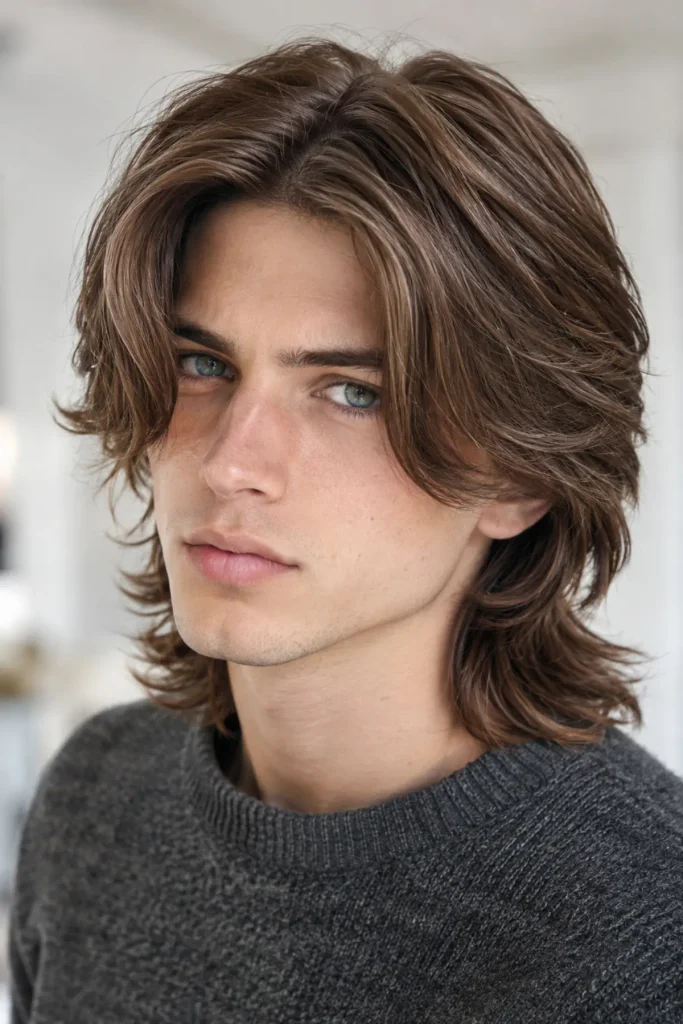
Men who want a face framing, slightly retro look with soft movement. It tends to suit round, square, oblong face shapes best, works especially well on straight to wavy hair with medium density, and sits at a moderate maintenance level. Styling it is generally moderate: blow dry with a round brush, parting the front section down the middle and sweeping each side away from the face, then set with a light hold cream.
It is worth seeing a barber every 8 to 10 weeks, and the simplest way to describe it in the chair is to ask for a middle part with longer layers left specifically at the front to frame the face, blending into the length at the back and sides. The front pieces require daily styling to keep the curtain shape rather than falling flat. Men with very fine hair who struggle to hold volume at the front. As for growing it out, front layers grow out first and may need trimming sooner than the rest of the length.
Surfer Inspired Long Layers

Men who want a relaxed, low effort, beachy look. It tends to suit oval, square face shapes best, works especially well on naturally wavy hair with medium to thick density, and sits at a low maintenance level. Styling it is generally easy: towel dry, spritz with sea salt spray, then scrunch with fingers and let it air dry for natural texture and separation.
It is worth seeing a barber every 10 to 14 weeks, and the simplest way to describe it in the chair is to ask for long, lightly textured layers with minimal thinning, letting the natural wave pattern do most of the styling work. Works best with genuine natural wave. Straight hair needs extra product to fake the same effect. Men with poker straight hair who are not willing to add texture with product. As for growing it out, one of the most forgiving cuts to grow out since the relaxed shape does not rely on precision.
Layered Man Bun or Half Up Style
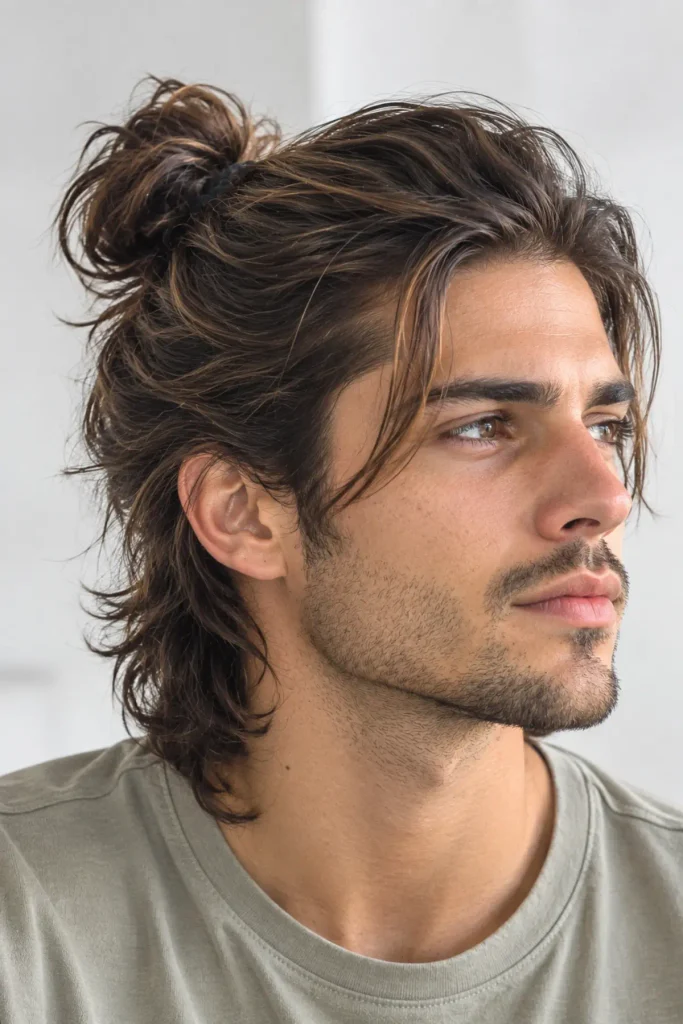
Men growing their hair past shoulder length who want it out of their face without losing the layered shape. It tends to suit nearly all face shapes best, works especially well on straight to curly hair with medium to thick density, and sits at a low maintenance level. Styling it is generally easy: gather the top and crown section and secure with a hair tie, leaving the rest down or tucking it under for a full bun.
It is worth seeing a barber every 10 to 12 weeks, and the simplest way to describe it in the chair is to ask for layers concentrated through the crown and top so the gathered section has shape, rather than sitting as one dense clump. Constant pulling into the same style can cause tension around the hairline over time. Men worried about traction stress on a receding hairline should keep the bun loose and vary the position. As for growing it out, layers grow out gracefully since the style itself hides length changes.
Long Layered Mullet
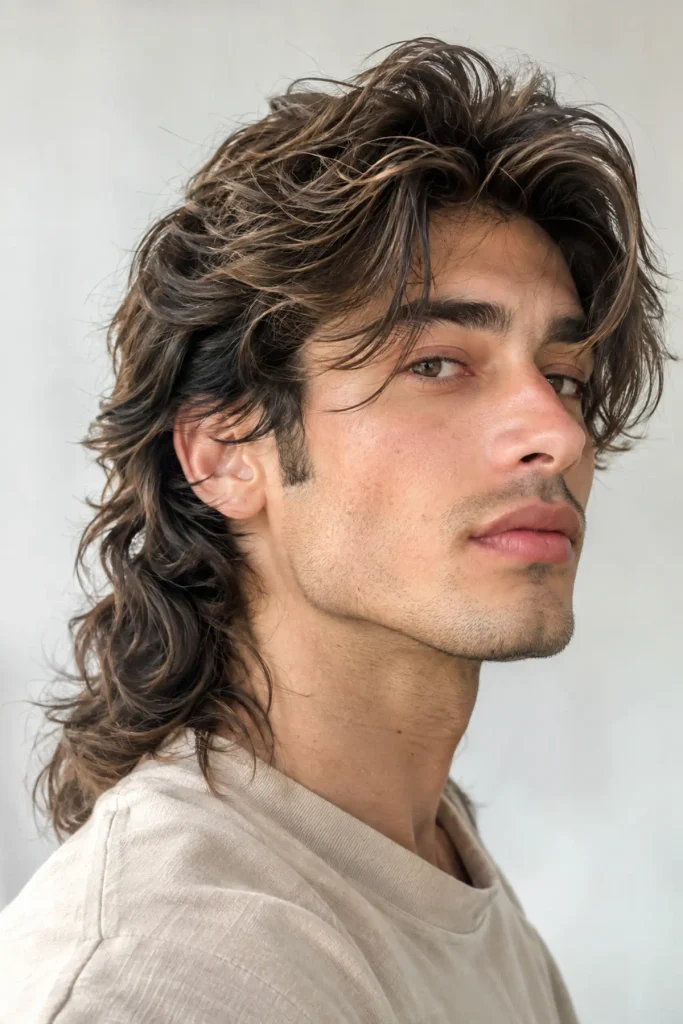
Men who want a bold, retro inspired cut with real personality and contrast. It tends to suit oval, round, diamond face shapes best, works especially well on straight to wavy hair with medium to thick density, and sits at a moderate maintenance level. Styling it is generally moderate: blow dry the top for lift, apply a matte clay for texture, and let the back fall naturally for contrast against the shorter top.
It is worth seeing a barber every 6 to 8 weeks, and the simplest way to describe it in the chair is to ask for short, layered length on top and sides that blends into longer, layered length at the back and nape. Not universally office friendly and needs a barber comfortable with strong length contrast. Men who need a conservative, uniform length for work. As for growing it out, grows in reasonably well since the back length already leads, though the top needs regular shaping to keep the contrast clean. This cut shares plenty of DNA with the wolf cut for men, which takes the same short on top, long and layered at the back idea and pushes the texture even further, so anyone drawn to this mullet style is usually a good candidate for a wolf cut too.
Long Layers with Undercut
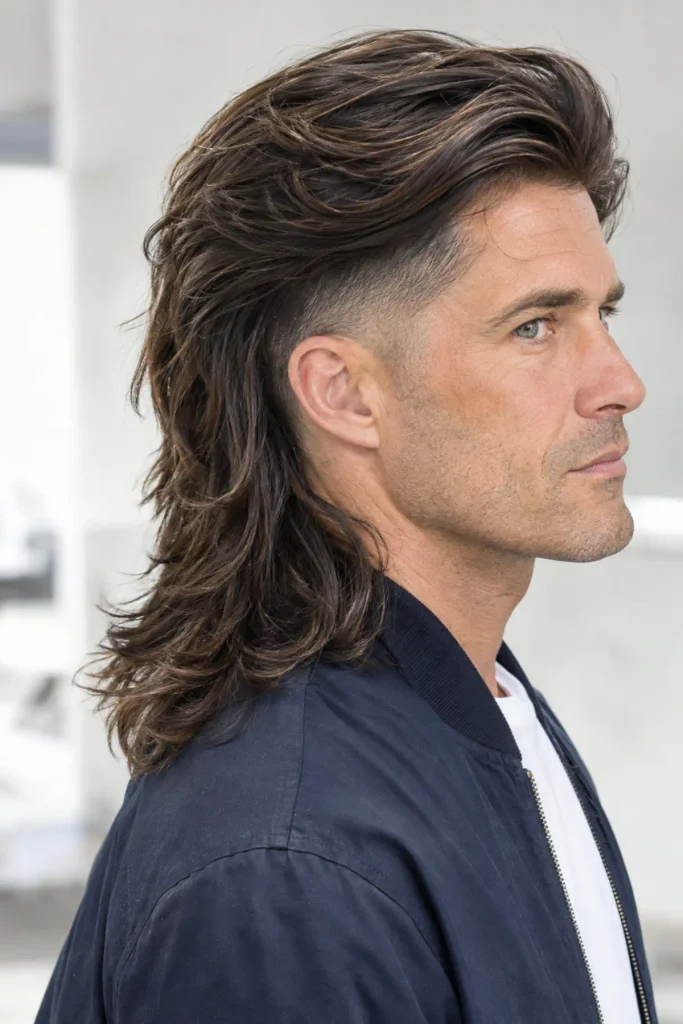
Men who want a sharp, modern contrast between short sides and long, flowing hair on top. It tends to suit square, oval, heart face shapes best, works especially well on straight to wavy hair with medium to thick density, and sits at a moderate to high maintenance level. Styling it is generally moderate: blow dry or slick back with pomade for a polished look, or leave textured and undone for a casual finish.
It is worth seeing a barber every 4 to 6 weeks for the undercut, every 10 to 12 weeks for the layered length on top, and the simplest way to describe it in the chair is to ask for a tight undercut or fade on the sides with long layers left on top, blended where the two sections meet. Two different maintenance schedules to manage since the sides grow out faster than the top. Men who want one simple, low upkeep haircut rather than two zones to maintain. As for growing it out, the top layers grow out gracefully, but the undercut needs its own separate trim schedule to stay sharp.
Layered Curly

Men with natural curl or coil pattern who want to keep length while controlling volume. It tends to suit oval, round, heart face shapes best, works especially well on curly to coily hair with medium to thick density, and sits at a moderate maintenance level. Styling it is generally moderate: apply curl cream or leave in conditioner to damp hair, then air dry or diffuse to preserve the natural curl pattern without frizz.
It is worth seeing a barber every 10 to 14 weeks, and the simplest way to describe it in the chair is to ask for layers cut while the hair is dry, since curls and coils shrink upward once dry. Requires a stylist genuinely experienced with textured hair, since incorrect layering can create an uneven, triangular shape. Men whose curl pattern is very tight and who prefer a rounded afro shape without heavy internal layering. As for growing it out, grows out well because layers blend into the curl pattern rather than creating a visible hard line.
Long Layered Hair by Face Shape
A good barber does not just copy a photo. They adjust where the layers start based on the shape of the face in front of them.
| Face Shape | Recommended Layering Approach | Why It Works |
|---|---|---|
| Oval | Almost any layering style, medium length layers throughout | Balanced proportions suit nearly every version of long layers |
| Round | Vertical layers starting at the crown, minimal width at the jaw | Adds height and elongates the face instead of widening it |
| Square | Soft, longer layers around the jawline | Breaks up strong, angular jaw lines with movement |
| Oblong | Layers with volume at the sides, curtain style fringe | Adds width and shortens the visual length of the face |
| Heart | Layers starting below the chin to build width at the jaw | Balances a wider forehead with a narrower chin |
| Diamond | Layers around the cheekbones and jaw | Softens prominent cheekbones and adds width lower down |
Long Layered Hair by Hair Type and Density
Hair type (the curl pattern) and hair density (how much hair is actually on the head) are two different things, and a good long layered cut accounts for both.
| Hair Type | Fine or Low Density | Medium Density | Thick or High Density |
|---|---|---|---|
| Straight | Long, subtle layers to avoid a flat, stringy look | Classic long layers with light texturizing | Heavier layering through the mid lengths to remove bulk |
| Wavy | Light layering paired with a texturizing spray for lift | Long layers or a surfer style, works with the natural wave | Shag or heavier layers to stop the wave from clumping under its own weight |
| Curly | Layers cut dry, minimal thinning to preserve fullness | Layers cut dry with attention to curl clusters | Heavier internal layering to manage volume without losing shape |
| Coily or Kinky | Gentle layering to protect fragile, fine coils | Layers cut dry, accounting for shrinkage | Strong internal layering plus protective styling to manage density |
The rule barbers use most often: thick hair benefits from more weight removal, fine hair benefits from less, and curly or coily hair should always be assessed dry, since curls can shrink upward by several inches once they dry, which changes how the finished layers actually sit.
Long Layered Hair for Different Ages
20s and 30s
This is typically when men have the most freedom to experiment with bolder layering, like a shag or a long layered mullet, since there is usually more flexibility around workplace expectations and more patience for the growing out process.
40s and Beyond
Long layered hair remains a genuinely flattering option well past 40. Subtler, classic long layers or a curtain style tend to look the most polished, and layering around the crown can soften the appearance of a thinning crown or a receding hairline without drawing extra attention to it.
Receding Hairlines and Thinning Areas
Long layered hair is often more forgiving for a receding hairline than short hair is, since length and movement around the front and crown add the appearance of volume. A side part with soft, layered length usually reads better than pulling thinning hair straight back, which can expose the hairline more directly.
How to Style Long Layered Hair, Step by Step
Air Drying for a Natural Look
- Towel dry gently rather than rubbing, which can roughen the hair cuticle and cause frizz.
- Apply a lightweight leave in conditioner or texturizing spray while the hair is still damp.
- Finger comb into place and let it dry naturally, scrunching lightly for wavy or curly hair to encourage the natural pattern.
Blow Drying With a Round Brush
- Apply a heat protectant or lightweight mousse to damp hair before drying.
- Use a round brush to lift the roots and direct the layers as the hair dries, working in sections.
- Finish with a small amount of pomade or cream on the ends to define the layers and control flyaways.
Product Guide by Hair Type
| Hair Type | Recommended Product |
|---|---|
| Straight | Light hold gel or cream for movement without stiffness |
| Wavy | Sea salt spray for texture, light mousse for hold |
| Curly | Curl cream or leave in conditioner to reduce frizz |
| Coily | Heavier leave in conditioner or curl butter for moisture and definition |
| Fine or thin | Volumizing mousse applied at the roots |
| Thick or coarse | Lightweight styling cream to avoid weighing the layers down |
Maintenance: Keeping Long Layers Looking Intentional
How Often to See Your Barber
Most long layered cuts hold their shape for 8 to 12 weeks before the layers start losing definition. Shaggier or heavily textured styles, along with any undercut paired with long layers, need attention closer to every 6 to 8 weeks to stay sharp.
What to Ask Your Barber For
- Bring one or two clear reference photos rather than trying to describe the look from memory alone.
- Specify how heavy or subtle the layering should be, since that single detail changes the entire outcome.
- Mention your hair type and any past problems, such as hair puffing out or looking stringy after a previous cut.
- Ask specifically for layering with shears or a razor rather than a quick pass with thinning shears if you want real shape rather than just less bulk.
Common Mistakes to Avoid
- Asking for “just a trim” without mentioning the layers, which often means the barber only tidies the ends.
- Letting a barber default to thinning shears as a shortcut instead of proper slide or point cutting.
- Skipping regular trims, which lets the layers grow into visible, uneven shelves rather than a smooth blend.
- Ignoring natural texture and asking for a style built for straight hair when the hair is naturally curly or coily.
- Over applying heavy product on fine hair, which flattens the very volume the layers were meant to create.
Realistic Cost Expectations in the US
According to 2026 industry data reported by American Salon, the average barbershop haircut in the United States costs about $43, ranging from roughly $35 in the Midwest to $45 in the West. A long layered cut at a barbershop typically falls within this range, while a specialized salon stylist experienced with texture and length may charge more. Getting a trim every 8 to 12 weeks generally works out to a modest, manageable line item rather than a major expense.
FAQ
Do layers look good on long hair for men?
Yes, for most men layers are what make long hair look intentional rather than heavy. Layers remove bulk, add movement, and let hair fall naturally instead of sitting like one flat mass, which is especially helpful for thick or wavy hair.
How do I ask my barber for long layered hair?
Bring one or two reference photos and describe the length and how heavy or subtle you want the layers. A simple, clear request is to ask for long layers cut with a razor or shears to remove weight through the mid lengths and ends while keeping the overall length.
How often should men get long layered hair trimmed?
Most long layered cuts hold their shape well for 8 to 12 weeks. Textured or shag style layers that rely on a defined shape may need a trim closer to every 6 to 8 weeks to stay sharp.
Is long layered hair high maintenance for men?
Long layered hair is generally low to moderate maintenance. Once the initial cut is done well, it grows out more gracefully than a single length cut and often needs little more than the right products and an occasional trim.
What face shape suits long layered hair best?
Oval faces suit almost any version of long layered hair. Round and square faces benefit from layers that start below the cheekbone to add length and soften angles, while heart shaped faces do well with layers that add width around the jaw.
Does long layered hair work for curly or coily hair?
Yes, though it needs a different approach than straight hair because curls shrink upward as they dry. A stylist experienced with textured hair should cut curly or coily layers while the hair is dry or nearly dry so the finished shape is accurate.
How long does it take to grow men’s hair into a long layered style?
Human scalp hair grows at an average rate of about half an inch per month, or roughly six inches per year, according to research summarized by Live Science. Reaching shoulder length from a short cut typically takes most men one to two years.
What’s the difference between a shag and long layers?
Long layers are a general layering technique that adds movement while keeping length. A shag is a specific style built from heavier, more textured layering throughout, often paired with a fringe, for a choppier and more lived in look.
Will layers make my long hair look thinner?
Not when they are cut correctly. Layers are meant to remove excess bulk from thick hair or add the appearance of movement to fine hair. Hair only looks thinner when a barber over thins it with thinning shears instead of proper layering.
Is long layered hair a good option for a receding hairline?
It can be, since layers around the front and crown add volume and soften the hairline instead of drawing attention to it. A side part or slight fringe of layered length often works better than pulling hair straight back.
Final Thoughts
Long layered hair rewards men who treat it as a genuine haircut choice rather than just letting hair grow and hoping it works out. The right layering, matched to face shape, hair type, and density, is what separates a style that looks deliberate at week one and still looks deliberate at week eight from one that quietly falls apart. Bring reference photos, be specific about how much weight should come out, and stick to a regular trim schedule, and long layered hair can be one of the lowest effort, highest impact choices a man makes for his overall look.
For more face shape guides, hair type breakdowns, and haircut inspiration, explore the rest of the collection on MenHairInspo.com.
2 thoughts on “Long Layered Hair for Men: The Complete Style, Maintenance and Barber Guide”