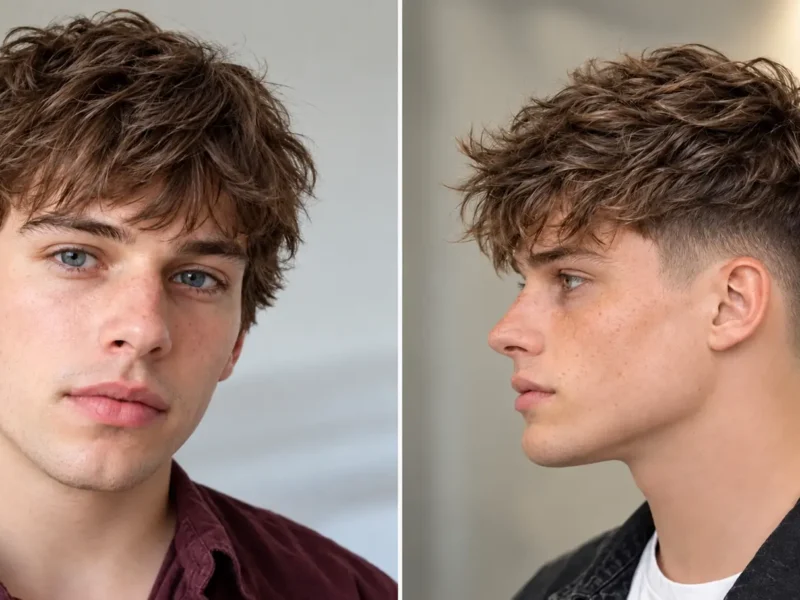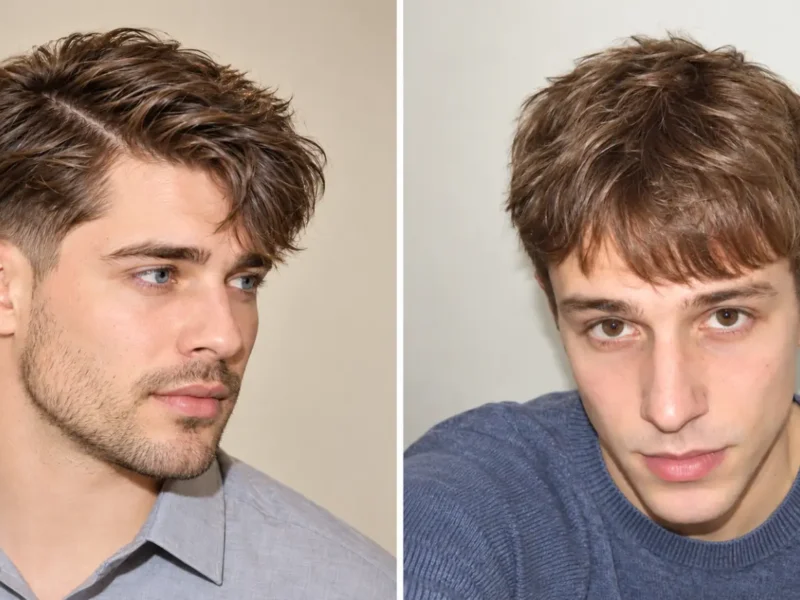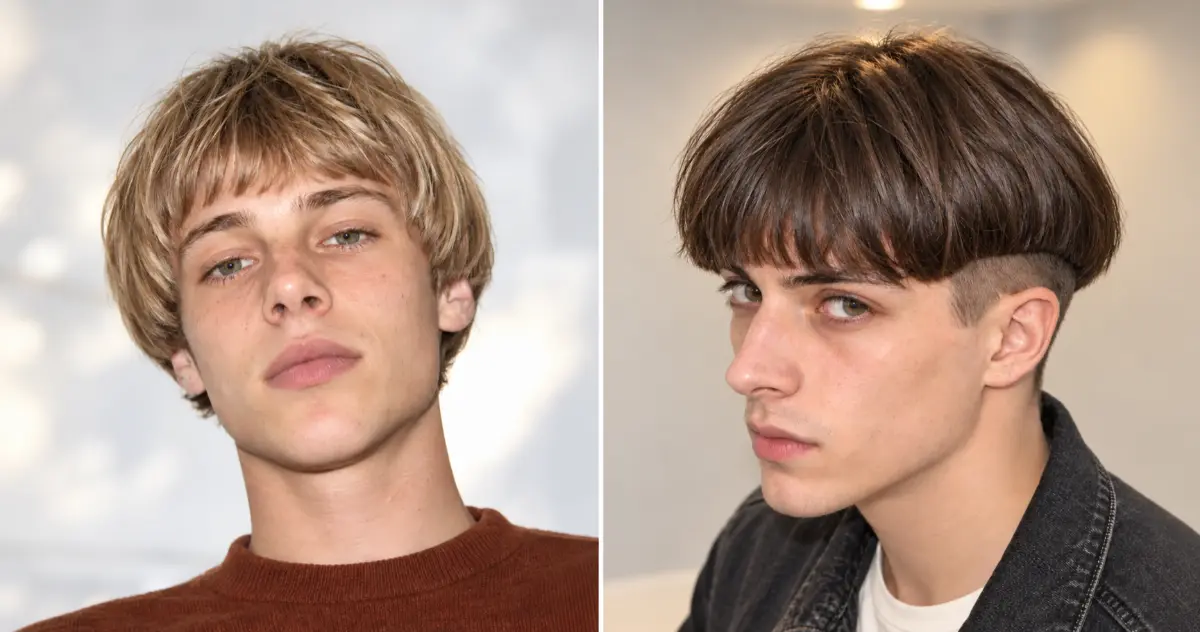
Yes, men can wear a pageboy haircut, and it works best on straight to wavy hair. The classic shape sits between the ears and the jaw, curves under all the way around, and finishes with a fringe across the forehead. Modern versions soften the ends with point cutting, add texture, and sometimes taper the neckline so the shape reads current instead of costume. Most pageboys need a trim every 6 to 8 weeks, and a tapered neckline usually needs a visit every 3 to 4 weeks.
| Pageboy at a glance | What men can expect |
|---|---|
| Typical length | Ear to jaw, with longer versions reaching the collar |
| Defining features | Rounded perimeter, ends turned under, fringe across the forehead |
| Best hair types | Straight and wavy hair; curly hair works with a modified cut |
| Best face shapes | Oval, square and heart faces; round and long faces need small adjustments |
| Density | Fine to medium hair holds the line; thick hair needs weight removed |
| Upkeep | Moderate; the fringe and perimeter show growth first |
| Styling difficulty | Low for air-dry versions, medium for a smooth blow-dried finish |
| Biggest risk | Looking like a bowl cut when the edges are too blunt and heavy |
| Trim schedule | About every 6 to 8 weeks, or every 3 to 4 weeks with a taper |
Most men who search for a pageboy haircut for men share the same worry: will it look cool, or will it look like a costume? The honest answer is that it depends on the details. A pageboy cut with soft, textured ends looks relaxed and deliberate. The same cut with a heavy, blunt edge looks like a bowl. This guide breaks down what the cut is, who it suits, 15 versions worth showing a barber, and how to keep the shape working between appointments.
Table of Contents
What Is a Pageboy Haircut on a Man?
A pageboy is a rounded, connected haircut where the hair hangs around the head at one even outline and the ends curve under. Wikipedia’s entry on the pageboy describes it as straight hair hanging to below the ear, usually turning under, with a fringe at the front. On men, the length usually lands somewhere between the ears and the jaw. The fringe either sits straight across the forehead or breaks into soft pieces.
The shape is not a new idea. The same reference notes that men wore the look in the early Renaissance, that boys wore it in the early 1900s (often called the Dutch Boy look), and that it returned to men’s fashion in the 1960s for men with straight hair, helped along by The Beatles and The Rolling Stones. Pop culture kept it alive through characters such as Luke Skywalker and the comic strip hero Prince Valiant, which is why a longer pageboy still picks up the nickname Prince Valiant cut.
The Beatles connection matters because it explains why men mix up several haircuts. According to the Beatles Story profile of Astrid Kirchherr, the photographer gave Stuart Sutcliffe the style in Hamburg around 1960 and 1961, and she herself said the look was already popular with her art school friends. George Harrison followed, and drummer Pete Best was the one holdout. That style became known as the mop top, which sits close to the pageboy but is looser, longer across the forehead, and less rounded at the back.
Why Men Are Asking About It Again
Barbers and trade writers describe a clear mood in 2026. Behind The Chair reports that clients are asking for fringe and flow, shapes are getting softer, and the ’60s fringe made famous by The Beatles is being filtered through modern styling and regrowth friendly structure. NPR also reported on teenage boys requesting a fade with a high-volume top, a cut one Maryland barber simply calls the mushroom. In short, the pageboy family is back, but in a looser and more wearable form. Men who already like medium length haircuts for men or a fluffy fringe are the natural audience.
Pageboy vs Bowl Cut vs Mushroom vs Mop Top vs Curtains
These five haircuts overlap, and different sources draw the lines in slightly different places. Some writers treat the pageboy as a bowl cut variant that grows gradually longer toward the back. Others place it in the bob family because of its rounded, connected outline. The table below uses the most common barbershop meanings, which is also the quickest way for a man to explain what he wants.
| Haircut | Overall shape | Fringe | Sides and back | Best for |
|---|---|---|---|---|
| Pageboy | Rounded, connected outline with ends turned under | Straight across or softly broken | Same flowing length, often slightly longer at the back | Straight or wavy hair and a retro but polished look |
| Bowl cut | Hair cut to one length all around, like a bowl placed on the head | Straight and blunt | Short or the same length as the top | Thick, straight hair and a bold statement |
| Mushroom | Full, rounded top that sits over shorter sides | Heavy and thick | Tapered, faded or shaved | Men who want volume on top with a clean, short back |
| Mop top (Beatles cut) | Mid length hair swept across the forehead | Long, loose, often side swept | Covers the tops of the ears | Fine to medium straight hair and a relaxed look |
| Curtains | Center part with the hair falling to both sides | Parted in the middle | Medium length, tapered or natural | Men who want an easy, modern medium length cut |
The simple rule: if the outline looks like a smooth, rounded cap with the ends tucked under, it is a pageboy. If the sides are clipped short beneath a heavy top, it is closer to a mushroom. If the fringe is parted and swept apart, it is curtains. Men who prefer the parted look can browse medium length haircuts for men for more options, and anyone leaning toward a looser, layered finish can look at shaggy haircuts for men.
15 Pageboy Haircut Ideas for Men
Each idea below lists who it suits, how much upkeep it needs, what to watch for, and a ready made line for the barber. Trim timing follows stylist guidance: roughly every 6 to 8 weeks to keep a rounded shape, and sooner for sharper or tapered versions. Barber guard numbers vary from shop to shop, so showing a photo always beats quoting a number alone.
1. Classic Pageboy
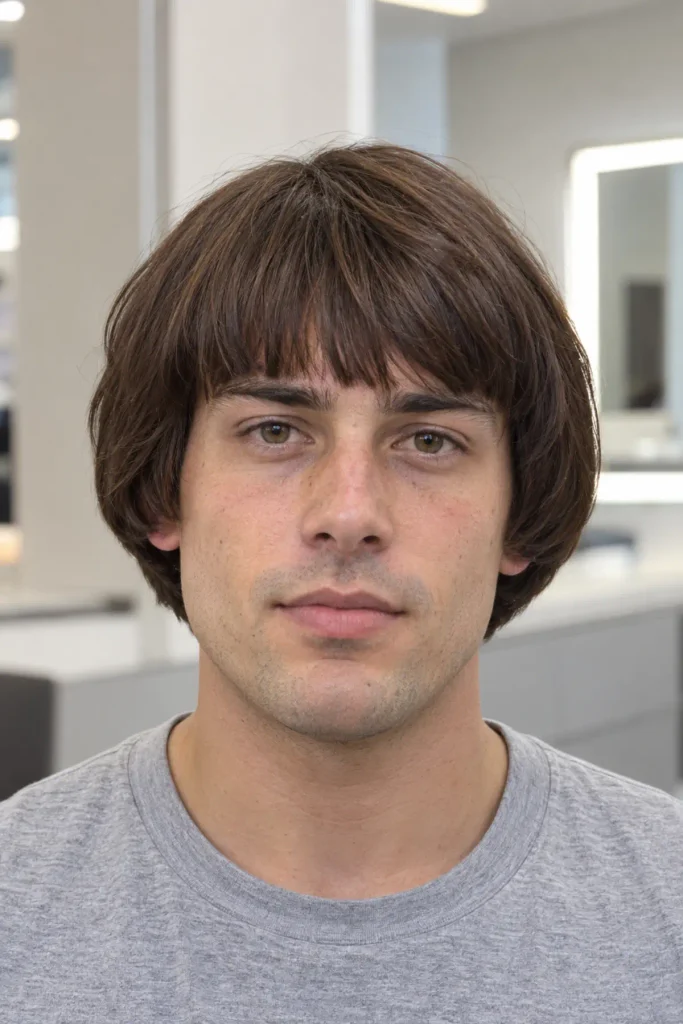
The original shape sits between the ears and the jaw, with the ends curving under and a full fringe across the forehead. It reads vintage on purpose, so it suits men who like a retro, tidy outline.
- Best for: Straight to slightly wavy hair, medium density, oval, square or heart faces
- Upkeep: A trim every 6 to 8 weeks keeps the curve; blow drying with a small round brush gives the smoothest finish
- Watch out for: A heavy, blunt edge, which can drift toward a bowl cut
- Tell the barber: “A classic pageboy at ear to jaw length, ends curving under, with a straight fringe at the brow.”
2. Modern Soft Pageboy
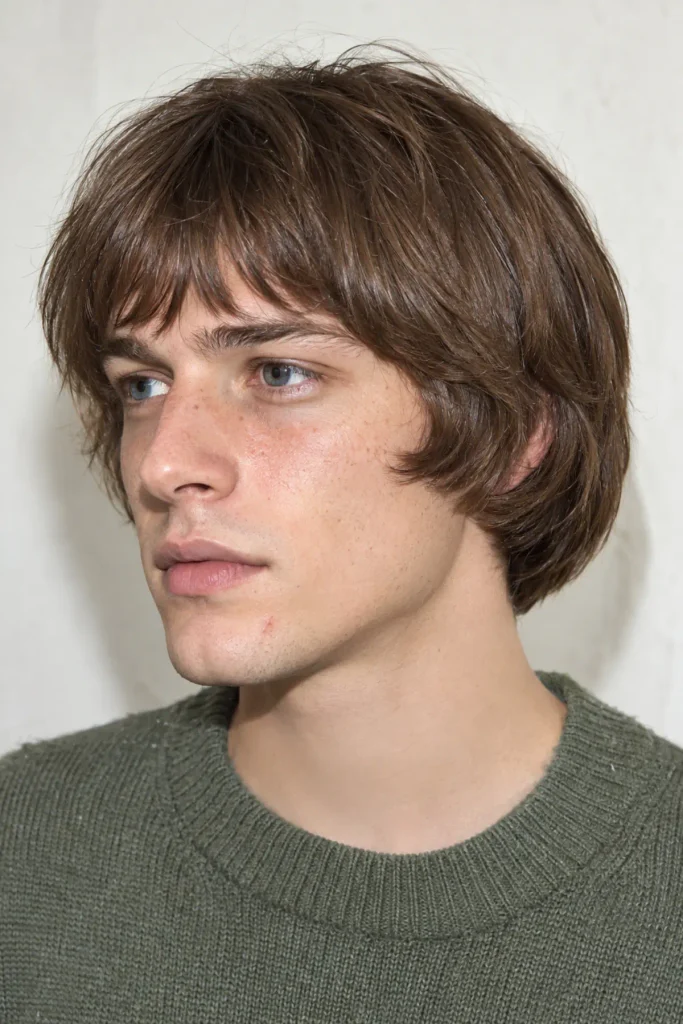
The same rounded outline with the edge broken up. A barber cuts the ends with the scissors pointed into the hair or uses a razor, then adds light internal texture so the shape moves instead of sitting like a helmet. A barber education tutorial on a soft razored pageboy builds the shape at zero elevation, trims it blunt first, then softens it, which keeps the silhouette while removing the stiffness.
- Best for: Fine to medium straight or wavy hair; works on most face shapes
- Upkeep: Low to medium; air drying is enough for most days
- Watch out for: Too much razoring on thin hair, which can look ragged
- Tell the barber: “A pageboy shape with point cut ends and a fringe that breaks into pieces, nothing blunt.”
3. Textured Messy Pageboy
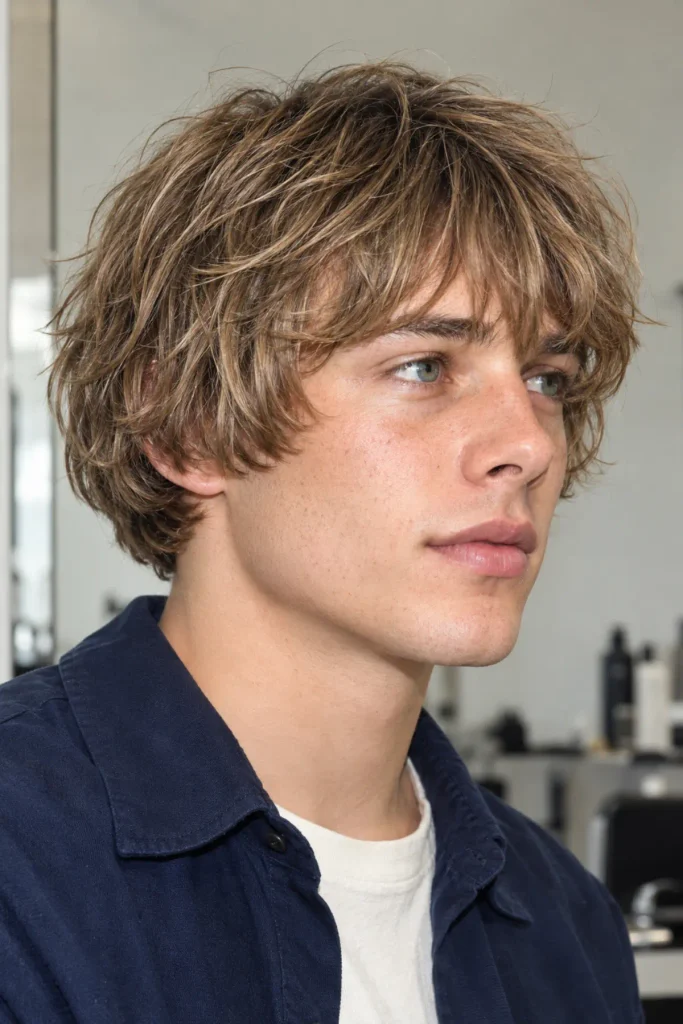
A loose, undone version for men who do not want a polished helmet. The outline stays round, but the ends and fringe look choppy and finger dried. A light texturizing spray or paste on damp hair, rough dried with fingers, builds the look.
- Best for: Wavy hair, medium density, casual dress codes
- Upkeep: Low; shaping is easier to maintain because imperfection is the point
- Watch out for: Over layering, which can erase the rounded outline entirely
- Tell the barber: “A rounded pageboy with choppy ends and a loose, undone finish.”
4. Pageboy With a Low Taper

The top keeps its rounded pageboy length while the sideburns and neckline are tapered short. It looks cleaner on the sides, so the cut feels more masculine and less retro.
- Best for: Straight or wavy hair with medium to thick density; works with a short beard
- Upkeep: Medium to high, since the tapered neckline shows growth first and needs visits more often than a one length cut
- Watch out for: Cutting the taper too high, which turns the pageboy into a mushroom
- Tell the barber: “A pageboy on top with a low taper at the sideburns and neckline.”
Men who like more contrast on the sides can compare mid fade haircuts for men.
5. Pageboy With a Disconnected Undercut
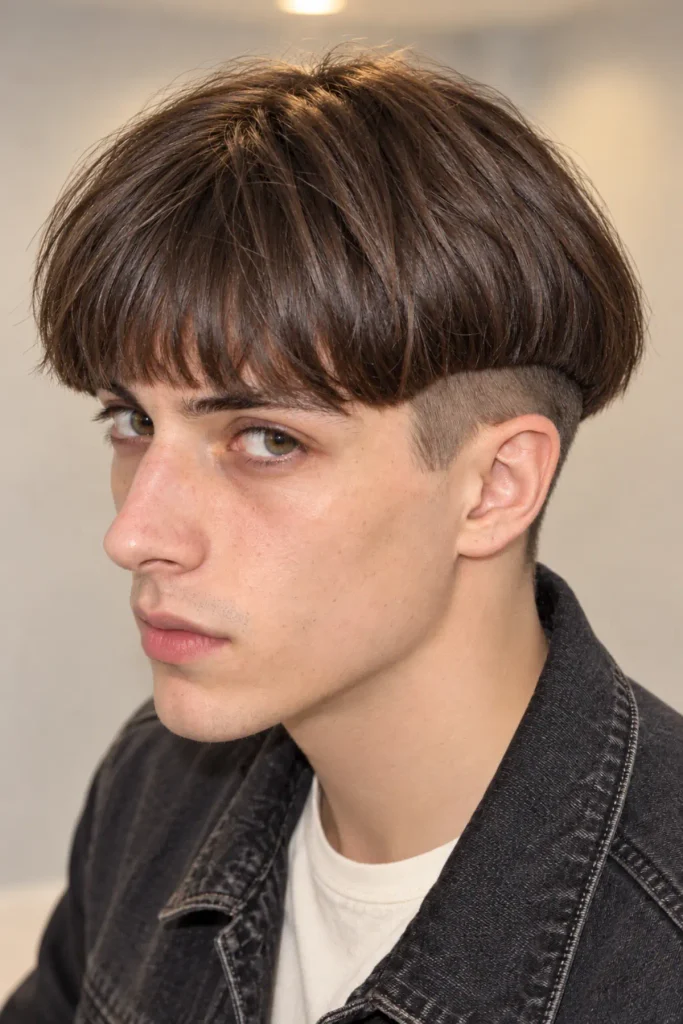
A hard line separates the rounded top from clipper short sides. One stylist guide recommends a short guard on the sides and a visit every 3 to 4 weeks to keep the disconnection crisp. The contrast makes the top look fuller and suits men who want an edgier take.
- Best for: Any texture with medium to thick density; oval, square and diamond faces
- Upkeep: Medium to high, about every 3 to 4 weeks
- Watch out for: The line growing out soft and muddy if visits slip
- Tell the barber: “A disconnected undercut with the sides clipped short and the rounded pageboy kept long on top.”
6. Curly Pageboy With a Burst Fade
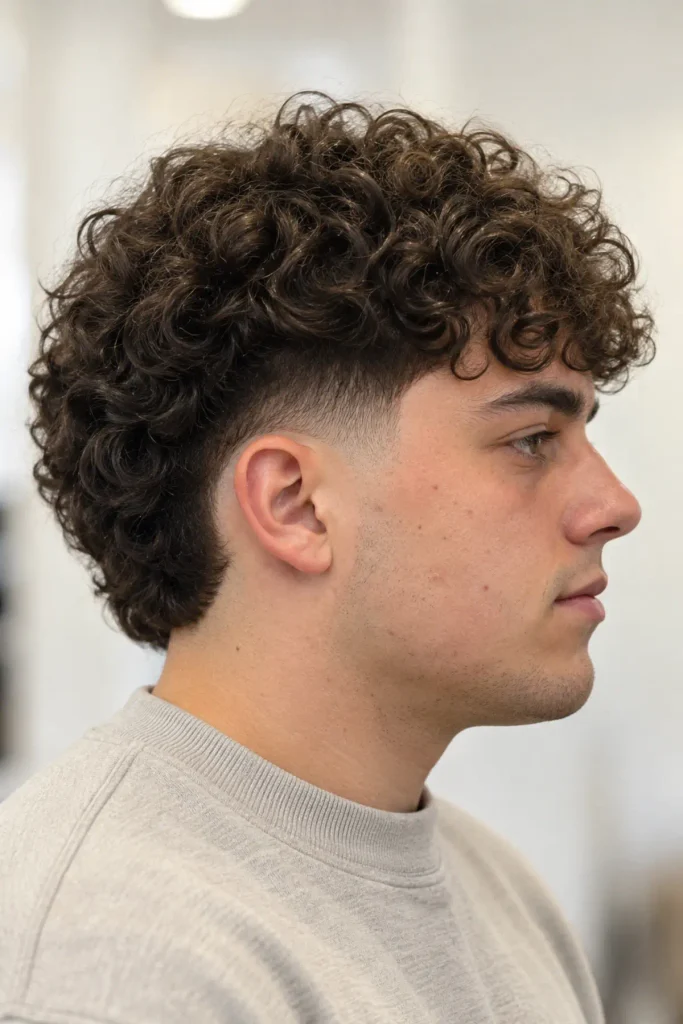
A burst fade curves around the ear and leaves length at the nape, so it pairs naturally with a rounded, curly top. The curls round the shape without any heat tool, which removes the usual under tuck styling step.
- Best for: Curly to coily hair, medium to high density
- Upkeep: Medium; the fade needs regular visits, and curls need moisture between cuts
- Watch out for: Cutting the curls wet, since they spring up shorter once dry
- Tell the barber: “A rounded curly top with a burst fade around the ears, cut dry so the length stays right.”
Men exploring this direction can browse burst fade haircuts for curly hair for more shapes.
7. Short Cropped Pageboy

This is the shortest sensible version. The fringe grazes the forehead, the sides curve in close, and the length stays above the ears. A stylist guide on the cropped pageboy suggests a visit every 4 to 5 weeks, since a short, defined shape stops looking intentional once it grows out.
- Best for: Fine to medium straight or wavy hair; oval faces and angular faces that want softening
- Upkeep: High, about every 4 to 5 weeks
- Watch out for: A fringe that sits too high on a short forehead
- Tell the barber: “A cropped pageboy above the ears with a short, soft fringe at the brow.”
8. Long Pageboy (Prince Valiant)

The long version reaches the collar, and the fringe still wraps around the head. The Modest Man describes the long bowl cut for men as very 1970s and compares it to a really long pageboy. Because the shape is longer, forgives missed appointments better than most other versions here
- Best for: Straight, fine to medium hair; longer and heart shaped faces
- Upkeep: Low to medium; a stylist guide notes the longest versions can stretch 6 to 8 weeks between visits
- Watch out for: Flat, limp hair at the crown if the layers are cut too short
- Tell the barber: “A long pageboy to the collar, ends turned under, with a soft fringe and no sharp layers.”
Men who want a looser long cut can compare long layered hair for men.
9. Curtain Pageboy
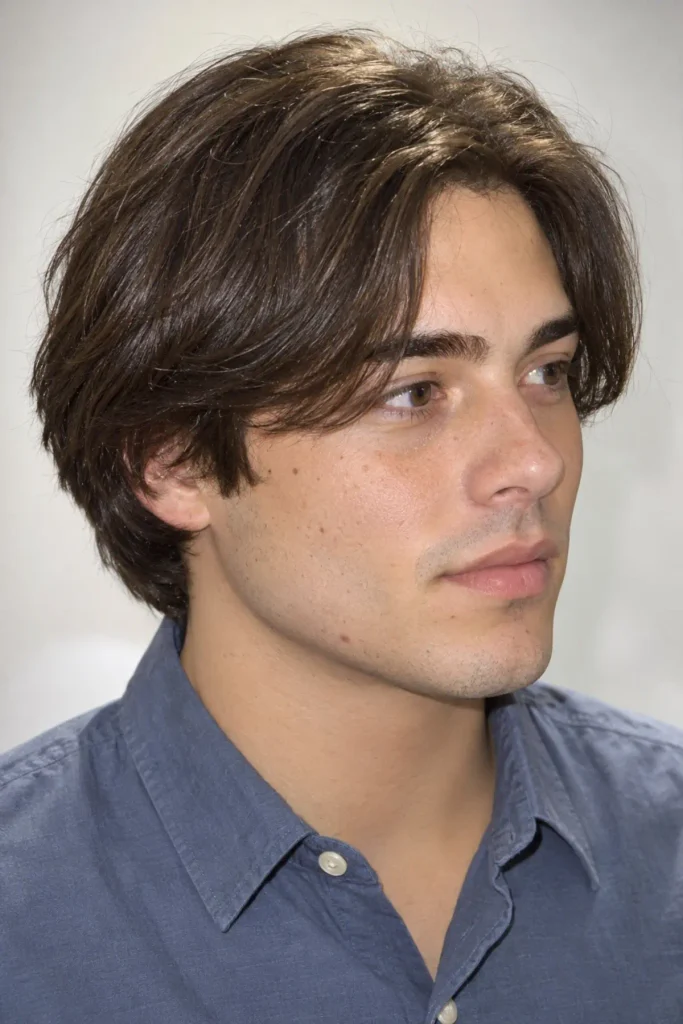
The fringe parts in the middle and falls to both sides, while the rest of the hair keeps the rounded, turned under outline. The parted fringe gives the face more openness than a straight one, which suits men who want a friendlier look.
- Best for: Straight to wavy hair, any face shape except very long faces
- Upkeep: Low; the fringe grows out gracefully
- Watch out for: A center part that falls the wrong way when a cowlick sits at the front
- Tell the barber: “A pageboy outline with a center parted curtain fringe, softened at the ends.”
A fluffy fringe gives similar movement for men who prefer a shorter route.
10. Wavy Pageboy

The natural wave rounds the ends under, so the shape looks softer than a straight hair version and the outline loosens up. Texture spray or paste brings out the wave, and a light hand with product prevents frizz.
- Best for: Wavy hair of fine to thick density; oval, heart and square faces
- Upkeep: Low to medium; air drying works well
- Watch out for: Weight on the sides that makes the cut triangular instead of round
- Tell the barber: “A pageboy shape cut to follow the natural wave, with weight removed on the sides.”
Men who like this look can browse more medium length haircuts for men.
11. Natural Curly Pageboy
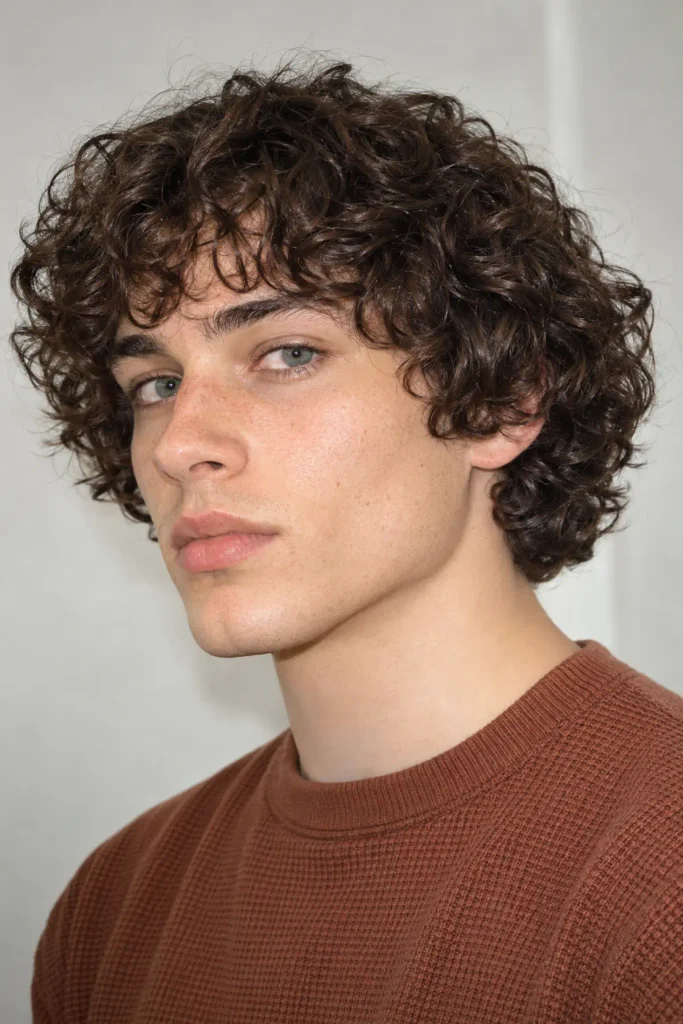
Here the curl rounds the outline without a fade. The result looks softer and less geometric than a straight hair pageboy, and the shape sits wider, so weight needs to be removed in the right spots. Stylists point out that curls cut wet can lose a noticeable chunk of the silhouette once they dry, which is why a dry cut is the safer route.
- Best for: Curly hair, medium to high density; oval, heart and square faces
- Upkeep: Medium; curl cream and a diffuser or air drying keep the pattern defined
- Watch out for: A wide, triangular shape when the sides are left too heavy
- Tell the barber: “A rounded curly pageboy cut dry, with weight taken out of the sides so it stays round.”
12. Coily Rounded Shape With a Taper
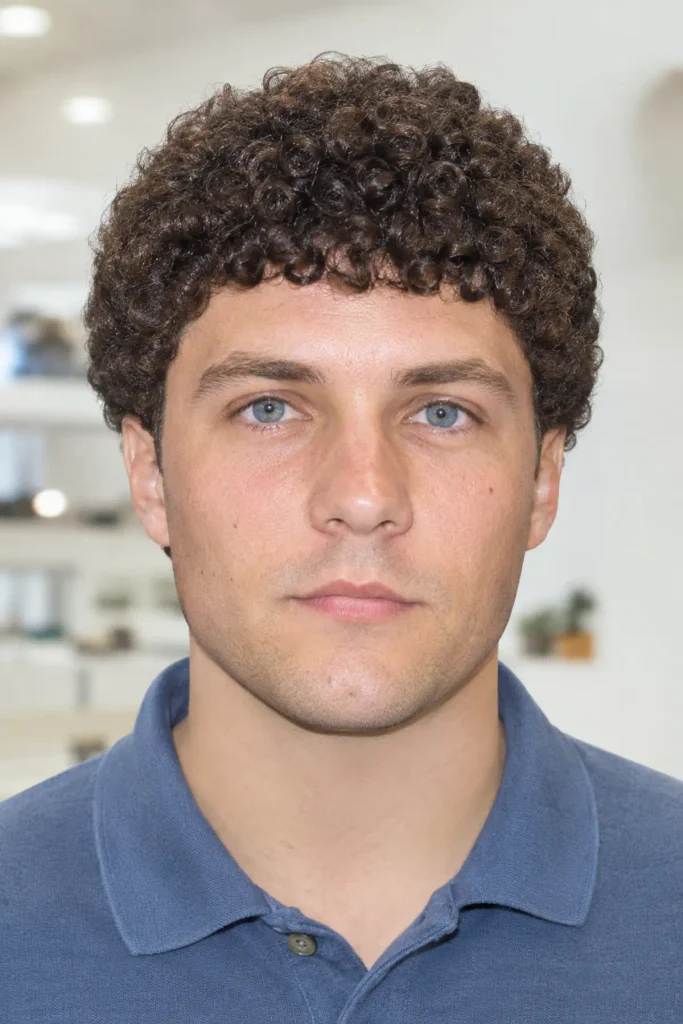
True pageboy styling relies on hair that falls and tucks under, so on coily hair the closest match is a rounded, even outline with a clean taper at the neckline and sideburns. It keeps the pageboy idea of a soft, continuous curve while working with the hair’s natural direction.
- Best for: Coily hair of medium to high density
- Upkeep: Medium to high; the taper and line need regular visits
- Watch out for: Showing a straight hair reference photo, which leads to a mismatched result
- Tell the barber: “A rounded, even shape on top with a clean taper, using the natural texture instead of straightening it.
13. Pageboy for Fine Hair
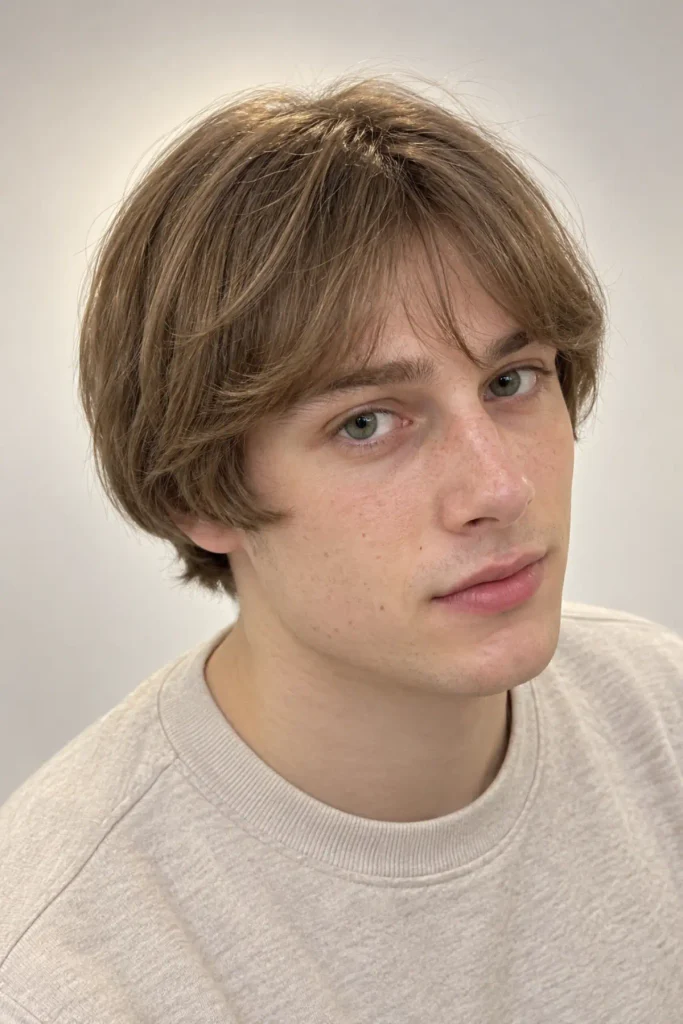
Fine hair holds a clean perimeter well, and a precise outline can make the ends look fuller. The risk is over layering, which strips away density, plus heavy oils and waxes that flatten the shape.
- Best for: Fine, straight hair of low to medium density
- Upkeep: Medium; light mousse or a texture cream gives lift without weight
- Watch out for: Heavy products and a fringe cut too thin, which can look see through
- Tell the barber: “A clean pageboy outline with minimal layering and a light fringe.”
Men with fine hair can also compare shorter shapes in short haircuts for men with fine hair.
14. Pageboy for Thick Hair
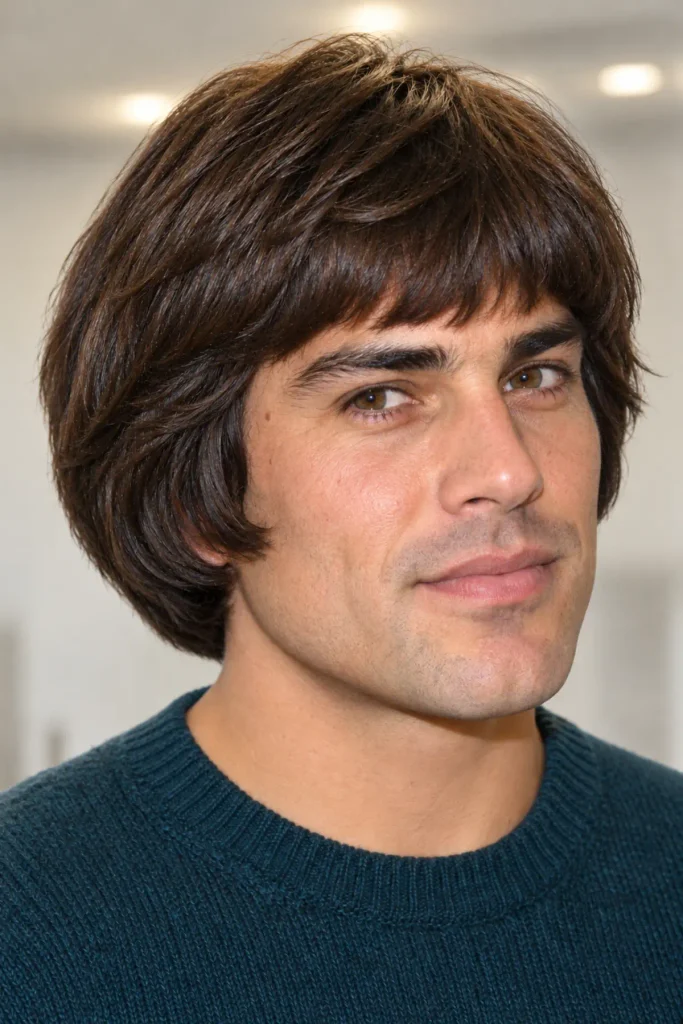
Thick hair builds a strong, full pageboy, but the cut needs internal layering to remove weight. Without it, the shape reads heavy within a few days. Going slightly below the chin also gives thick, wavy hair space to settle instead of puffing.
- Best for: Thick or coarse straight to wavy hair, high density
- Upkeep: Medium; plan on regular thinning or weight removal at each visit
- Watch out for: Blunt cutting alone, which can create a bell shape
- Tell the barber: “A pageboy with internal layering to remove weight, so it curves under instead of puffing out.”
15. Grown Out Shaggy Pageboy

A pageboy that has grown past its prime becomes a loose, shaggy shape. Hair grows about half an inch a month on average, according to the American Academy of Dermatology as reported by USA Today, so a few months of patience turns a tidy cut into a relaxed shag. Trimming does not speed growth, but it does remove damaged ends.
- Best for: Men who want a lived in shape or are heading toward longer hair
- Upkeep: Low; small shaping trims every couple of months keep it neat
- Watch out for: Cutting the whole shape back each time instead of making small adjustments that connect the fringe and preserve length
- Tell the barber: “Just reshape the fringe and ends so it keeps growing, with no big layers.”
Men planning a longer route can use this shape as a starting point and explore shaggy haircuts for men as the next step.
Who Looks Best With a Pageboy Haircut?
The pageboy suits more men than most expect, but the version matters more than the label. Face shape, hair texture, hair density and daily habits all change which version works.
Face Shapes
Stylists generally agree that the cut flatters oval, square and heart shaped faces most easily, while round and long faces need a few adjustments. Several men’s style writers add that the fringe length and the amount of layering do most of the work.
| Face shape | How a pageboy behaves | Smart adjustment |
|---|---|---|
| Oval | Almost any version works | Choose by hair type and styling time |
| Square | A hard one length edge can make the jaw look heavier | Add soft layers or a wispy fringe, or go slightly longer |
| Round | A full rounded outline can add width | Keep some height on top and layers up front |
| Heart | A wider forehead can look broader under a blunt fringe | Choose a side swept or broken fringe and a length that reaches the chin or just past it |
| Long or narrow | A blunt fringe shortens the face and balances it | Keep the sides fuller and avoid extra height |
| Diamond | Works best when the top has some visual weight | A fringe with texture and a tapered neckline |
Men who want more detail on matching cuts to a face can read triangle face shape hairstyles for men for a closer look at how length and texture change proportions.
Hair Type and Texture
- Straight hair: The easiest match. The hair falls into the rounded line naturally, and a barber can build in movement with point cutting or a razor.
- Wavy hair: Works well with a looser finish. A texturizing spray or paste brings out the wave, and a round brush is best skipped so the cut does not look too perfect.
- Curly hair: Works with a modified shape. A barber who cuts curls dry sees the real shape, since wet curls stretch and spring up shorter after drying.
- Coily hair: A true pageboy depends on hair that falls and tucks under, so most barbers use a rounded shape with a tapered neckline instead. It is worth showing a photo of an actual coily result rather than a straight hair reference.
Hair Density
- Fine or thin hair: A clean perimeter makes the ends look fuller. Light layering protects density, and heavy oils or waxes can flatten the shape.
- Medium density: The sweet spot, since the hair holds its outline without extra work.
- Thick or coarse hair: Needs weight removed inside the cut so the shape curves instead of puffing outward. Without that step, it can look heavy by the third day.
Men with fine hair can compare ideas in short haircuts for men with fine hair.
Cowlicks, Hairlines and Thinning
A cowlick is a natural growth pattern, not a flaw, and it cannot be removed. Barbers say a cowlick at the front hairline makes a crisp, straight fringe harder to keep, which is why a stylist quoted by Refinery29 suggests starting the fringe a little longer and judging how it behaves before cutting shorter. Healthline notes that wetting the cowlick, then blow drying it in the direction the hair should go, makes it easier to control, and that a heavier fringe can weigh it down.
A fringe can also soften a high forehead. Men with a receding hairline or thinning crown should ask for a softer, broken fringe instead of a solid blunt line, since thin hair under a hard edge can look see through. Men with a very high forehead can also compare options in buzz cut ideas for a big forehead if a shorter route appeals.
Beards, Glasses and the Workplace
- Beards: A short, groomed beard balances the length around the jaw. A long beard plus a long pageboy can look heavy, so the barber usually shortens one or the other.
- Glasses: The fringe should clear the frames or stop at the brow, so it does not brush the lenses.
- Office settings: A smoother, lightly styled pageboy with neat ends reads polished. Men comparing professional options can see office hairstyles for men for more conservative choices.
What to Ask the Barber for a Pageboy Haircut
The word “pageboy” means different things to different barbers, so a clear request matters more than the name. Bringing two or three photos that show the front, side and back of the cut removes most of the guesswork. A short script helps too:
- Name the shape. “A pageboy with the hair curving under, about one length around the head.”
- Say where the hair lands when dry. Ear lobe, jaw, chin or collar. Wet hair looks longer than dry hair, so the dry landing point is the number that counts.
- Describe the fringe. Eyebrow, forehead, or swept to the side. A fringe that starts a little longer is easy to shorten later, but impossible to lengthen.
- Choose the sides. “Keep the sides the same length as the back” for the classic look, or “add a low taper at the neckline and ears” for a modern one.
- Pick the finish. “Blunt and clean” for a polished outline, or “point cut the ends for a soft, textured edge.”
- Mention the hair. Cowlicks, a thinning crown, curls or a recent grow-out all change how the barber plans the cut. Curls are best cut dry.
What the Barber Is Actually Doing
Knowing the technique makes the conversation easier and helps spot a good cut. A modern pageboy usually follows this order:
- Zero elevation cutting. The hair is combed straight down and cut without lifting it, so the length stays even and the ends turn under.
- A single length guide. The barber sets one perimeter line, then works around the head to keep it level.
- Removing graduation. A bowl cut stacks layers, while a pageboy avoids them so the outline stays smooth.
- Softening the edge. Point cutting, texturizing shears or a razor take away the hard line without adding layers.
- Internal texture. On thick hair, weight is removed inside the shape so it hangs instead of puffing.
- Fringe check. The fringe is cut last, with the head held in a natural position, because hair behaves differently when the chin is down.
A useful sign of a skilled cut is that the shape still looks tidy five weeks later, since good internal balance makes a pageboy grow out gracefully.
How to Style a Pageboy Haircut at Home
Most versions take five minutes or less. The goal is a smooth, slightly textured shape where the ends tuck under on their own.
- Start with damp hair. Towel dry until it stops dripping, then comb the fringe and sides straight down.
- Add a light product. A texturizing spray or cream on damp hair works well. Fine hair does best with a mousse or sea salt spray, since heavy oils and waxes collapse the shape.
- Dry with direction. Use a blow dryer on medium heat and point the airflow down the hair shaft. A round brush tends to make the look too polished and dated, so a flat brush or fingers give a more current finish.
- Shape the ends. Use a finger to tuck the ends under, and push the fringe slightly to the side if it parts unevenly.
- Set it. A pinch of cream or light paste on the ends keeps flyaways down without weight.
Hair that is air dried needs a bit more patience, but it suits wavy and curly textures best. A cowlick at the front hairline can be tamed by wetting it and blow drying it in the direction the hair should lie, and a slightly longer fringe adds weight that holds it in place.
Products That Work (and Ones to Skip)
| Hair type | Works well | Better to skip |
|---|---|---|
| Fine, straight | Mousse, sea salt spray | Heavy pomade, thick oils |
| Thick, straight | Light cream, smoothing balm | Strong gel that makes the shape stiff |
| Wavy | Texture cream, light paste | Over brushing, which causes frizz |
| Curly | Curl cream, leave in conditioner | Heavy wax that weighs curls down |
| Coily | Moisturizing cream, butter based styler | Alcohol heavy sprays that dry strands out |
How Often to Get a Pageboy Trim
The outline is the whole point of a pageboy, so it loses its look quickly when the ends grow past the plan. Hair grows about half an inch a month, so the average pageboy needs attention on a predictable schedule.
| Version | Trim every | Why |
|---|---|---|
| Classic or long pageboy | 6 to 8 weeks | Keeps the line and fringe level |
| Textured or messy | 8 weeks or more | The softer edge forgives growth |
| With taper or undercut | 3 to 4 weeks | Fades show regrowth fast |
| Short cropped | 4 to 5 weeks | Small length changes show quickly |
| Grown out shaggy | 8 to 12 weeks | Only light shaping is needed |
Pros and Cons of a Pageboy Haircut
Pros
- Looks polished with very little styling effort
- Works across many face shapes and several hair textures
- Easy to grow out into longer styles
- Stands out from the usual short fade
Cons
- Needs regular trims to keep the outline sharp
- Struggles on hair that sticks out instead of falling flat or curving under
- A cowlick or thinning crown can make the shape harder to wear
- Some workplaces prefer a more conventional cut, so a tapered version may fit better
Common Pageboy Mistakes to Avoid
- Cutting it too short in the first visit. The fringe and sides are easy to shorten later but cannot be put back.
- Choosing a blunt line on frizzy or very thick hair. Without internal texture, the shape can balloon.
- Using heavy products on fine hair. The result is flat, stringy ends.
- Cutting wet curls to a final length. Curls spring up when they dry, so the finished length ends up noticeably shorter.
- Skipping trims. An overgrown pageboy slowly becomes a bowl shape.
- Using a bowl cut photo as the reference. A bowl cut is shorter and more graduated, so the barber needs a pageboy example.
Growing Out a Pageboy Haircut
Growing out a pageboy is far easier than most cuts, because the length is already there. Hair grows roughly half an inch a month, so about six inches in a year, and trimming does not make it grow faster. What a trim does is keep split ends from dragging the shape down.
A practical plan is to book a small shaping visit every ten to twelve weeks. Ask the barber to clean up the fringe and ends but leave the length. After four to six months the cut becomes a longer, shaggier shape that connects naturally to shaggy haircuts for men, and later to man bun hairstyles if the length keeps climbing.
Pageboy Haircut for Men: Frequently Asked Questions
What is a pageboy haircut for men?
A pageboy haircut for men is a one length cut where straight hair falls to about ear or jaw level and curves under at the ends, usually with a fringe across the forehead. Modern versions add point cutting, texture or a taper at the neckline.
Can men wear a pageboy haircut?
Yes. Men wore the cut as far back as the early Renaissance, and it returned in the 1960s with The Beatles and The Rolling Stones. Today it suits men with straight to wavy hair who want a soft, low styling look.
What is the difference between a pageboy and a bowl cut?
A pageboy is longer, smoother and curves under evenly, while a bowl cut is shorter, more graduated and often finished with a hard, blunt line. A pageboy usually reaches the ears or jaw, and a bowl cut sits higher.
Is a pageboy the same as a mushroom cut?
Not exactly. Both are rounded, but a mushroom cut is shorter and puffier on top with tapered sides, while a pageboy keeps one flowing length around the head.
What face shape suits a pageboy haircut best?
Oval, heart and square faces carry it most easily. Round faces do better with a longer, side swept version, and long faces benefit from a fuller fringe to shorten the look of the forehead.
Is a pageboy good for fine or thin hair?
It can be. A clean outline makes fine hair look fuller, though heavy layering and thick products should be avoided. Thinning crowns or a receding hairline are harder to cover with a fringe.
What should a man tell the barber to get a pageboy?
He can ask for a pageboy cut with zero elevation and one length around the head, then state where the hair should land when dry, how long the fringe should be, and whether to point cut the ends. Photos from the front, side and back help.
How often does a pageboy haircut need a trim?
Most versions need a trim every 6 to 8 weeks. Versions with a taper or undercut need a visit every 3 to 4 weeks, and short cropped versions every 4 to 5 weeks.
How long does it take to grow out a pageboy?
Hair grows about half an inch a month, so most men need about three to six months of growth to move from a short crop to a full pageboy. Trimming does not speed growth, but it keeps the ends healthy.
What products work best for a pageboy haircut?
Light products work best, such as a texturizing spray, mousse or a small amount of cream. Heavy oils and waxes weigh the hair down and break the smooth outline, especially on fine hair.
Is a pageboy haircut professional enough for work?
A clean, tidy pageboy with a trimmed outline fits most modern offices. Men in stricter workplaces can choose a tapered or shorter version. See office hairstyles for men for more options.
Final Take on the Pageboy Haircut for Men
The pageboy has moved from a vintage curiosity to a flexible, modern option. It works best on straight to wavy hair, rewards a good barber and needs only a few minutes of styling. The key is choosing the right version for hair type, density and face shape, then walking into the chair with clear instructions and a photo. Men who are unsure can start with a longer fringe and sides, because both are easy to shorten later.