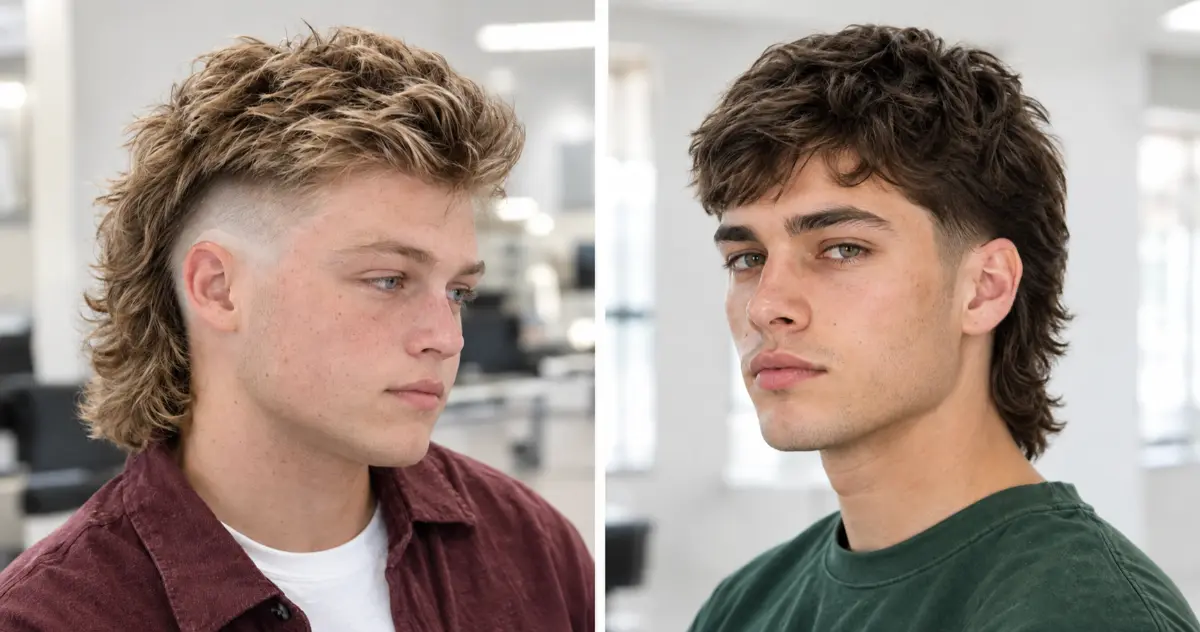
A burst fade mullet is a mullet with a burst fade on the sides. The hair curves in a half circle around the ear, gets shortest right behind it, and then blends into a longer back that keeps the classic mullet length. The fade is the shape of the sides, and the mullet is the whole haircut.
Most men land on one of four setups: a low burst fade for a softer, office friendly look, a mid burst fade for a balanced modern cut, a high burst fade for a bold, high contrast statement, or a skin burst fade for the sharpest, most graphic finish. The top can stay short and textured, or grow long for a shaggy finish.
| Quick Snapshot | Details |
|---|---|
| What it is | A mullet with a curved, ear hugging fade on the sides |
| Also called | Radial fade, halo taper, burst taper mullet |
| Best fade heights | Low (subtle), mid (balanced), high (bold), skin (sharpest) |
| Works on | Straight, wavy, curly and coily hair, with small tweaks for each |
| Typical trim schedule | Low burst every 3 to 4 weeks, mid every 2 to 3 weeks, high or skin every 10 to 14 days |
| Back length | Short and neat, medium and collar grazing, or long and shaggy |
| Styling time | About 3 to 5 minutes with a light product |
| Biggest watch out | The fade grows out fast, so the shape softens within two to three weeks |
Table of Contents
Why the Burst Fade Mullet Is Everywhere
The mullet has come back, but it looks very different from the 1980s version. Modern barbers keep the contrast of short sides and a longer back, then clean it up with precise fading. The burst fade is the perfect partner because it frames the ear, sharpens the profile and makes the back look intentional instead of messy.
For men who like the shape but want something less dramatic, a wolf cut for men offers a softer, layered cousin of the same idea. This guide covers 20 burst fade mullet styles, who each one suits, what to tell the barber, and how to keep the cut looking sharp between visits.
What a Burst Fade Mullet Really Is
A burst fade is a semicircular fade that starts above the ear, curves around it and drops into the neckline. The hair is shortest right behind the ear and gets longer as it moves away from that spot, which creates the “burst” look. Unlike a regular taper that runs straight around the head, the burst fade leaves the hair at the back and top untouched, so it pairs naturally with a mullet.
In a burst fade mullet, the barber fades only the sides in that curved shape, leaves the top with some length, and keeps the back long enough to sit on the collar or lower. That is why the cut reads as both clean and relaxed.
The Three Decisions That Shape the Cut
Every burst fade mullet comes down to three choices. Settling them before the appointment makes the haircut much easier to explain.
| Decision | Options | What changes |
|---|---|---|
| Fade height | Low, mid, high | How far up the head the fade climbs and how bold the contrast looks |
| Closeness | Skin (bald) or a guard (usually a #1 or #2) | How sharp and high maintenance the fade feels |
| Back length | Short, medium, long | How loud the mullet reads from behind |
Burst Fade vs Other Fades
Men often mix up the burst fade with similar shapes. The table below shows the difference in plain terms.
| Fade type | Shape | Best for | How it pairs with a mullet |
|---|---|---|---|
| Burst fade | Curves around the ear | Mullets and longer tops | The classic match, since the back stays long |
| Taper fade | Short trim along the sideburns and neckline | Conservative looks | A softer, more subtle mullet |
| Drop fade | Arcs lower behind the ear | Curved head shapes | Adds a dramatic drop at the nape |
| Temple fade | Focuses on the temples | Sharp, tidy sides | Works if the fade stays small |
| Low fade | Starts near the ears and neckline | Work friendly looks | Easy for first timers |
Burst Fade Mullet vs Mullet Fade vs Wolf Cut
A standard mullet fade can use any fade shape, while a burst fade mullet always uses the curved, ear hugging one. A wolf cut is different again. It is heavily layered all around with a shaggy, voluminous finish rather than a sharp faded side. Men who like the layered, textured top but want less contrast on the sides often lean toward the medium length haircuts for men as a middle ground.
Who Should Get a Burst Fade Mullet?
The cut works for a wide range of men, but a few details decide how well it lands.
Face Shape
| Face shape | What helps |
|---|---|
| Oval | Almost any height works, so mid and high bursts are fun to try |
| Round | A higher fade and extra height on top add length to the face |
| Square | A low or mid burst softens strong angles with a textured top |
| Heart | A fringe and a fuller back balance a narrower chin |
| Diamond | Keep the sides tidy and add texture at the forehead |
| Triangle or pear | Volume on top evens out a wider jaw, as covered in these triangle face shape hairstyles for men |
Hair Type and Density
- Straight hair: Shows the fade the most clearly and holds a sleek back well.
- Wavy hair: The easiest match, since natural movement gives the mullet shape with little effort.
- Curly and coily hair: Looks great with a burst fade, but the barber should cut it dry so shrinkage does not shorten the back more than planned.
- Fine or thinning hair: Works best with a shorter back and a low or mid fade, as shown in these short haircuts for men with fine hair.
- Thick hair: Handles long backs well, though it benefits from point cutting to remove bulk.
Hairline and crown matter too. A receding hairline pairs well with a textured fringe, and a strong crown whorl usually needs a little extra length so the top lies flat. Men dealing with early thinning can also read the American Academy of Dermatology’s hair loss resource center to understand what is normal and when to see a dermatologist.
Work, Age and Lifestyle
The cut suits teens through men in their 40s and beyond. In stricter workplaces, a low burst fade with a short, tidy back keeps things professional. In creative or casual settings, a mid or high fade with a longer back has more room to play.
Quick Picker: Four Questions
- How often can he visit the barber? Every 2 weeks or less points to a mid or high fade, while every month points to a low burst.
- How bold should the look be? Subtle means low and short back, bold means high or skin with a long back.
- What is the hair texture? Straight and wavy suit sleek styles, while curly and coily suit voluminous tops.
- How much styling time is available? Under five minutes means a textured, air dried finish.
20 Burst Fade Mullet Haircuts for Men
Each style below lists who it suits, how often it needs a trim and what to ask for. Fade heights and trim intervals follow the usual barbershop rhythm, so adjust a little for how fast your hair grows.
Fade Height Styles
1. Burst Taper Mullet
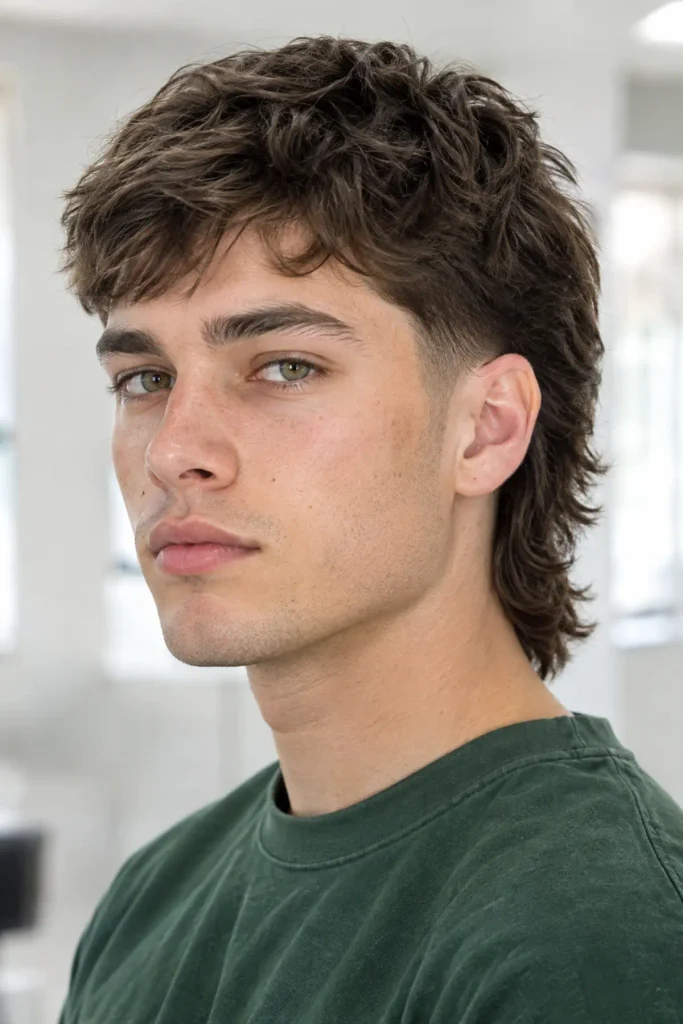
The gentlest version. The fade is short and subtle around the ear, so the sides stay close to natural. It is a smart first step for men who are curious about the mullet but want to stay low risk.
Best for: First timers, office settings, most face shapes.
Trim every: 4 to 5 weeks.
Ask for: “A burst taper around the ear, leaving the back at collar length.”
2. Low Burst Fade Mullet
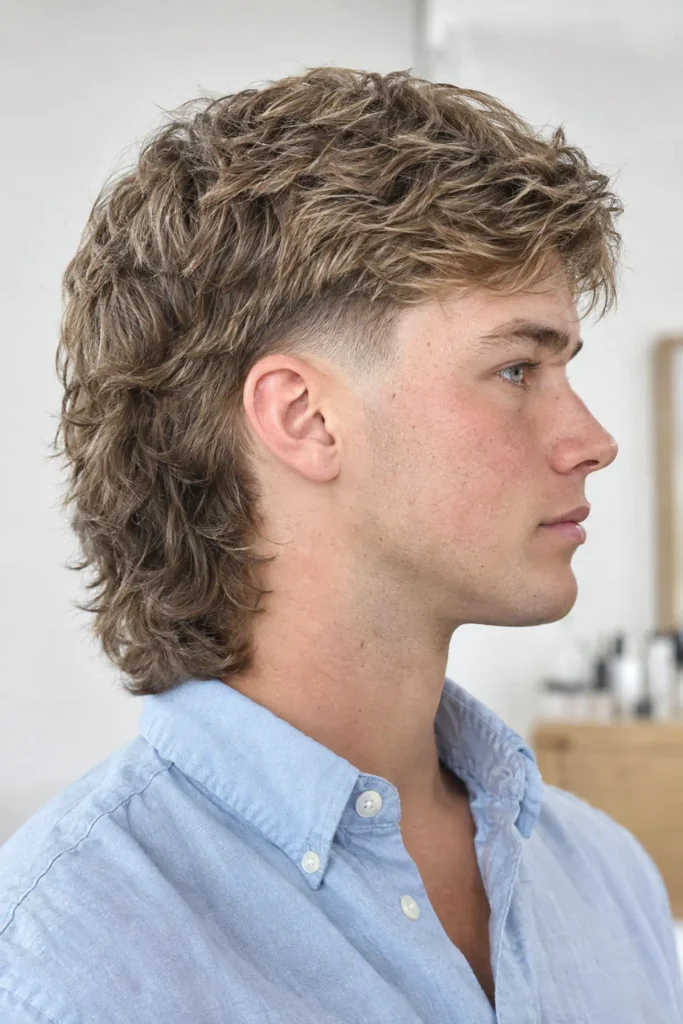
The fade starts low near the ear and neckline, with a clean curve and a soft blend. It looks polished and keeps a nice balance between sides and back.
Best for: Oval, square and heart faces.
Trim every: 3 to 4 weeks.
Ask for: “A low burst fade with a #2 guard, blended into a medium back.”
3. Mid Burst Fade Mullet
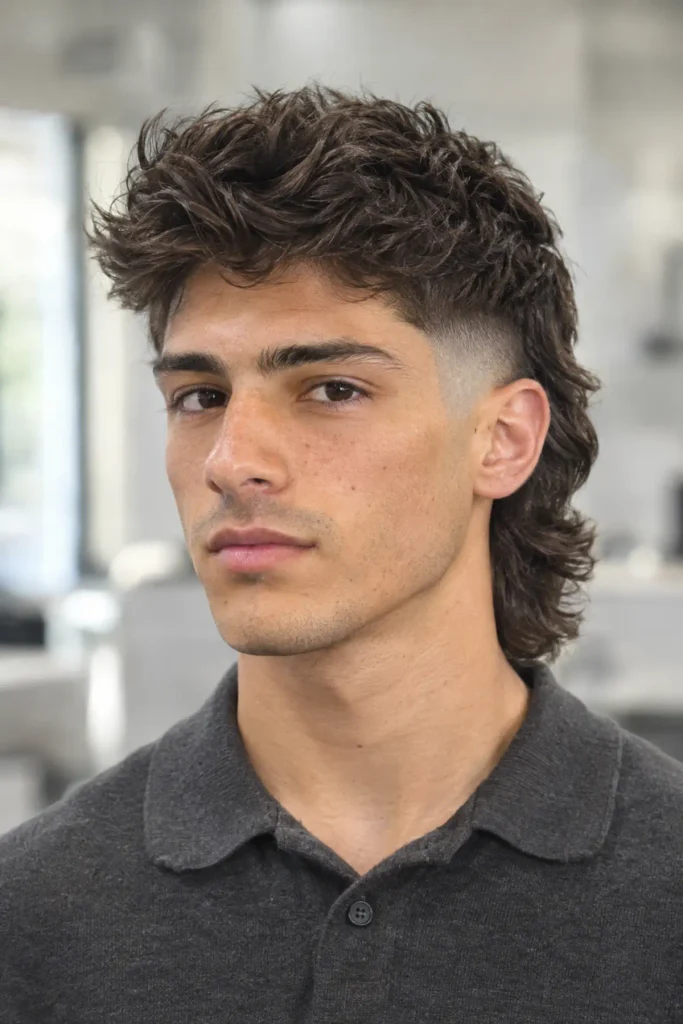
The fade climbs to around the temple, which adds clear contrast and a modern edge. It is the most popular height since it works for nearly everyone. For more ideas on this height, the mid fade haircuts for men guide includes a mid burst fade section.
Best for: Most face shapes and hair types.
Trim every: 2 to 3 weeks.
Ask for: “A mid burst fade, curved behind the ear, with texture on top and length in the back.”
4. High Burst Fade Mullet
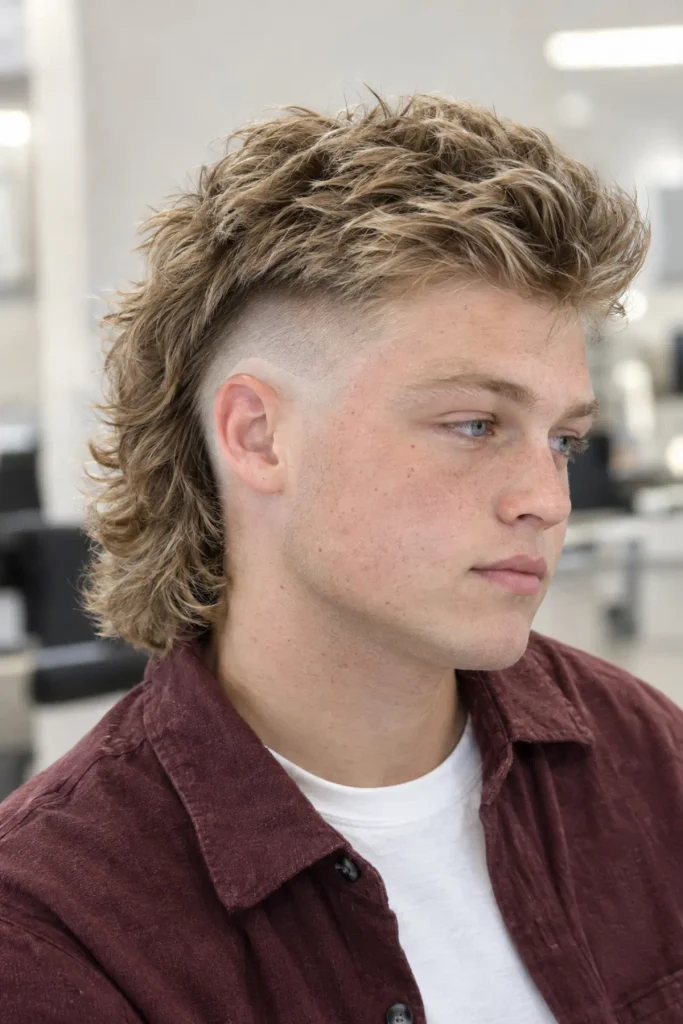
The fade rises high on the head, so the sides look very short and the top and back stand out strongly. It is the boldest height and shows off long, thick backs.
Best for: Round and oval faces, confident dressers.
Trim every: 10 to 14 days.
Ask for: “A high burst fade with a defined curve, keeping the top and back long.”
5. Skin Burst Fade Mullet
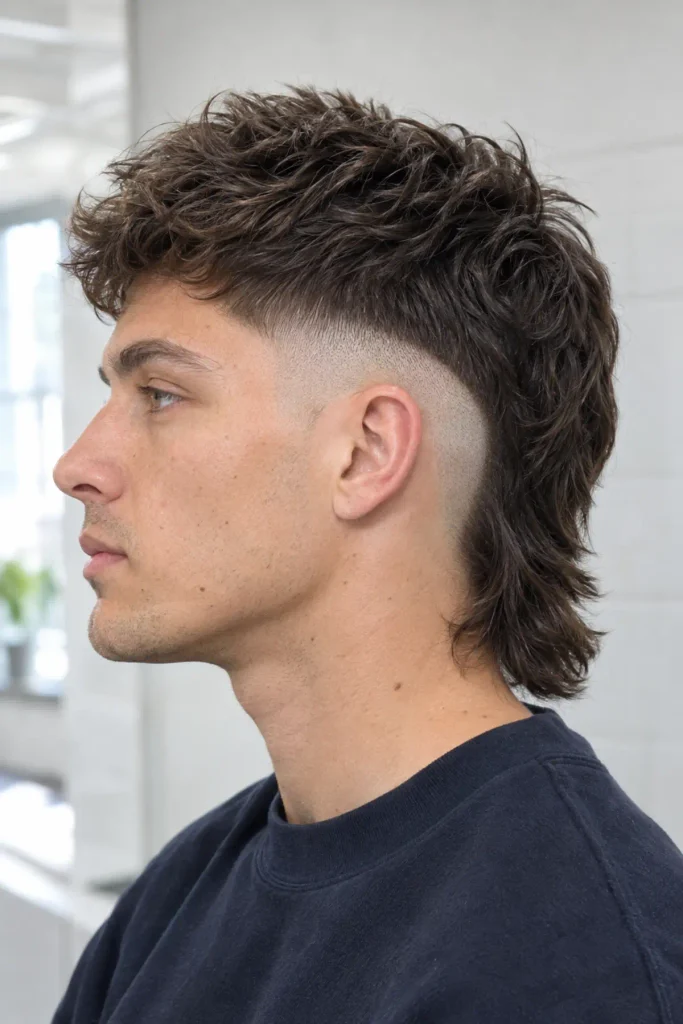
The fade goes all the way down to bare skin at the lowest point. It gives the sharpest, most graphic result. It needs very frequent visits, and the exposed skin needs sun care in warm months. The Skin Cancer Foundation’s scalp protection advice is a helpful reference for short sides.
Best for: Straight and wavy hair, men who like very clean lines.
Trim every: 10 to 14 days.
Ask for: “A skin burst fade, zero guard at the lowest point.”
Texture Styles
6. Straight Hair Burst Fade Mullet
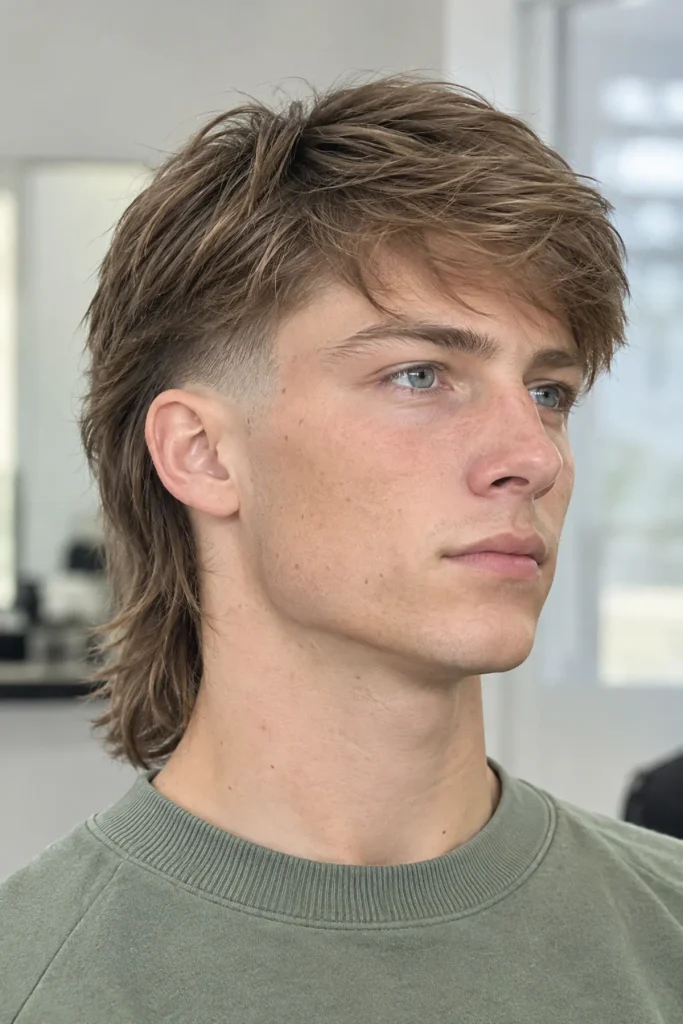
Straight hair shows every edge of the fade, so the curve looks extra crisp. A little texture spray stops the back from looking flat.
Best for: Straight, medium density hair.
Trim every: 3 weeks.
Ask for: “Point cut the back to remove weight so it moves.”
7. Wavy Burst Fade Mullet
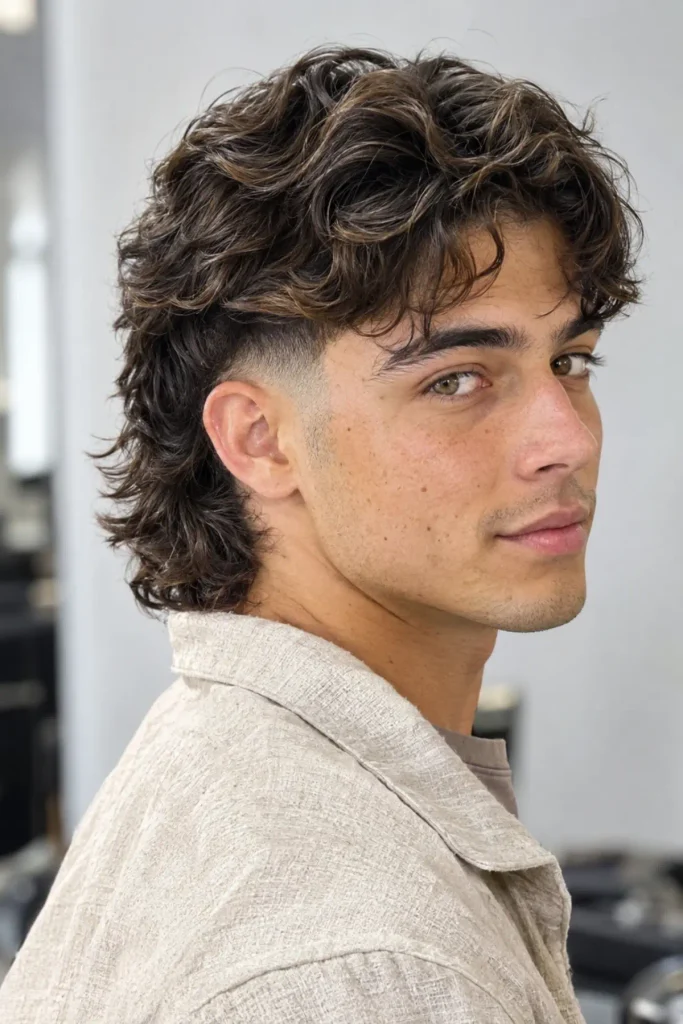
Waves give the mullet built in shape, so the style looks effortless. Air drying with a light cream is usually enough.
Best for: Wavy hair of any length.
Trim every: 3 weeks.
Ask for: “Keep the waves long on top and in the back, with the burst fade only on the sides.”
8. Curly Burst Fade Mullet
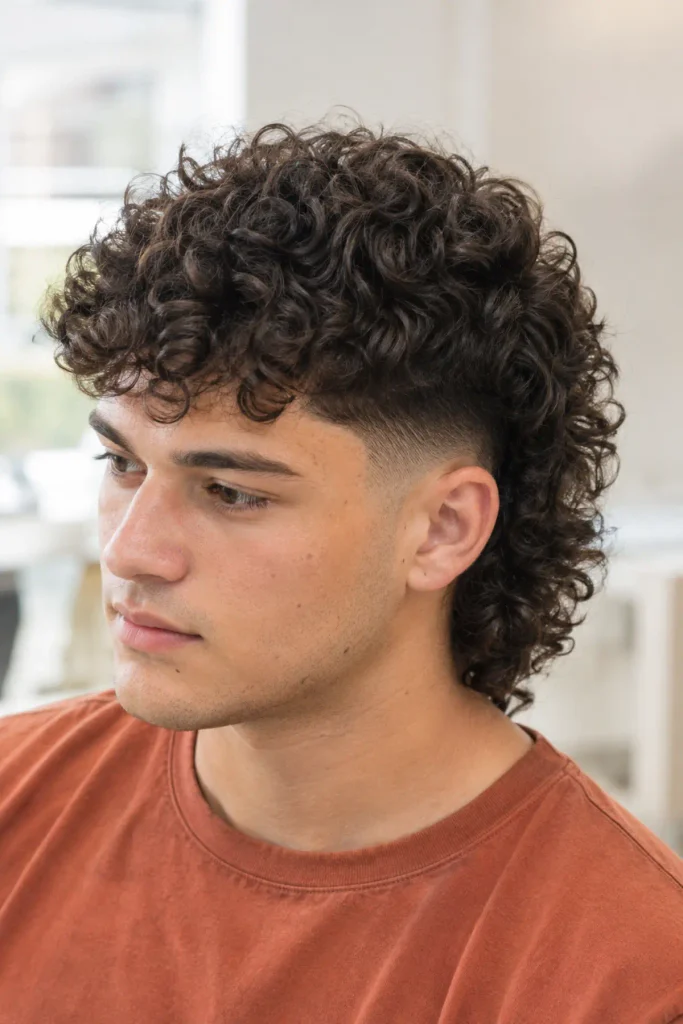
Curls create a full, bouncy back and a rounded top. The fade keeps the sides neat so the volume reads as intentional. Dry cutting helps the barber see where each curl actually falls.
Best for: Curly hair, round and oval faces.
Trim every: 2 to 3 weeks.
Ask for: “A dry cut so the curls are shaped at their true length.”
9. Coily or Afro Burst Fade Mullet
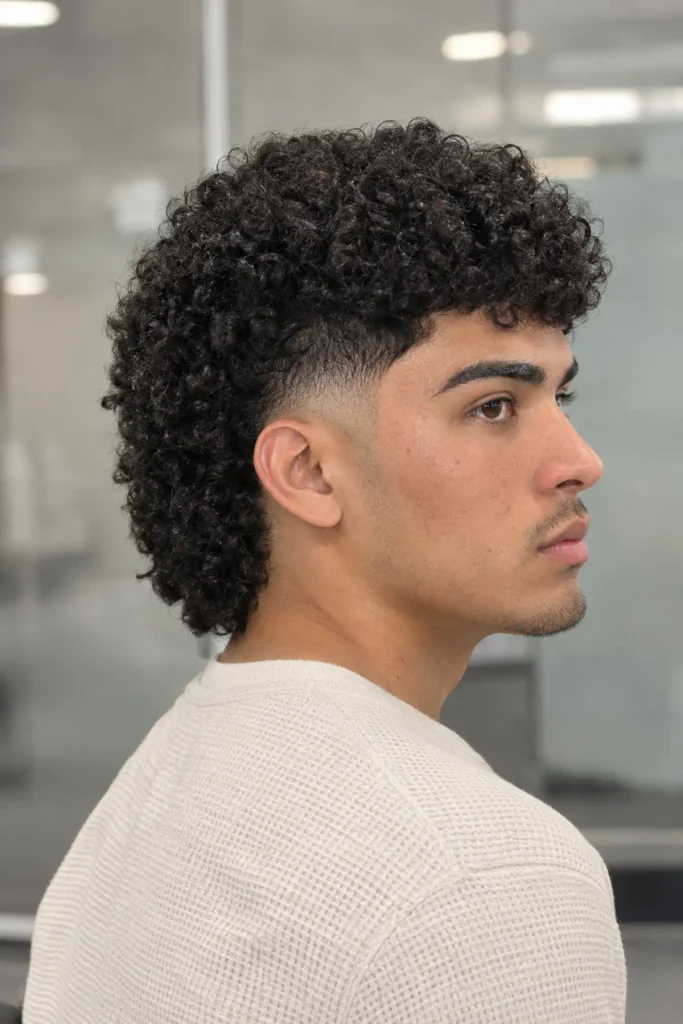
Coily hair holds shape beautifully, which makes the contrast between the faded sides and the fuller back especially striking. Because coils shrink a lot, the back often looks shorter than it measures.
Best for: Type 4 hair.
Trim every: 2 to 3 weeks.
Ask for: “Leave extra length in the back since my hair shrinks, and keep the burst clean.”
10. Permed Burst Fade Mullet
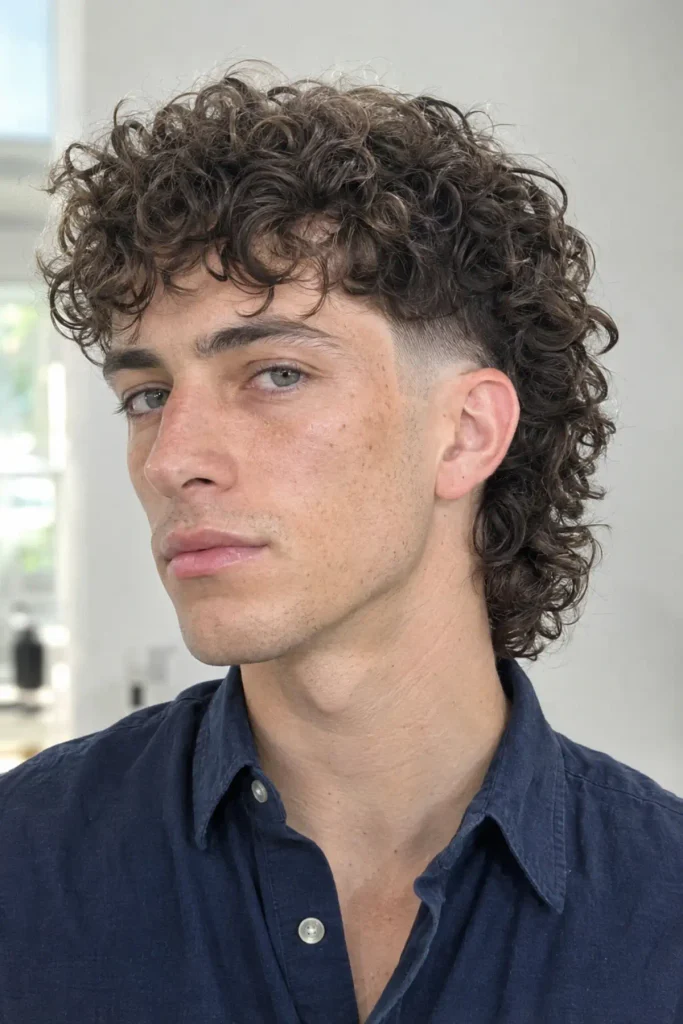
A perm adds curl and body to straight hair, so the mullet gets that bouncy, textured look without waiting for natural waves. Perm care means gentle shampoo and a moisturizing conditioner.
Best for: Straight, fine to medium hair.
Trim every: 3 weeks.
Ask for: “A perm on the top and back, with a mid burst fade on the sides.”
Density and Length Styles
11. Thick Hair Burst Fade Mullet
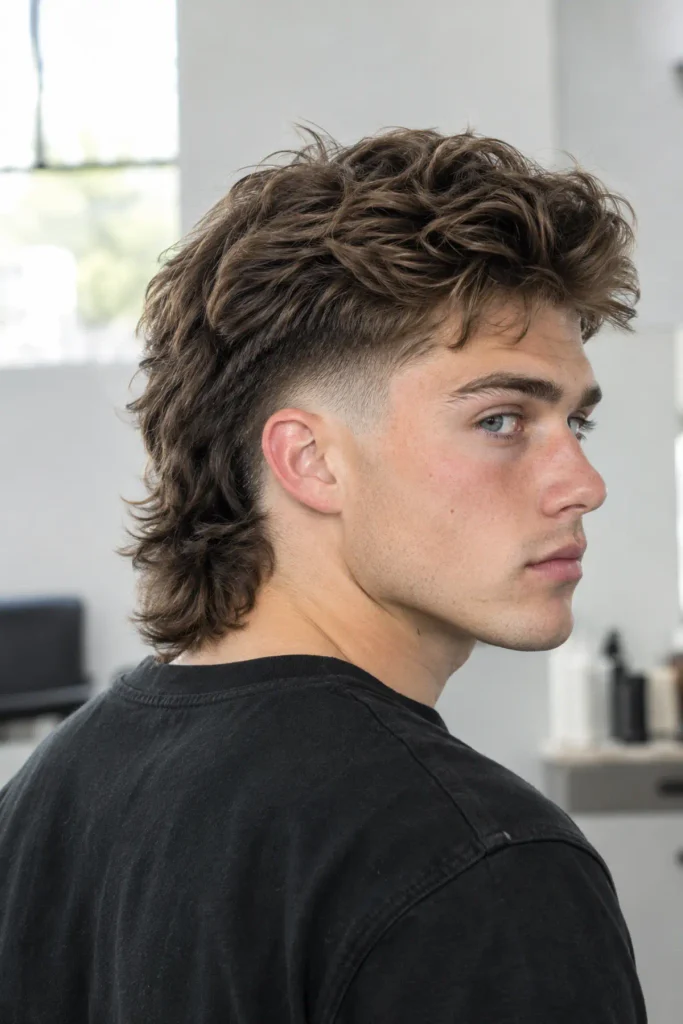
Thick hair gives the mullet real presence, but it can look heavy. Thinning shears or point cutting keeps the back from puffing out.
Best for: Thick, dense hair.
Trim every: 3 weeks.
Ask for: “Remove weight from the back without losing length.”
12. Fine or Thinning Hair Burst Fade Mullet
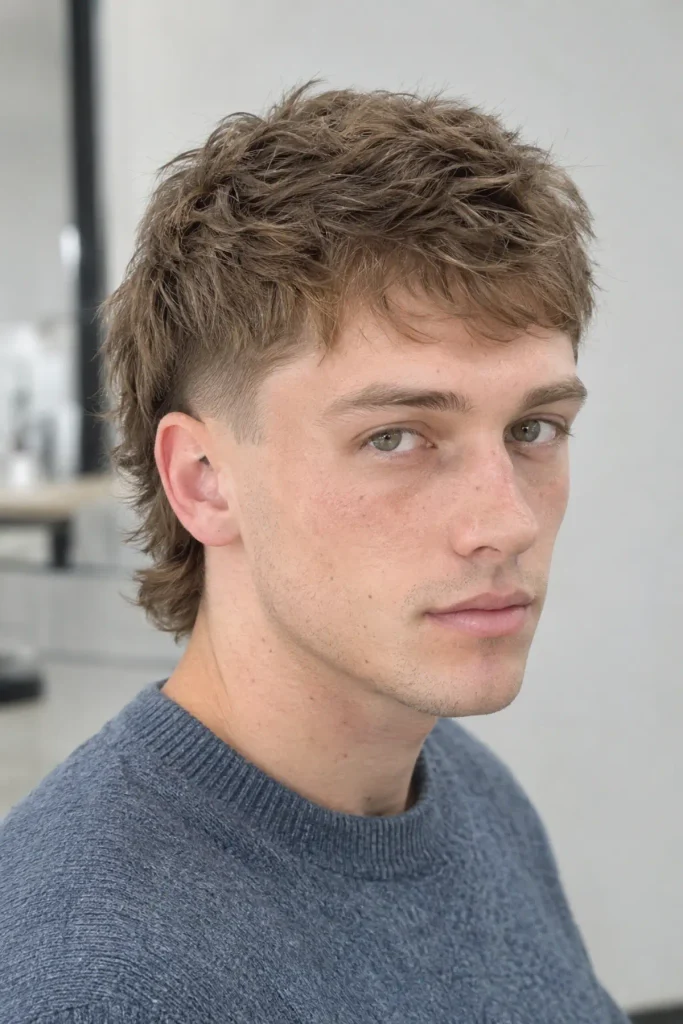
Fine hair does better with a shorter back and a low or mid fade. That keeps the cut looking full instead of wispy. A light texture powder adds grip and body.
Best for: Fine or thinning hair.
Trim every: 3 to 4 weeks.
Ask for: “A low burst fade with a short mullet and a bit of texture on top.”
13. Short or Baby Burst Fade Mullet
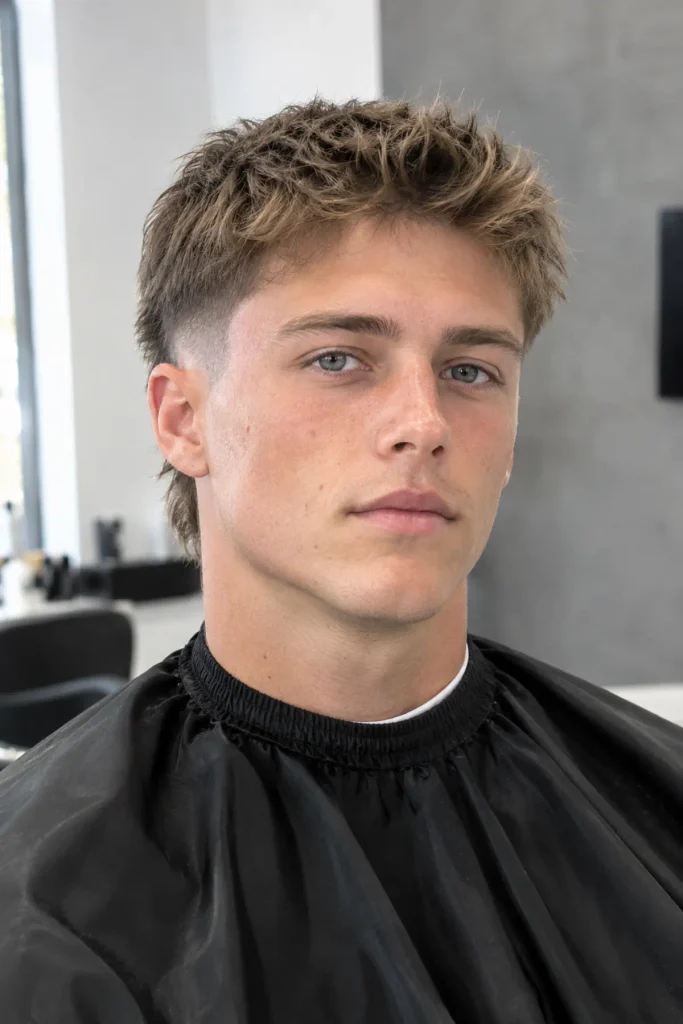
The back stays only slightly longer than the sides, so the mullet shape is subtle. It suits men who want the look without the length.
Best for: Conservative workplaces, short hair lovers.
Trim every: 3 weeks.
Ask for: “A short mullet with a low burst fade, just a touch longer in the back.”
14. Medium Length Burst Fade Mullet
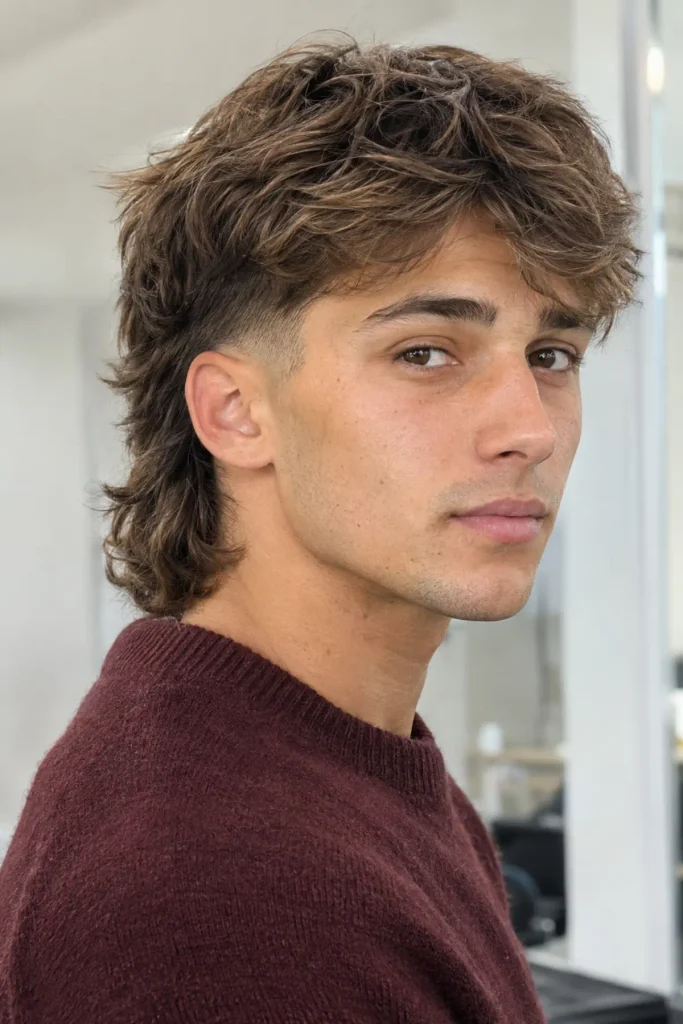
The back reaches the collar and the top has enough length to push forward or sweep to the side. It is the most balanced version of the cut.
Best for: Most men.
Trim every: 3 weeks.
Ask for: “A medium mullet that sits on the collar, with a mid burst fade.”
15. Long or Shaggy Burst Fade Mullet
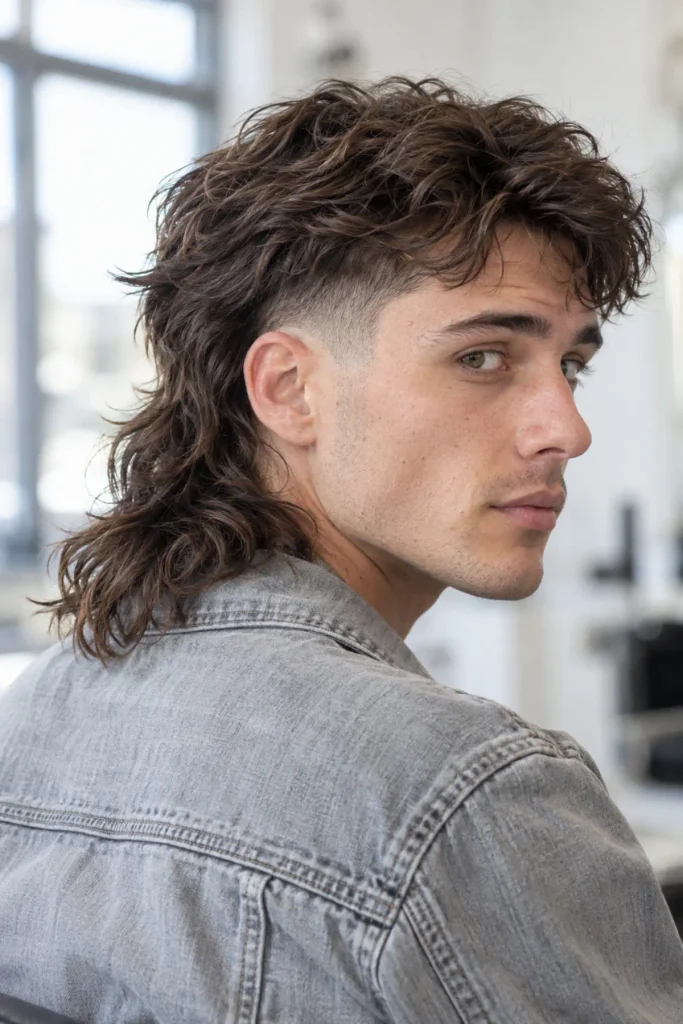
A long, layered back with a clean burst fade gives the biggest contrast. Layering through the length keeps it from looking stringy, as shown in these long layered hair for men ideas.
Best for: Thick or wavy hair, creative looks.
Trim every: 3 weeks, with a longer trim every 6 to 8 weeks.
Ask for: “Long layers in the back with a clean burst fade on the sides.”
Top Styling Variations
16. Textured and Messy Top
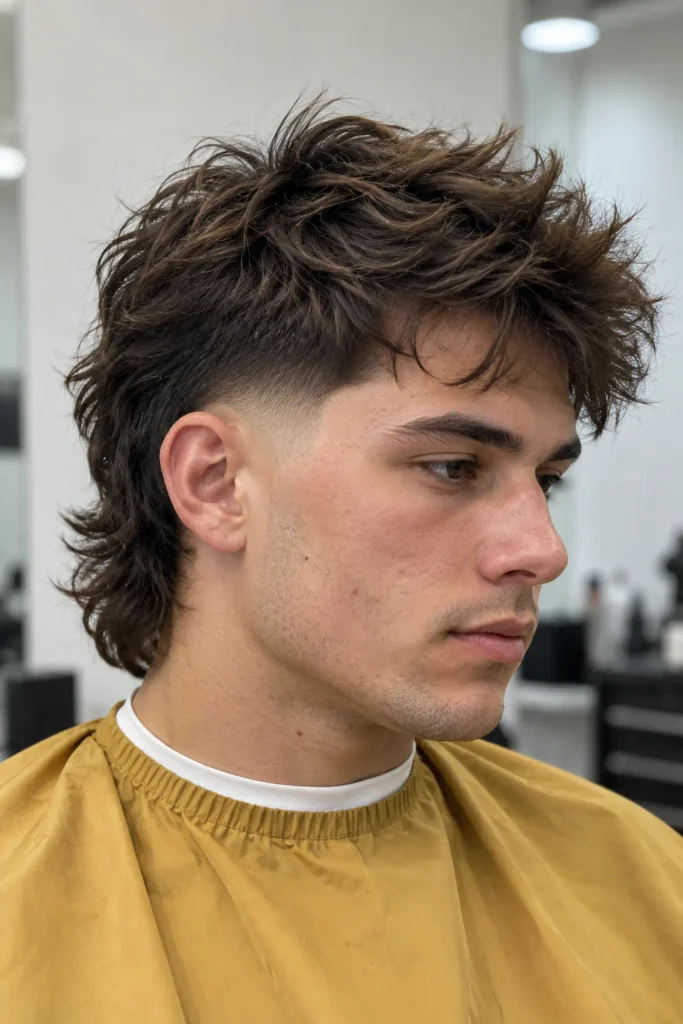
The top is cut with choppy layers and styled with matte clay for a tousled finish. The burst fade keeps the mess looking planned.
Best for: Straight and wavy hair.
Trim every: 3 weeks.
Ask for: “Choppy layers on top and a burst fade on the sides.”
17. Fringe or Bangs
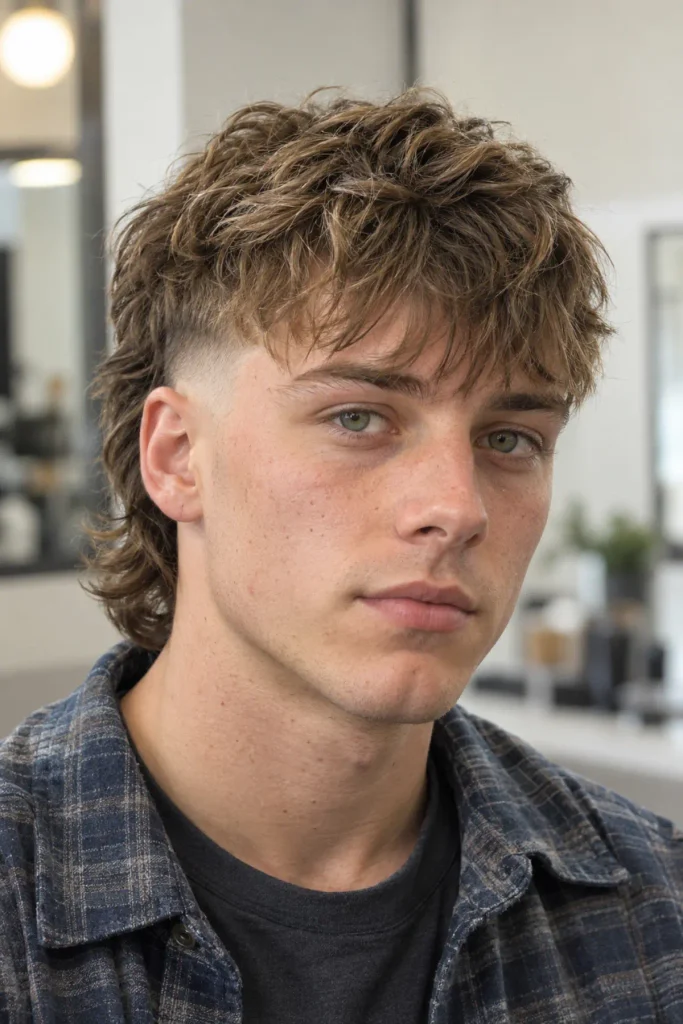
A forward fringe softens a high forehead and hides a receding hairline. It also gives the front a boyish, relaxed feel. For men who want to balance a larger forehead, the buzz cut for a big forehead page shows other ways to handle it.
Best for: Heart, long and oval faces.
Trim every: 3 weeks.
Ask for: “A textured fringe that falls just above the brow.”
18. Slick Back Burst Fade Mullet
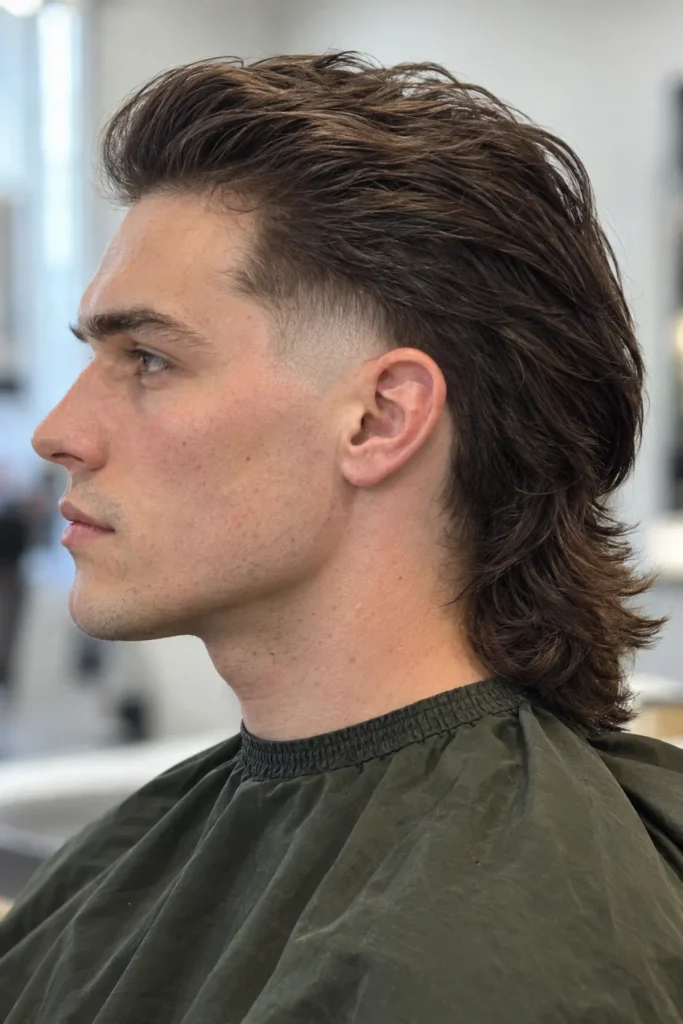
Slicked back hair pairs with a burst fade for a sharper, almost retro look. A light pomade gives hold without a stiff, wet finish.
Best for: Straight or slightly wavy hair.
Trim every: 2 to 3 weeks.
Ask for: “Enough length on top to slick back, with a mid burst fade.”
Statement Cuts
19. Mohawk or Faux Hawk Burst Fade Mullet
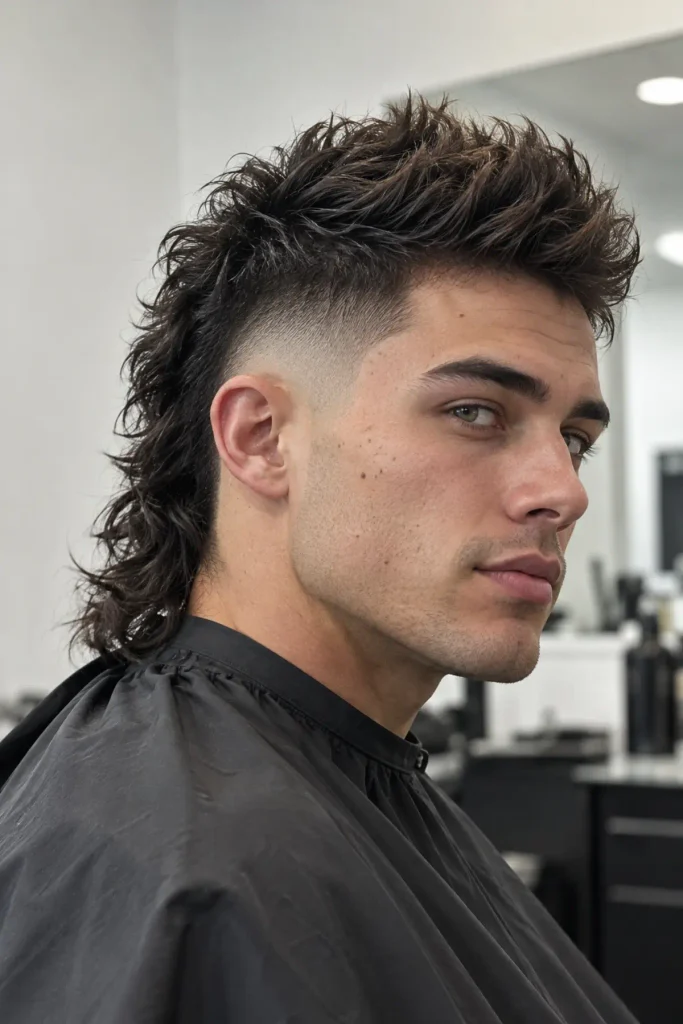
The sides fade away strongly and the center stays long from front to back, forming a mohawk that flows straight into the mullet. It is high impact, so it suits confident dressers.
Best for: Thick hair, bold personalities.
Trim every: 2 weeks.
Ask for: “A high burst fade with a center strip kept long into the back.”
20. Burst Fade Mullet With a Beard
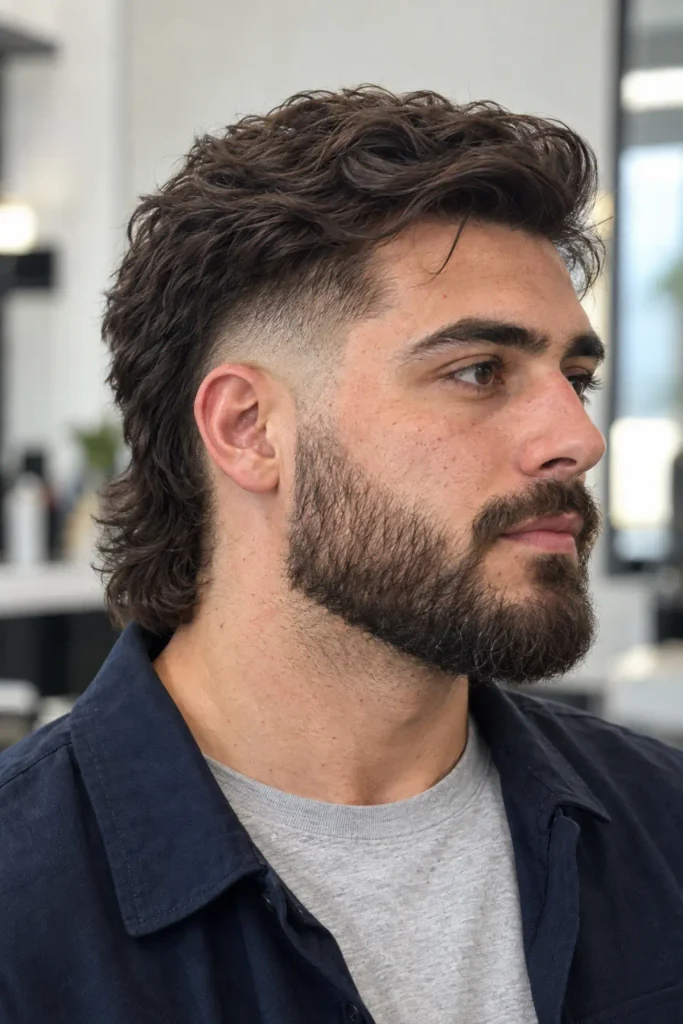
A beard blends into the faded sides so the face and head look like one clean shape. The beard fades up into the burst without a harsh line. Many men find the buzz cut fade with beard guide helpful for planning that blend.
Best for: Men with full or medium beards.
Trim every: 2 to 3 weeks.
Ask for: “Blend my beard into the burst fade with no visible line.”
Add-Ons That Make the Cut Stand Out
- Razor lines: A clean edge along the hairline and fade.
- Hair designs: Small parts or shapes shaved into the fade.
- Color: Bleached tips, a gentle blonde or soft highlights.
- Hair tied back: A longer back can be pulled up, similar to the looks in these man bun hairstyles.
How to Ask Your Barber for a Burst Fade Mullet
Bringing a photo is the fastest way to get the right result. Beyond that, a short script covers the main details.
“I would like a mullet with a [low, mid or high] burst fade. Please curve the fade around the ear and blend it into the neckline. Use a [skin or #1 or #2] guard at the shortest point. Keep the top [short, medium or long], and leave the back [collar length or longer]. Please texturize the back so it does not look bulky.”
Barber Vocabulary
| Term | Meaning |
|---|---|
| Burst | The curved fade shape around the ear |
| Guard number | Clipper length, where a #1 is about 1/8 inch and a #2 about 1/4 inch |
| Skin | Faded down to bare skin |
| Blend | A smooth change between lengths with no visible line |
| Point cutting | Snipping into the ends for a softer, textured finish |
| Taper | A short, neat trim along the neckline and sideburns |
| Nape | The back of the neck, where the mullet ends |
Nape Shapes
The bottom of the mullet can be natural (uneven and relaxed), rounded (a soft curve), squared (a straight line) or tapered (faded into the neck). A tapered or natural nape grows out the most gracefully.
How to Style a Burst Fade Mullet
Styling takes about three to five minutes once the cut is right.
- Wash with a gentle shampoo and towel dry the hair until it is damp.
- Apply a sea salt spray or light cream to the top and back for texture.
- Air dry or use a diffuser for waves and curls, or a blow dryer for straight hair.
- Finish with a small amount of matte clay or paste on the top.
- Smooth the back with your fingers, and scrunch it if it needs more shape.
Styling by Texture
| Hair type | Product | Finish |
|---|---|---|
| Straight | Texture spray, matte paste | Piecey and relaxed |
| Wavy | Sea salt spray, light cream | Natural and tousled |
| Curly | Curl cream, gel | Defined and bouncy |
| Coily | Moisturizing cream, oil | Full and soft |
| Fine | Powder, volumizing spray | Thicker looking |
Troubleshooting
- Back looks flat: Add texture spray and lift with a diffuser.
- Back looks too bulky: Ask for point cutting or thinning at the next visit.
- Top feels greasy: Use less product and apply it to dry or damp hair.
- Curls frizz: Switch to a leave in conditioner and avoid rough toweling.
Maintenance: How Often to Get a Trim
The fade is the part that needs the most upkeep. Hair grows about half an inch a month, according to the American Academy of Dermatology, so even a short fade loses its sharpness within a few weeks.
| Fade type | Trim every | Why |
|---|---|---|
| Burst taper | 4 to 5 weeks | The fade is subtle, so growth is less visible |
| Low burst | 3 to 4 weeks | Sharp near the ear, but softer overall |
| Mid burst | 2 to 3 weeks | Higher contrast shows growth sooner |
| High or skin burst | 10 to 14 days | Bare skin grows in fast and looks fuzzy |
Between visits, men can keep the shape tidy by washing the back regularly, using a light conditioner on a longer mullet and avoiding heavy product build up.
Growing Out a Burst Fade Mullet
For a man growing the cut out or letting the back lengthen, the timeline below is a fair expectation.
| Time | What to expect |
|---|---|
| Weeks 1 to 3 | The fade softens and the edges blur |
| Month 2 | The sides fill in and the back reaches the collar |
| Months 3 to 4 | The cut becomes a classic mullet or a layered shag |
| Months 6 and beyond | The sides catch up, leaving a long, even length |
A small trim every 6 to 8 weeks removes split ends and keeps the shape clean while the hair gets longer.
Common Mistakes to Avoid
- Skipping the photo: “Burst fade” means different things to different barbers, so a picture avoids surprises.
- Cutting wet curly hair: Curls shrink as they dry, which can leave the back much shorter than planned.
- Going too high too fast: A high or skin fade is hard to undo, so many men start with a low burst.
- Ignoring the neckline: A messy nape makes the whole cut look unfinished.
- Overusing product: Too much wax or gel weighs down the top and makes the back greasy.
- Forgetting sun care: Short sides expose more scalp, so sunscreen matters in summer.
Pros and Cons
| Pros | Cons |
|---|---|
| Looks modern and confident | Needs frequent trims for the fade |
| Works on many hair types | Can look dated if the back is too thin or stringy |
| Easy to style once cut well | The grow out phase can feel awkward |
| Easy to adjust from subtle to bold | Some workplaces prefer shorter backs |
Burst Fade Mullet FAQs
What is a burst fade mullet?
A burst fade mullet is a mullet haircut with a curved, ear hugging burst fade on the sides. The hair is shortest behind the ear and blends into a longer back, so the cut keeps the classic mullet contrast with a cleaner, more modern finish.
What is the difference between a burst fade and a taper fade?
A burst fade curves in a half circle around the ear and leaves the back and top longer. A taper fade runs as a short, straight trim along the sideburns and neckline. The burst reads as bolder, while the taper reads as subtler.
Does a burst fade mullet work on curly hair?
Yes. Curly and coily hair suits the cut well because the faded sides make the fuller back and top stand out. Barbers usually cut curly hair dry so shrinkage does not leave the back shorter than expected.
How often does a burst fade mullet need a trim?
A low burst usually needs a trim every 3 to 4 weeks, a mid burst every 2 to 3 weeks, and a high or skin burst every 10 to 14 days. A burst taper can wait 4 to 5 weeks.
How do you ask a barber for a burst fade mullet?
A man should bring a photo and name three things: the fade height (low, mid or high), the guard or skin level at the lowest point, and the length of the top and back. Asking the barber to curve the fade around the ear and blend it into the neckline gives the clearest instruction.
Which face shapes suit a burst fade mullet?
Oval faces suit almost any version. Round faces benefit from a higher fade and height on top, square faces look good with a low or mid burst and soft texture, and heart faces pair well with a fringe and a fuller back.
Is the burst fade mullet professional enough for work?
It can be. A low burst fade with a short, tidy back looks neat in most offices. Bolder versions with high fades and long backs suit creative or casual workplaces better.
Can men with thin or fine hair wear a burst fade mullet?
Yes, with small changes. A shorter back, a low or mid fade and a light texture powder keep fine hair looking fuller. Very long backs can look stringy on fine hair.
How long does it take to grow out a burst fade mullet?
Hair grows about half an inch a month, so the sides usually catch up in around six months. The back reaches a classic mullet length within two to four months.
What products work best for a burst fade mullet?
Sea salt spray and a light cream suit straight and wavy hair, curl cream suits curly hair, and a moisturizing cream suits coily hair. Matte clay or paste gives the top a textured finish without shine.
Is a burst fade mullet the same as a wolf cut?
No. A wolf cut is layered all over with a shaggy finish, while a burst fade mullet has clean faded sides and a longer back. The two can be combined for a softer look.
Final Thoughts
The burst fade mullet is flexible enough to fit nearly any hair type, face shape and style. A man can start with a low burst taper and a short back, then move toward a mid or high fade and a longer back once he feels comfortable. The key is clear communication with the barber, regular trims for the fade and a simple styling routine for the top and back.
For a softer, layered cousin of this look, the site also covers the wolf cut for men in full detai
4 thoughts on “20 Burst Fade Mullet Haircuts for Men”