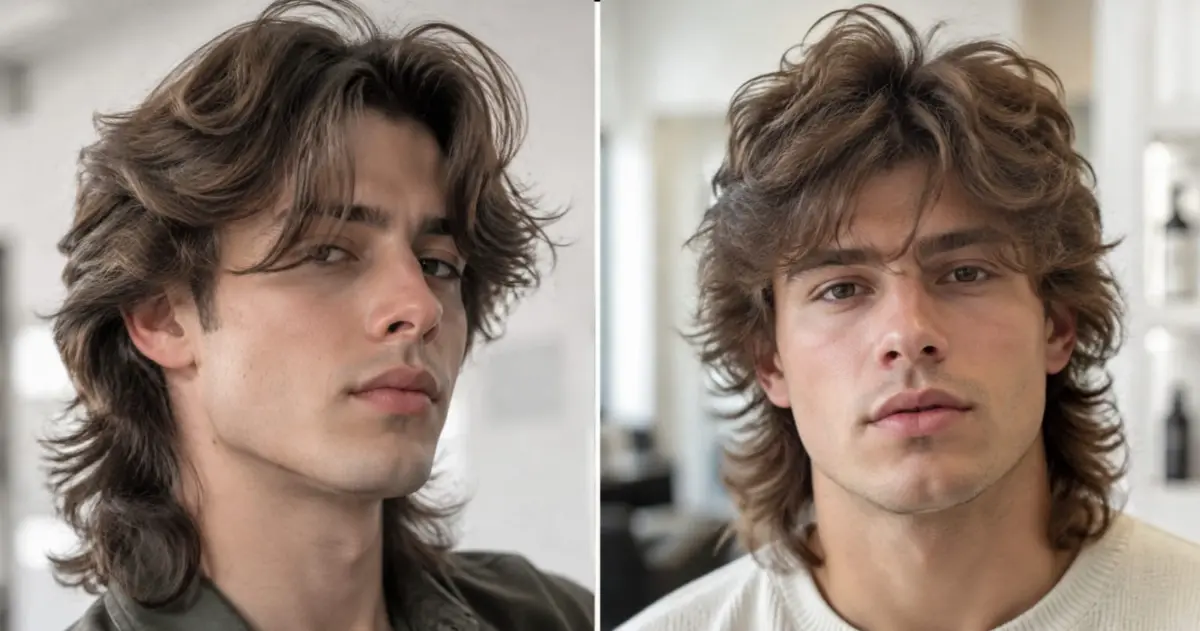
The wolf cut has been one of the most requested men’s haircuts of the past few years, and for good reason. It borrows the messy volume of a shag, the length contrast of a mullet, and turns the whole thing into something that looks deliberately undone rather than accidentally overgrown. But not every guy who asks for a wolf cut walks out of the barbershop happy with it. The result depends heavily on hair type, face shape, and how much daily styling someone is actually willing to do.
This guide breaks the wolf cut down piece by piece: what it actually is, where it came from, which version suits which face and hair type, the exact words to use with a barber, and how to keep it looking sharp as it grows out.
Table of Contents
Wolf Cut for Men at a Glance
| Question | Quick Answer |
|---|---|
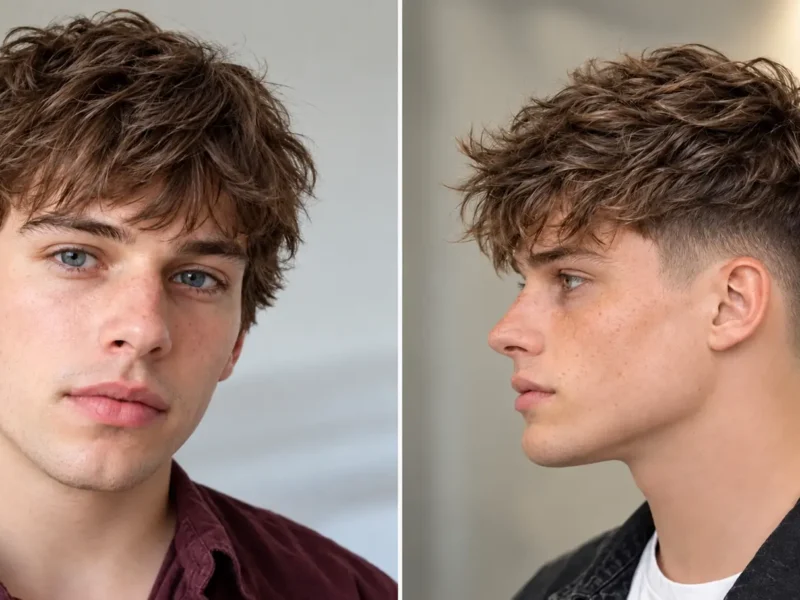
| What is a wolf cut? | A layered haircut combining a shaggy mullet with a textured shag: short and voluminous on top, longer at the back and sides. |
| Best hair type | Wavy or naturally textured, medium to thick hair shows it off best, though straight and curly hair both work with the right styling. |
| Best face shapes | Oval, heart, round, and square faces respond especially well; layers can be adjusted for long or diamond face shapes too. |
| Maintenance level | Low to moderate. Trims are typically needed every 4 to 8 weeks depending on length and hair growth rate. |
| Styling difficulty | Easy to moderate. A blow dryer, a texturizing spray, and a light pomade cover most of the work. |
| Good for beginners? | Yes. It grows out gracefully compared to a fade or a sharp shape-up, so small mistakes are easy to live with. |
What Is a Wolf Cut, Exactly?
A wolf cut is a heavily layered haircut that blends two older styles: the shag and the mullet. The top and crown are cut into short, choppy layers that create lift and volume, while the back and sides are left longer, gradually tapering down the head. The result is a silhouette that is fuller at the crown and looser toward the ends, with plenty of texture and movement built directly into the cut rather than added entirely through styling.
The name comes from the resemblance to a wolf’s thick, textured coat. Because the layering does most of the work, a wolf cut tends to look intentional even a few weeks past a trim, which is part of why it has stayed popular as a lower-maintenance alternative to sharper, more structured cuts like a fade or a crew cut.
Wolf Cut vs Mullet vs Shag: What’s the Real Difference?
These three styles get confused constantly, and for good reason, since a wolf cut genuinely borrows from both of the other two.
| Style | Length Pattern | Texture | Overall Vibe |
|---|---|---|---|
| Mullet | Short and neat on top and sides, dramatically longer at the back | Can be smooth or textured | Bold contrast, retro and unapologetic |
| Shag | Even layering throughout, no dramatic length difference | Heavily textured, feathered ends | Soft, flowing, rock and roll |
| Wolf Cut | Short choppy layers on top, longer layers at the back and sides that blend rather than snap into place | Very textured, deliberately messy | A hybrid: more casual than a mullet, edgier than a shag |
The clearest way to separate the three is to look at the transition between the top and the back of the head. A mullet has an obvious, almost blunt break between the short top and the long back. A shag keeps the length fairly consistent throughout, with layering doing all the shaping work. A wolf cut sits between them: real length contrast like a mullet, but a graduated, blended transition like a shag, so it never looks as sharp edged as a true mullet. If you like the mullet shape but prefer clean faded sides over layers all around, the burst fade mullet is the sharper cousin of the wolf cut.
Where the Wolf Cut Trend Actually Came From
The wolf cut is often talked about as a TikTok invention, but its roots go back further. Professional stylists trace the shape to the shag haircuts of the 1970s, and the style resurfaced in South Korea in the mid 2000s, where K-pop performers wore layered, mullet-shag hybrids years before Western audiences had a name for it.
The trend picked up serious momentum again around 2020 and 2021, spreading rapidly through TikTok and Instagram and getting adopted by stylists worldwide. The industry publication BehindTheChair.com named it one of the biggest haircut trends of that period, noting its androgynous, disconnected, and heavily layered structure.
Professional haircare brand Hair.com traces the style even further back, connecting it to shag haircuts popularized decades earlier before the modern wolf cut version took shape in South Korean salons and eventually made its way west.
Since then, the wolf cut has stopped being a passing fad and settled into being a genuine, requestable style at most modern barbershops, in the same category as a textured crop or a modern mullet: trend-born, but now mainstream enough that most barbers can execute it without needing a reference photo.
Is a Wolf Cut the Right Choice?
Hair Type Reality Check
Medium to thick, wavy hair shows off the layering most naturally, since the texture already does half the work. Fine, straight hair can look flat without regular styling and a texturizing product, because there is less natural volume to hold the shape. Thick, curly, and coily hair holds a wolf cut extremely well and often needs less daily effort, since the natural curl pattern already creates the volume and separation the cut is designed around.
Face Shape Reality Check
Most face shapes can wear some version of a wolf cut. The real question is which variation, and the full breakdown is in the table further down this guide. As a general rule, rounder faces benefit from more height at the crown and shorter sides, while longer faces benefit from added width at the temples through curtain bangs or fuller sides.
Time and Cost Reality Check
A wolf cut is low maintenance compared to a fade, but it is not a wash-and-go style. It still benefits from a few minutes of blow drying and a texturizing product a few times a week to keep the volume from falling flat. Barber visits are typically needed every 4 to 8 weeks. Pricing generally lines up with a standard men’s haircut that includes layering and texturizing, sometimes running slightly higher than a basic clipper cut because of the extra cutting time layering requires.
The Best Wolf Cut for Every Face Shape
| Face Shape | What Works Best | Why It Works |
|---|---|---|
| Oval | Nearly every variation | Balanced proportions handle added length and volume without issue |
| Round | Shorter sides, more height and layers at the crown | Vertical volume elongates the face instead of widening it |
| Square | Soft, wispy layers around the jaw and temples | Softens strong angles without hiding the jawline completely |
| Long / Oblong | Fuller sides, curtain bangs or a fringe | Adds width at the temples and breaks up the length |
| Heart | Curtain bangs, layers that add width near the jaw | Balances a wider forehead with a narrower chin |
| Diamond | Face-framing layers around the cheekbones | Softens angular cheekbones while keeping crown volume |
Wolf Cut by Hair Type
Straight Hair
Straight hair can absolutely carry a wolf cut, but it needs the most help from styling products, since there is no natural texture to lean on. A texturizing spray or sea salt spray applied to damp hair, followed by a blow dry with fingers lifting the roots, is usually enough to build the volume the cut relies on. Without that step, straight hair versions can look flatter than the layering was designed to look.
Wavy Hair
Wavy hair is widely considered the easiest match for a wolf cut, since the natural movement already mirrors what the layering is trying to create. A light texturizing cream and air drying, or a quick diffuse with a blow dryer, is usually all that is needed.
Curly Hair
Curly hair adds natural volume and bounce that pairs well with the cut’s layered structure. A curl-defining cream on damp hair, followed by air drying or diffusing, helps keep the curls defined while the layers create shape and movement.
Coily Hair (Type 3C to 4)
Coily and tightly textured hair holds a wolf cut shape exceptionally well because the density and shrinkage already create fullness at the crown. A leave-in conditioner to manage moisture, along with a lightweight curl cream, keeps the layers defined without weighing the hair down.
15 Wolf Cut Variations Worth Asking For
Each of these is a real, barber-requestable version of the wolf cut. The name alone is usually enough to get a barber pointed in the right direction, but pairing it with the description below removes any guesswork.
1. Classic Wolf Cut
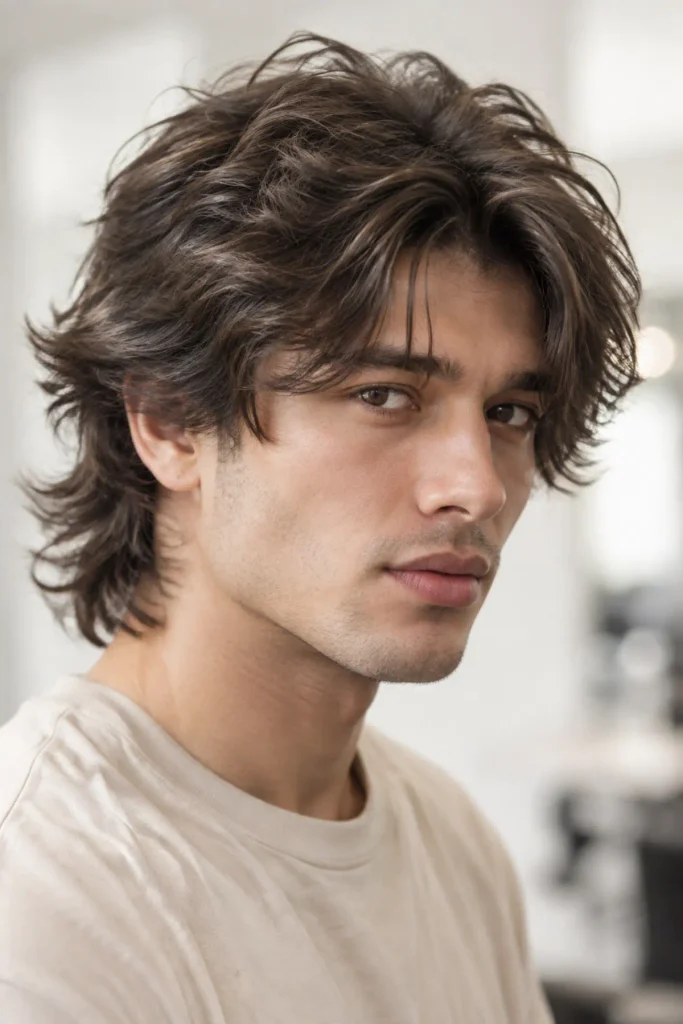
This is the balanced, original version, with choppy layers on top and a moderate length drop at the back. It works well on wavy or thick hair and suits most face shapes without much adjustment. Maintenance sits in the moderate range, needing a trim roughly every six to eight weeks and occasional styling to keep the crown volume looking intentional rather than flat.
2. Short Wolf Cut

A trimmed-down take with less length at the back and noticeably less choppiness than the classic version. It suits straight, wavy, or thick hair equally well and appeals to guys who want the wolf cut look without a heavy daily styling routine. Low maintenance overall, with trims needed every four to six weeks to keep the shorter shape sharp.
3. Long Wolf Cut

This version pushes length and drama at the back while keeping heavy, face-framing layers up top. Thick, wavy, or curly hair carries it best, since there is enough natural body to support the extra length. Maintenance is genuinely low once grown in, with trims spaced eight to ten weeks apart, though reaching the length takes real patience.
4. Shaggy Wolf Cut
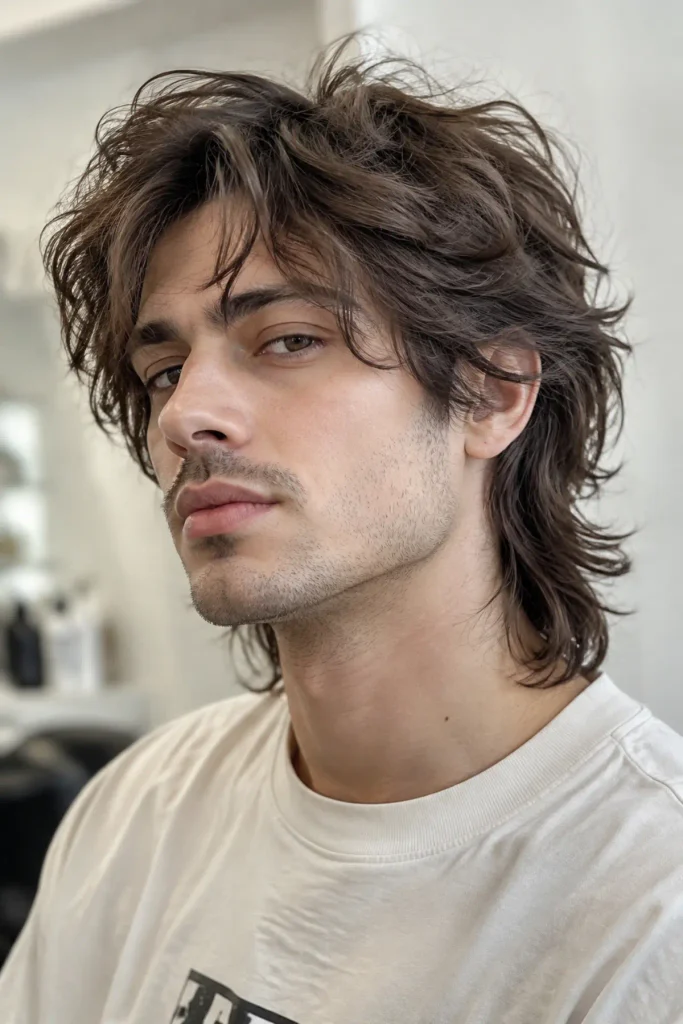
Extra choppy, heavily razor-textured layers create a deliberately undone, lived-in finish. Medium to thick hair responds best to the technique, since the added weight removal needs enough density to work with. It sits at moderate maintenance, wanting regular product use to keep the texture from settling flat between trims.
5. Wolf Cut with Curtain Bangs
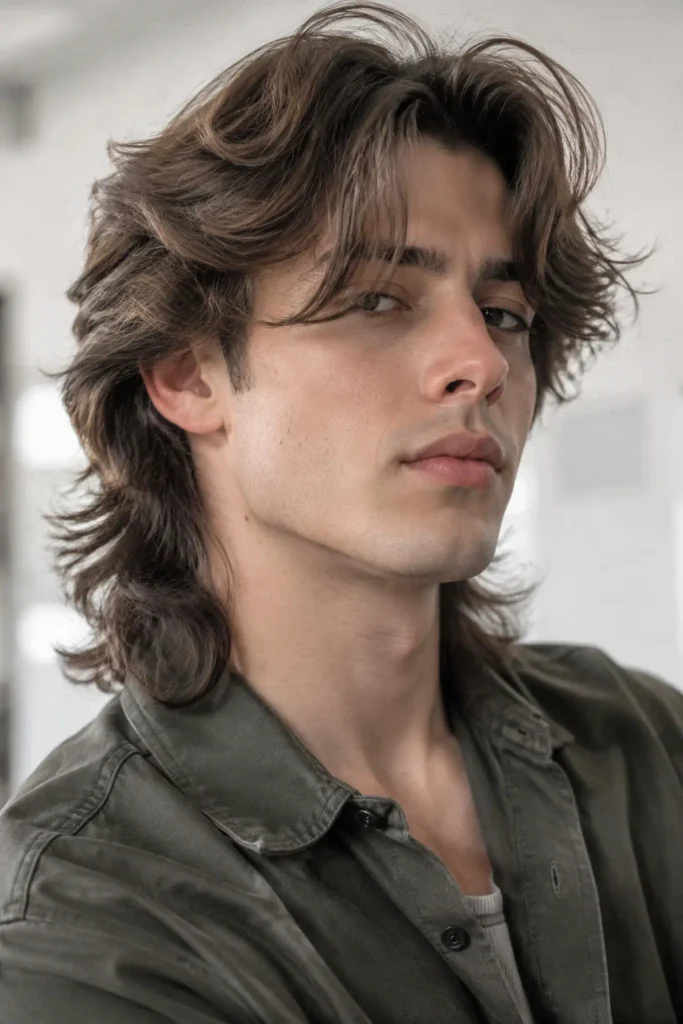
A center-parted fringe is added to the layered wolf cut base, softening the front and framing the face. It flatters square, rectangular, and heart face shapes especially well by adding width near the temples. Maintenance runs moderate, since the bangs need occasional trims of their own to stay at the right length.
6. Wolf Cut with a Fade or Skin Taper
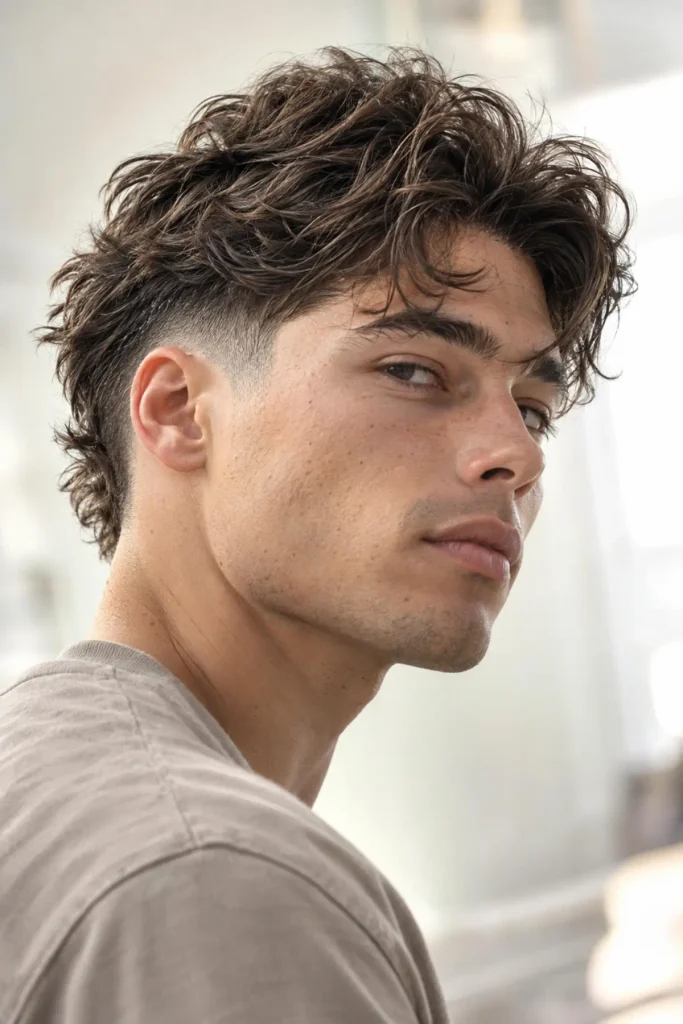
Clean, faded sides are paired with a longer, heavily layered top for a sharper overall silhouette. This suits guys who want more contrast and structure than a fully natural wolf cut offers. The sides need low maintenance between visits, while the top still asks for moderate daily styling attention.
7. Wolf Cut Mullet

This leans harder into the mullet influence, with a more dramatic, obvious length break between the top and the back. It works best on guys who already feel confident wearing a bold, statement haircut. Maintenance is moderate, and the dramatic length difference means grow out changes the shape noticeably faster than subtler versions.
8. Korean Wolf Cut

A softer, more polished take with less choppiness and smoother, more flowing layers throughout. Straight or wavy hair suits it particularly well, and it appeals to guys who want a refined finish rather than a rougher, rock-and-roll edge. Maintenance sits low to moderate, with a lighter daily styling routine than most other versions.
9. Curly Wolf Cut
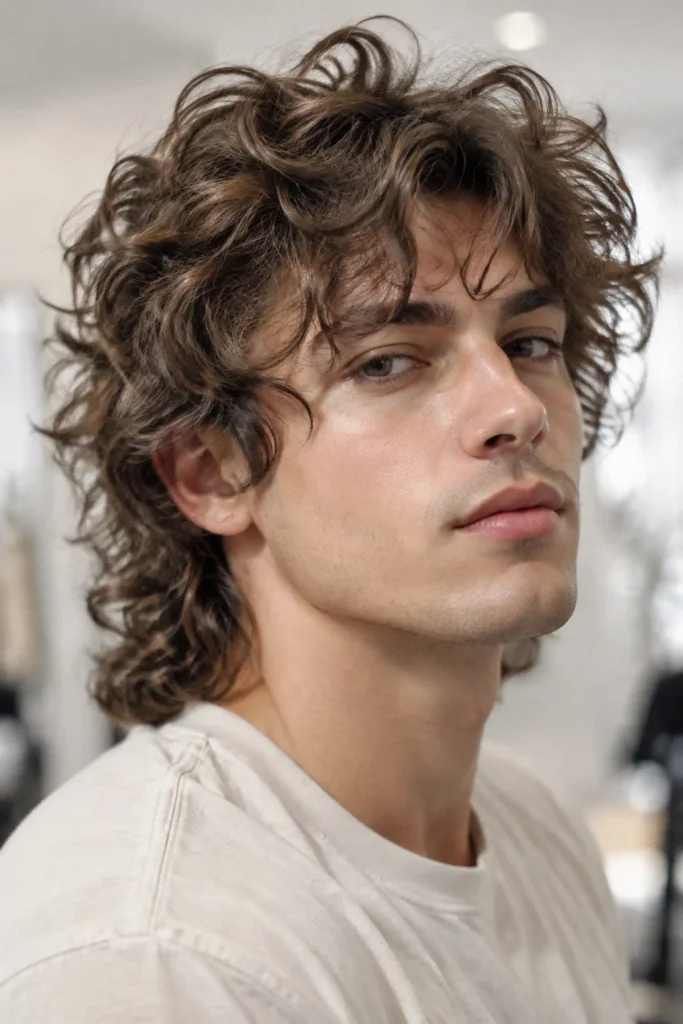
Layers here are cut specifically to work with a natural curl pattern instead of fighting it, removing bulk while keeping shape. Curly and coily hair are the ideal match, since the existing texture does most of the visual work. Maintenance is low, often needing little more than a curl cream and air drying.
10. Textured or Layered Wolf Cut
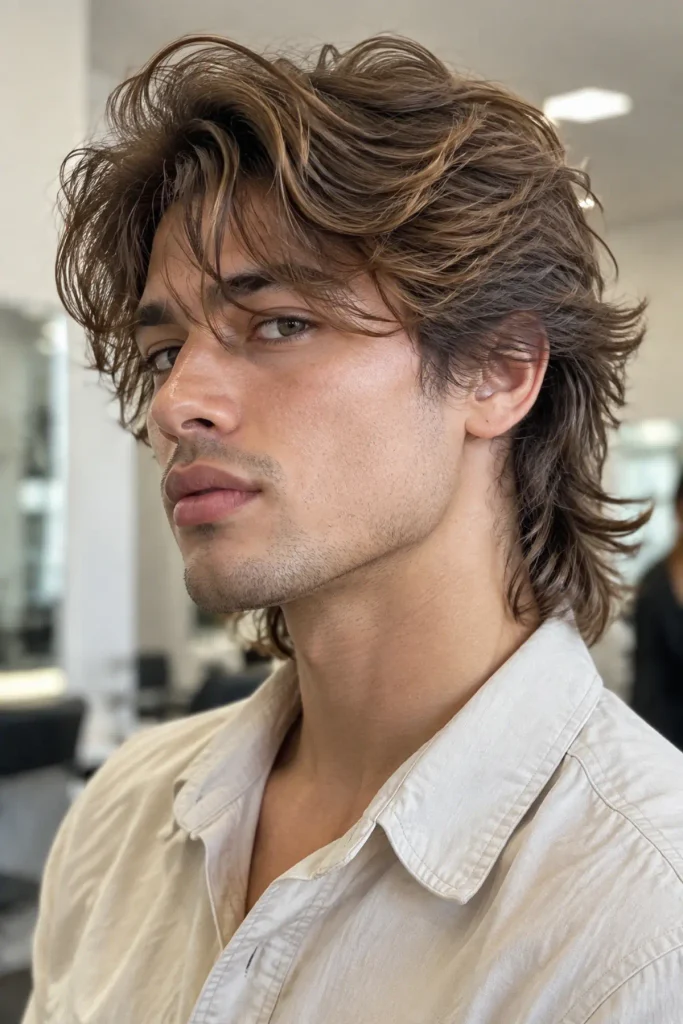
Heavy point cutting and razor work run throughout the whole head for maximum texture and movement. It suits straight hair that needs extra help holding shape, as well as curly hair looking for even more definition and bounce. Moderate maintenance applies, with regular product use needed to keep the texture visible.
11. Wolf Cut with Sideburns
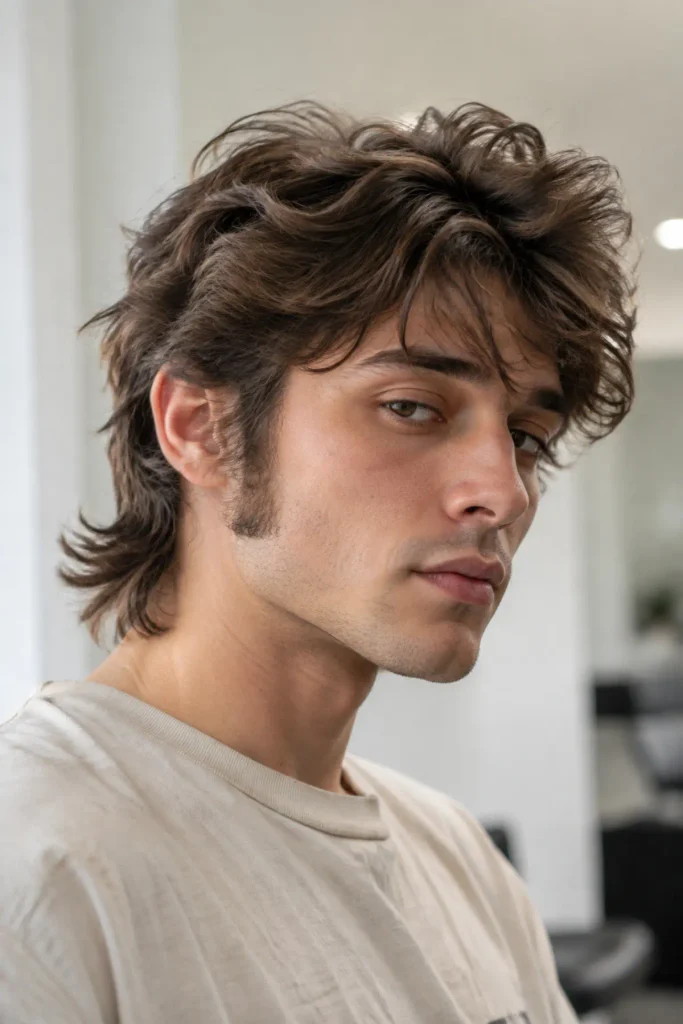
Longer, clearly defined sideburns are paired with the classic layered wolf cut shape for a more structured, intentional finish. Thick or wavy hair suits this best, since the sideburns need enough density to read clearly against the rest of the cut. Maintenance is moderate, with sideburns needing their own upkeep between full trims.
12. No-Mullet Wolf Cut

This keeps all the volume and texture of a wolf cut while removing the dramatic length break at the back that reads as mullet-like. It appeals to guys who want the trend without that specific association. Maintenance stays low, and the more even length distribution makes grow out especially forgiving.
13. Wolf Cut with a Perm
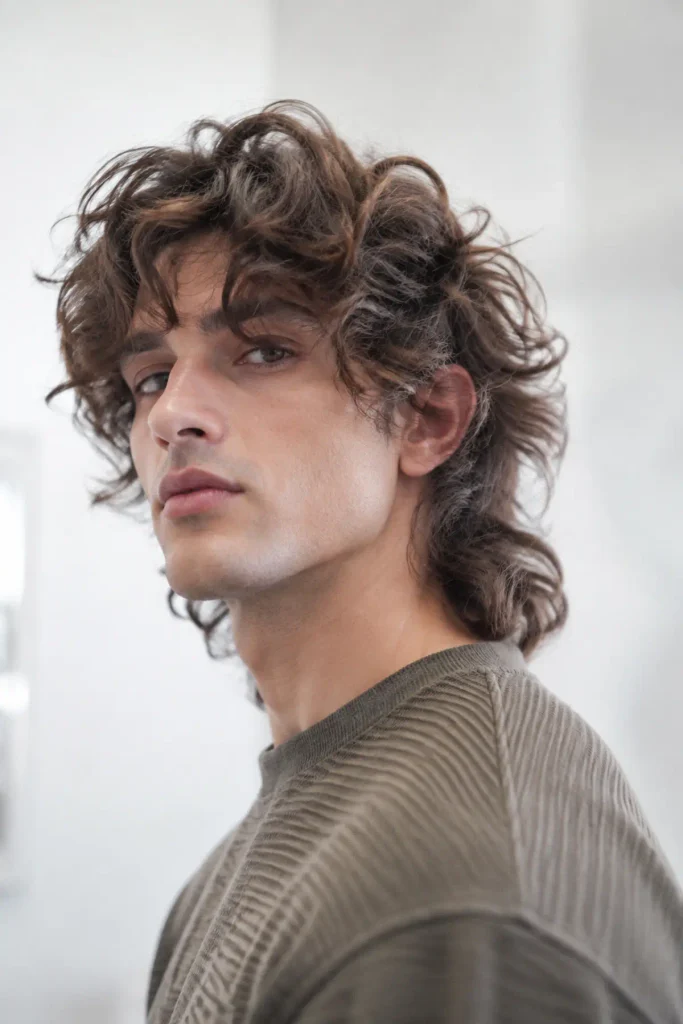
A light, textured perm is added to naturally straight hair to create the wave pattern the wolf cut relies on for volume. It suits guys with straight, fine hair who want a low-effort styling routine without daily blow drying. Maintenance is low day to day, though perm touch ups are typically needed every few months.
14. Disconnected Wolf Cut
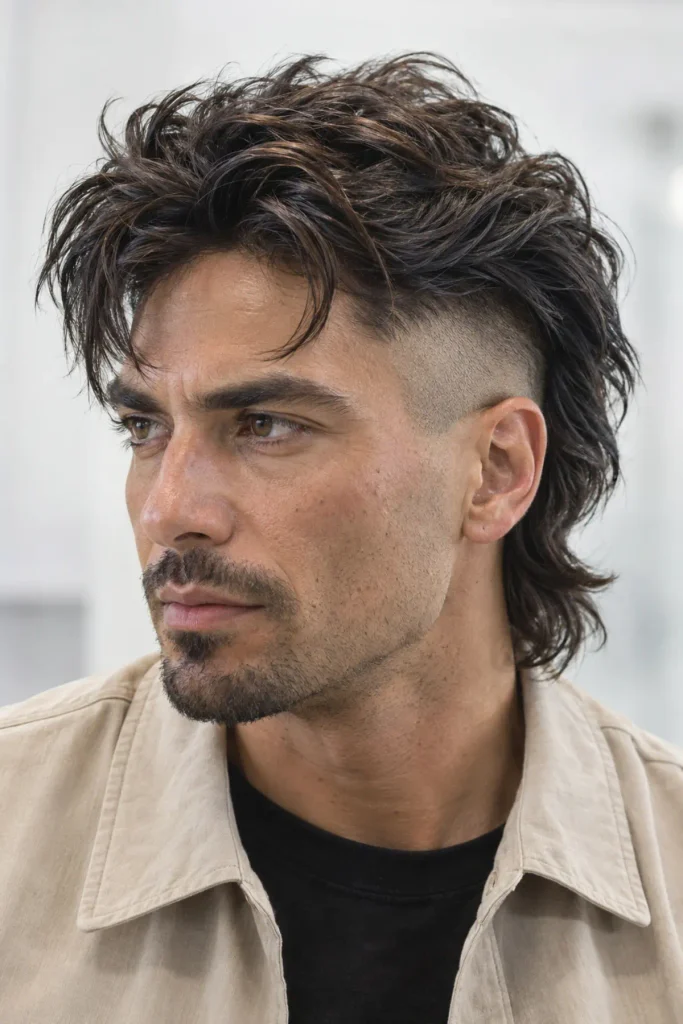
The sides are cut into a hard undercut with no gradual blend into the longer top, creating a bold, high-contrast look. Thick or coarse hair holds the disconnection cleanest, since there is enough volume up top to balance the shaved sides. Maintenance runs moderate, with the undercut portion needing more frequent upkeep than the rest.
15. Wolf Cut with Color or Highlights
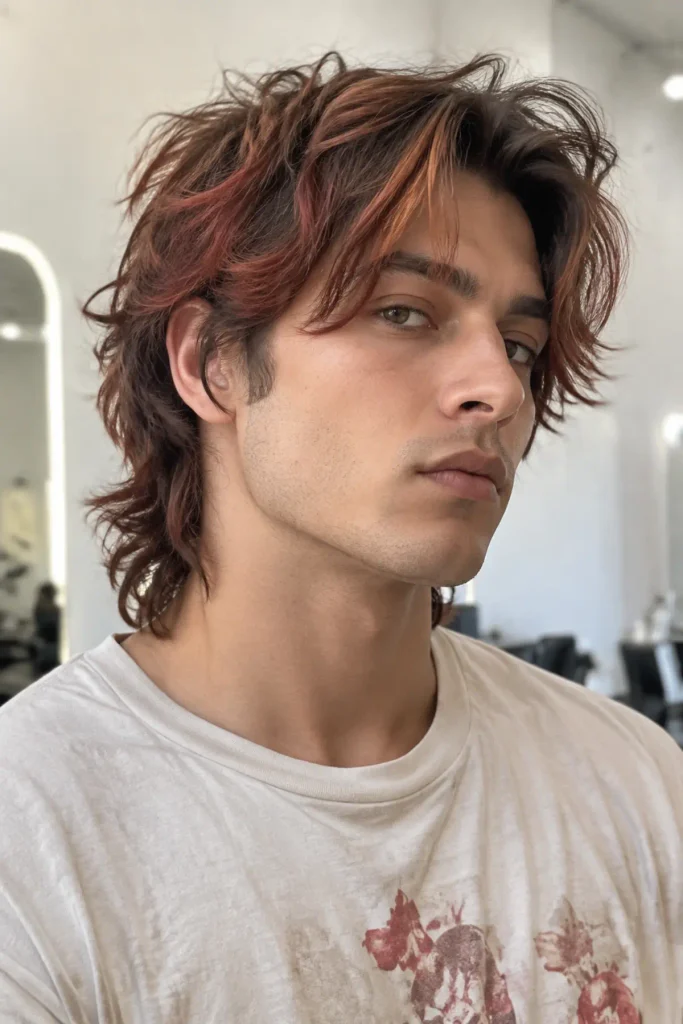
Subtle highlights, a root shadow, or a full color change is added over the same layered wolf cut shape to bring extra dimension to the texture. It works on any hair type that can safely handle color treatment. Maintenance is higher than an uncolored wolf cut, since color needs its own touch up schedule alongside regular trims.
Wolf Cut by Age
Teens and Guys in Their 20s
This is the age range the wolf cut was originally built around, and nearly every variation works well here, especially longer and shaggier versions. It pairs naturally with a more relaxed, experimental approach to styling.
Guys in Their 30s and 40s
A shorter or no-mullet wolf cut, or a version paired with a clean fade on the sides, tends to read as more polished and workplace-friendly while still keeping the texture and movement that make the style appealing.
Older Men and Men with Thinning Hair
The layering in a wolf cut can visually add fullness to hair that has started thinning at the crown, since shorter top layers create the appearance of density. It is not a fix for hair loss, but it is a genuinely flattering option for men managing early thinning who still want a textured, modern look rather than a very short crop.
How to Ask a Barber for a Wolf Cut
Barbers are generally familiar with the wolf cut by name at this point, but being specific avoids a result that misses the mark. A useful approach is to describe the shape in parts rather than relying on the name alone.
- Ask for choppy layers at the crown to build volume and height on top.
- Ask for longer, feathered layers at the back that gradually blend rather than cut off sharply.
- Mention face-framing layers if a softer look around the temples and cheeks is wanted.
- Specify point cutting or razor cutting for wispy, textured ends, especially on straight hair.
- Clarify the sides: fade, taper, or left natural and simply blended into the length.
- State the desired length up front, and mention whether bangs or a fringe are wanted.
- Bring one or two reference photos. Even a well-described cut benefits from a visual.
It also helps to mention how much daily styling time is realistic. A barber who knows the goal is a low-effort, wash-and-go result will cut it differently than one told the plan is to style it every morning.
How to Style a Wolf Cut, Step by Step
For Straight Hair
- Apply a texturizing or sea salt spray to damp hair.
- Blow dry using fingers to lift the roots and build volume at the crown.
- Add a small amount of matte pomade or clay through the mid-lengths and ends.
- Finish with a light-hold hairspray to lock in the shape without stiffness.
For Wavy or Curly Hair
- Apply a curl cream or lightweight gel to damp hair.
- Air dry or diffuse on low heat, scrunching gently to encourage natural texture.
- Use fingers rather than a brush to separate curls once dry, avoiding a helmet-like clump.
- Add a touch of dry texturizing spray if extra hold or separation is needed later in the day.
Best Products to Keep on Hand
- Sea salt or texturizing spray, for natural-looking volume
- Matte pomade or clay, for light hold without shine
- Curl cream or leave-in conditioner, for wavy, curly, and coily textures
- Light-hold hairspray, to finish without stiffening the texture
- Dry shampoo, to refresh volume between washes
Wolf Cut Maintenance: Trims and Grow-Out
| Hair Length | Recommended Trim Frequency |
|---|---|
| Short wolf cut | Every 4 to 6 weeks |
| Medium wolf cut | Every 6 to 8 weeks |
| Long wolf cut | Every 8 to 10 weeks |
The grow-out process is one of the wolf cut’s genuine advantages. In the first two to four weeks after a cut, the layers sit sharp and defined. Between roughly four and eight weeks, the shape softens and loosens in a way that still looks intentional rather than overgrown, which is part of why this cut is popular with guys who do not want to visit the barbershop constantly. Past about ten to twelve weeks without a trim, the layers start drifting toward a fuller mullet or shag shape. That is not necessarily a problem, since plenty of guys let it happen on purpose, but it is worth knowing in advance so the grow-out is a choice rather than a surprise.
Mistakes to Avoid With a Wolf Cut
- Skipping the reference photo. Even a clear verbal description leaves room for interpretation, and a photo removes the guesswork.
- Going too short on the sides for the desired look. A wolf cut needs enough length at the back and sides to create the length contrast the style is built around.
- Choosing a very long, dramatic version with fine, straight hair and no styling routine. Without volume-building products, longer versions can fall flat quickly.
- Over-applying product on thick or curly hair, which weighs down the natural texture the cut is designed to show off.
- Skipping trims entirely and letting the shape collapse into an unintentional, unkempt look rather than a deliberate grow-out.
- Assuming a wolf cut is a fix for hair loss. It can visually soften thinning at the crown, but it does not restore density.
Pros and Cons of the Wolf Cut
| Pros | Cons |
|---|---|
| Works across straight, wavy, curly, and coily hair | Fine, straight hair needs regular styling to avoid looking flat |
| Grows out gracefully compared to fades or sharp shapes | Not a wash-and-go style; some product and blow drying is usually needed |
| Can visually soften early thinning at the crown | A poorly cut version can look genuinely messy rather than intentional |
| Flexible: can be dialed up dramatic or down to subtle | Requires a barber comfortable with heavy layering and texturizing |
| Fewer barbershop visits needed than a fade | Longer versions take time and patience to grow into |
Is a Wolf Cut Professional or Workplace Appropriate?
A shorter, more controlled wolf cut, especially one paired with a clean taper or fade on the sides, generally reads as workplace-appropriate in most modern offices. Longer, shaggier, or more dramatic mullet-leaning versions lean more casual and creative, and may stand out more in conservative or client-facing roles. Mentioning the workplace to a barber ahead of time is an easy way to make sure the cut lands on the more polished end of the spectrum without losing the texture that makes it a wolf cut in the first place.
FAQs
What is a wolf cut for men?
A wolf cut is a heavily layered men’s haircut that combines the length contrast of a mullet with the textured, feathered look of a shag. It features short, choppy layers on top and longer layers at the back and sides.
What’s the difference between a wolf cut and a mullet?
A mullet has a sharp, obvious break between a short top and a long back. A wolf cut blends that same length contrast more gradually, with heavier layering throughout, so the transition feels smoother and less dramatic than a classic mullet.
Does a wolf cut work with straight hair?
Yes, though straight hair needs more help from styling products, such as a texturizing spray and a proper blow dry, to build the volume the cut is designed around. Without that step, straight versions can look flatter than intended.
Does a wolf cut work for thinning hair?
It can help visually. The shorter, layered top adds the appearance of fullness at the crown, which can soften early thinning. It does not restore hair density, but it is a genuinely flattering option compared to very short, exposing cuts.
How do you ask a barber for a wolf cut?
Describe it in parts: choppy layers at the crown for volume, longer feathered layers at the back, face-framing pieces if wanted, and whether the sides should be faded, tapered, or left natural. Bringing a reference photo helps avoid miscommunication.
How often does a wolf cut need to be trimmed?
Roughly every 4 to 6 weeks for a short wolf cut, every 6 to 8 weeks for a medium-length version, and every 8 to 10 weeks for a longer wolf cut, depending on hair growth rate.
Is a wolf cut still trendy?
The wolf cut has moved past being a short-lived TikTok trend and become a mainstream, requestable style at most barbershops. It is no longer new, but it remains a common and widely understood request.
Can a wolf cut be paired with a fade?
Yes. A wolf cut with a fade or skin taper keeps the layered, textured top while cleaning up the sides for a sharper, more structured overall look.
Is a wolf cut appropriate for work?
Shorter, more controlled versions, especially paired with a clean taper or fade, generally read as workplace-appropriate. Longer, shaggier versions lean more casual.
How much does a wolf cut typically cost?
Pricing usually lines up with a standard men’s haircut that includes layering and texturizing, and can run slightly higher than a basic clipper cut because of the extra cutting time the layering requires.
Final Verdict: Should Someone Get a Wolf Cut?
The wolf cut earns its popularity honestly. It works across a wide range of hair types and face shapes, it grows out more gracefully than most trend haircuts, and it offers real flexibility between a subtle, workplace-friendly version and a full, dramatic statement. The main requirement is honesty about hair type and styling habits going in. Guys with wavy, thick, curly, or coily hair will likely get the most natural-looking results with the least effort, while guys with fine, straight hair can absolutely make it work, but should plan on a few extra minutes with a texturizing product and a blow dryer. Choosing the right variation for face shape and being specific with the barber are what separate a wolf cut that looks sharp for months from one that looks like a mullet nobody finished.
8 thoughts on “Wolf Cut for Men: The Complete Guide to Styles, Face Shapes and Maintenance”