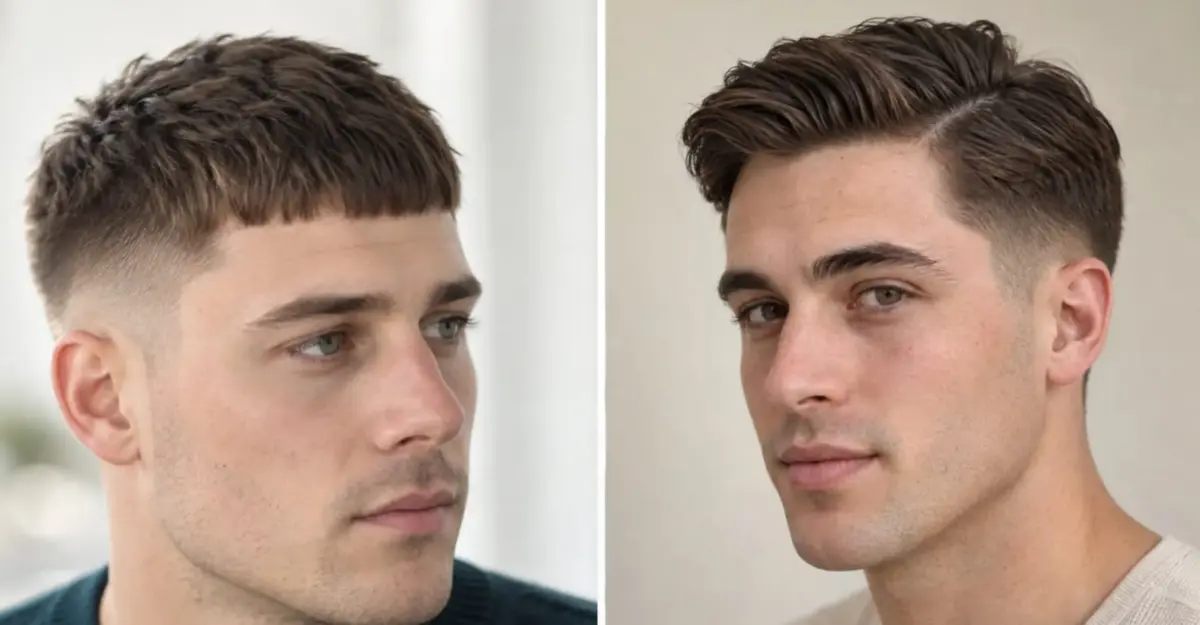
A mid fade is a men’s cut where the sides and back taper from long to short starting around the temple — roughly halfway between the ears and the top of the head. It sits right between a low fade and a high fade, which is exactly why barbers recommend it so often: it suits nearly every face shape and hair type. Most guys get it touched up every two to three weeks, and it usually costs ten to twenty dollars more than a basic haircut.
Ask any working barber which fade gets requested the most and the mid fade comes up first, almost every time. It flatters more faces than a low fade or a high fade, it stays sharp for weeks instead of days, and it works under pretty much any top style you can think of, from a buzz cut to a full pompadour. Some guys even keep it long on top and pair it with a man bun hairstyle for extra length. Below are 22 real, barber-tested mid fade haircuts, plus the practical stuff most guides skip: honest face-shape and hair-type matching, real national pricing, a maintenance schedule for each variation, and exactly what to tell your barber so you don’t walk out disappointed.
Table of Contents
Fade Comparison at a Glance
Before picking a style, it helps to see how the mid fade stacks up against its closest relatives. Quick reference for anyone torn between a low, mid, or high fade:
| Fade Type | Where It Starts | Best For | Typical Maintenance |
|---|---|---|---|
| Low fade | Just above the ears | Conservative workplaces, first-time fade wearers | 3 to 4 weeks |
| Mid fade | Temple level, halfway up the head | Most face shapes and hair types | 2 to 3 weeks |
| High fade | Above the temple, near the crown | Bold, high-contrast looks | 1 to 2 weeks |
| Mid skin fade | Temple level, down to bare skin | Maximum contrast and sharpness | 10 to 14 days |
| Mid taper fade | Temple level, stops short of skin | Softer, low-key, easy grow-out | 4 to 5 weeks |
What Is a Mid Fade Haircut?
A mid fade is a men’s haircut where the hair gets gradually shorter from the top of the head down through the sides and back, with the fade itself starting at temple level — about halfway between the hairline at the ears and the crown. That’s where the name comes from.
It’s short enough to create real contrast against the top, but not so high that it reshapes the whole haircut the way a high fade does. And because the fade sits in the middle of the head, a good barber can lean it more conservative (closer to a low fade) or more dramatic (closer to a high fade) depending on your hair type, face shape, and how often you plan to come back. That flexibility is the whole reason it dominates barbershop requests across just about every hair type and age group.
Skin Fade or Taper? The First Decision
Before you pick a look, settle one question first: should the fade go all the way down to bare skin, or stop a little short? A mid skin fade blends down to nothing at the bottom — sharpest possible contrast, shortest grow-out window. A mid taper fade keeps a little hair even at its shortest point, which reads softer and holds its shape noticeably longer between visits.
Barbers describe the finish using clipper guard numbers, zero up to four, lower meaning shorter. If you’ve never had to specify a guard length before, a quick primer on clipper guard sizing makes that barbershop conversation a lot easier.
22 Best Mid Fade Haircuts for Men
Who each style tends to suit, how to style it, and what to actually say in the chair.
Mid Fade Side Part
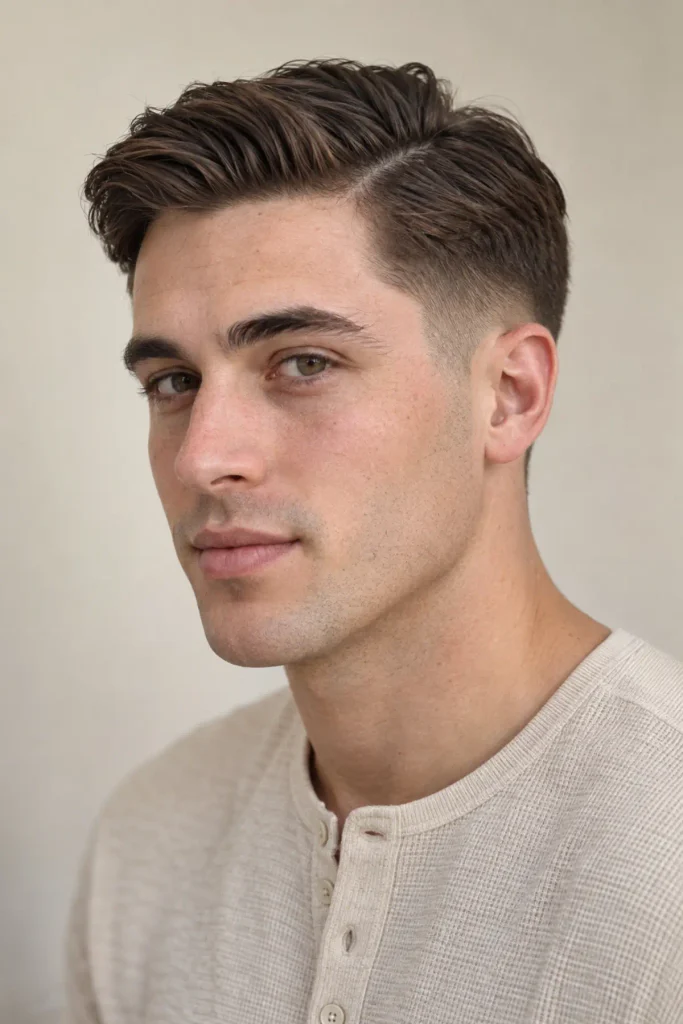
Clean temple-level fade, defined part combed into the top. A classic for a reason — it works especially well on oval, square, and heart-shaped faces and holds up nicely on straight or wavy hair. A little pomade or cream keeps the part crisp all day. Tell your barber you want a mid fade with a side part, and mention whether a natural or shaved line looks cleanest against your hairline.
Maintenance: Every 2 to 3 weeks
Mid Skin Fade
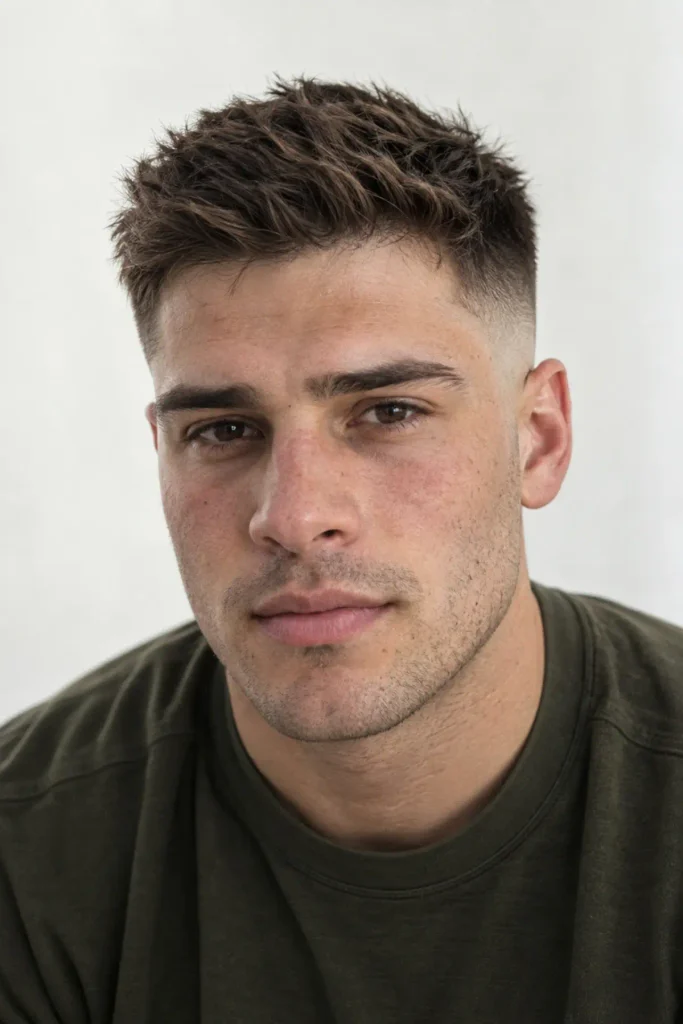
This one takes the taper all the way down to bare skin at the bottom, which gives you the sharpest contrast on this list. Suits most face shapes and looks especially clean on thick or straight hair that holds a defined edge. The trade-off: bare skin shows the moment it grows in, so this is the highest-maintenance style here. Just ask for a mid skin fade, blended all the way down to bare skin.
Maintenance: Every 10 to 14 days
Mid Taper Fade
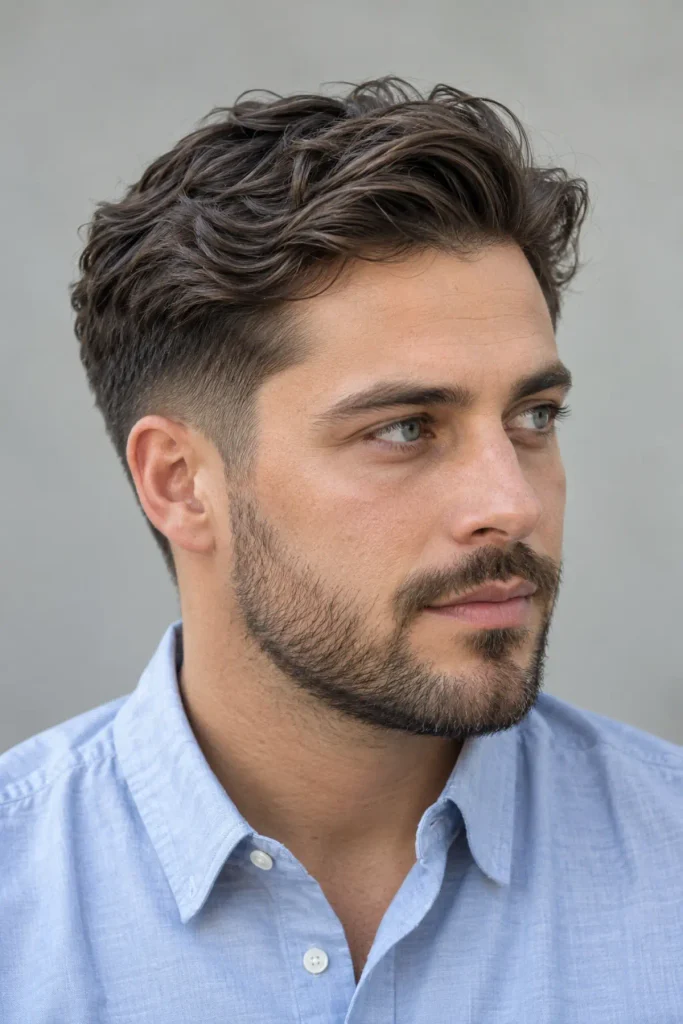
The taper softens everything by keeping a little length at the bottom instead of going to skin. It’s the most forgiving option as it grows out, which makes it the smart pick if you can only get to the barber once a month or so. Flatters square and longer face shapes especially well. Simple request: a mid taper, not a full skin fade — stopping short of the skin at the bottom.
Maintenance: Every 4 to 5 weeks
Mid Drop Fade
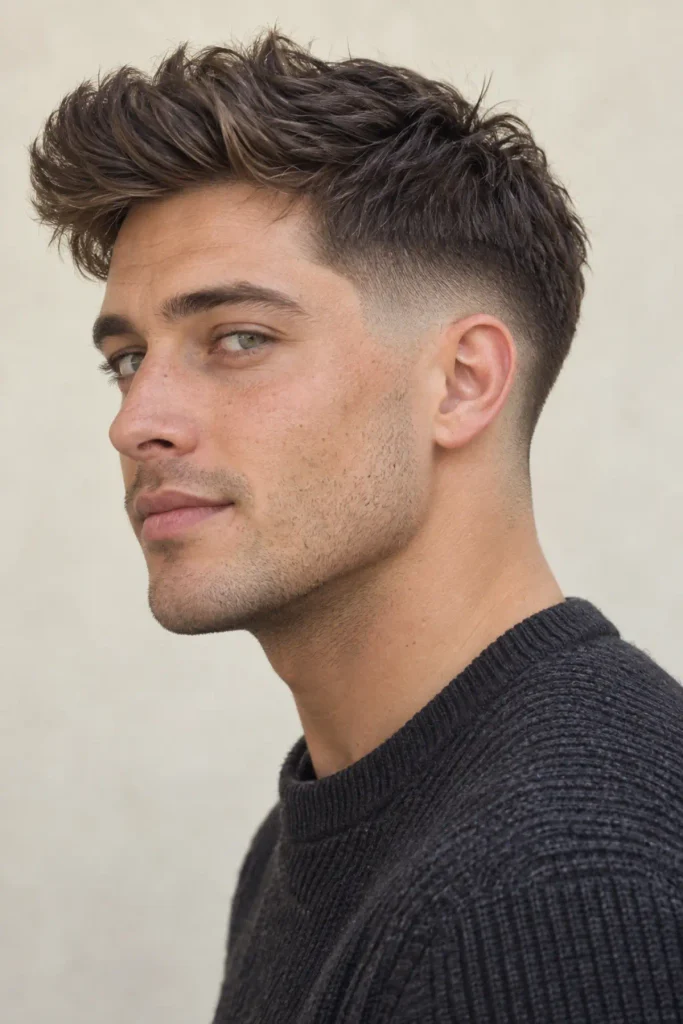
Instead of running straight across, a drop fade curves behind the ear, giving the cut a rounder, more natural outline. It pairs beautifully with pompadours, textured crops, and anything that needs extra room on top. Oval and square faces get the most out of that curve. Ask for a mid drop fade that curves behind the ear rather than staying straight.
Maintenance: Every 2 to 3 weeks
Mid Burst Fade
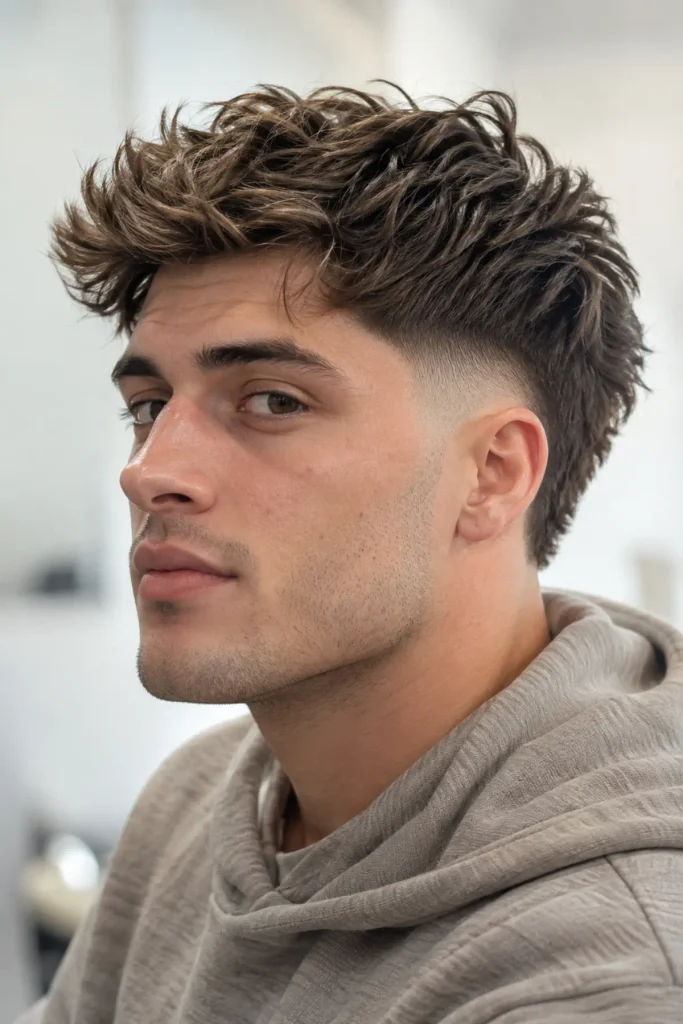
The burst fade fans out in a semicircle around the ear and leaves a bit more length at the back. Longtime favorite for mohawks, curly textures, and anyone who wants more shape than a straight fade line gives. Curly and coily hair shows it off best. “Mid burst fade, curving around the ear, back kept slightly longer” — that’s the whole brief.
Maintenance: Every 2 to 3 weeks
Mid Temple Fade

This one focuses the taper around the temples and hairline while leaving more length through the rest of the sides. It sharpens the frame around your face without taking off too much bulk — good for guys who want definition without an aggressive fade, and it pairs especially well with a beard. Ask for it sharp around the temples and hairline, sides kept a little longer everywhere else.
Maintenance: Every 2 to 3 weeks
Mid Fade Buzz Cut
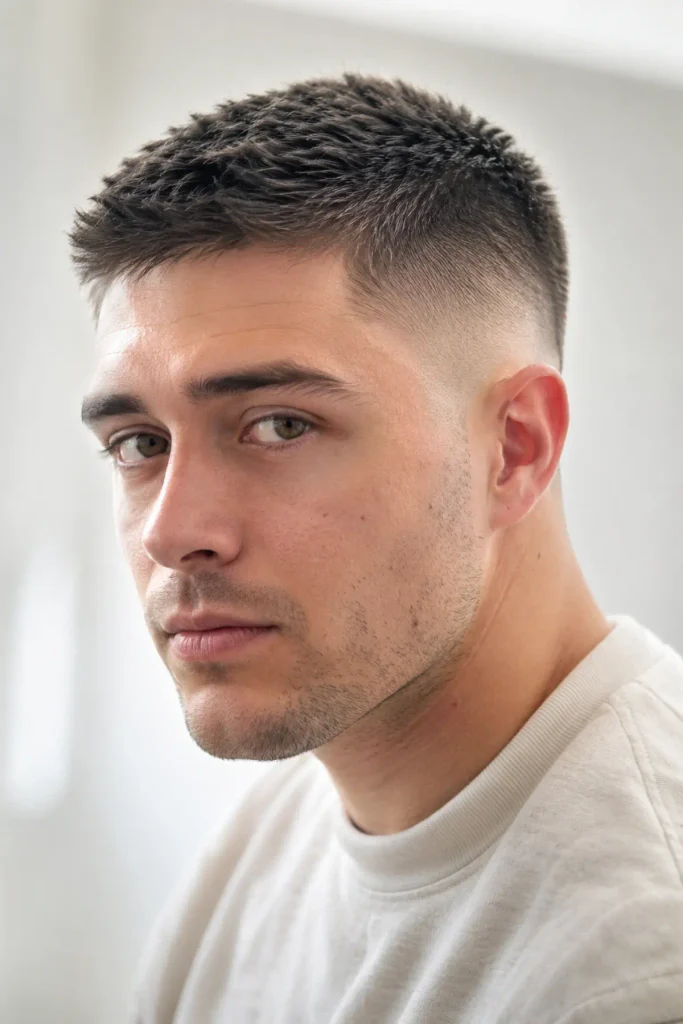
Top clipped short, usually a number two to four guard, sides tapering down from the temple. About as low-maintenance as a fade gets, since there’s nothing to style on top. Round faces benefit from the added definition on the sides. You barely need a script for this one: buzz cut on top, mid fade on the sides.
Maintenance: Every 2 weeks
Mid Fade Comb Over
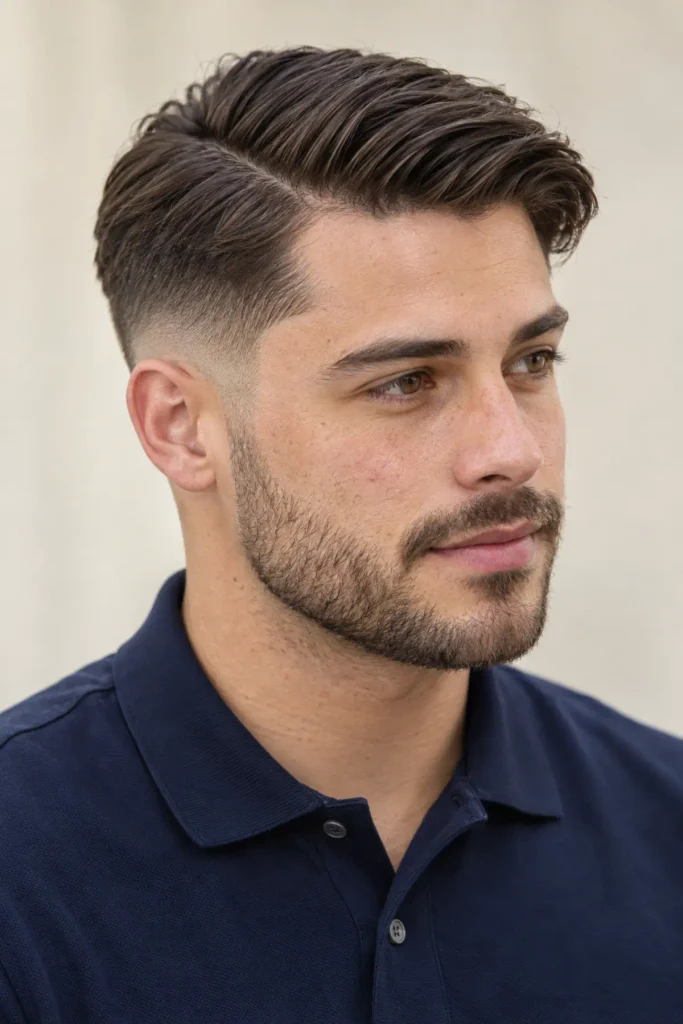
Temple-level fade with two to four inches on top, combed neatly to one side. Reads polished and professional, which makes it one of the safest picks for office environments. Oval, square, and heart-shaped faces all wear it well. Ask for a mid fade with a comb over, parted on your natural side.
Maintenance: Every 2 to 3 weeks
Mid Fade Textured Crop
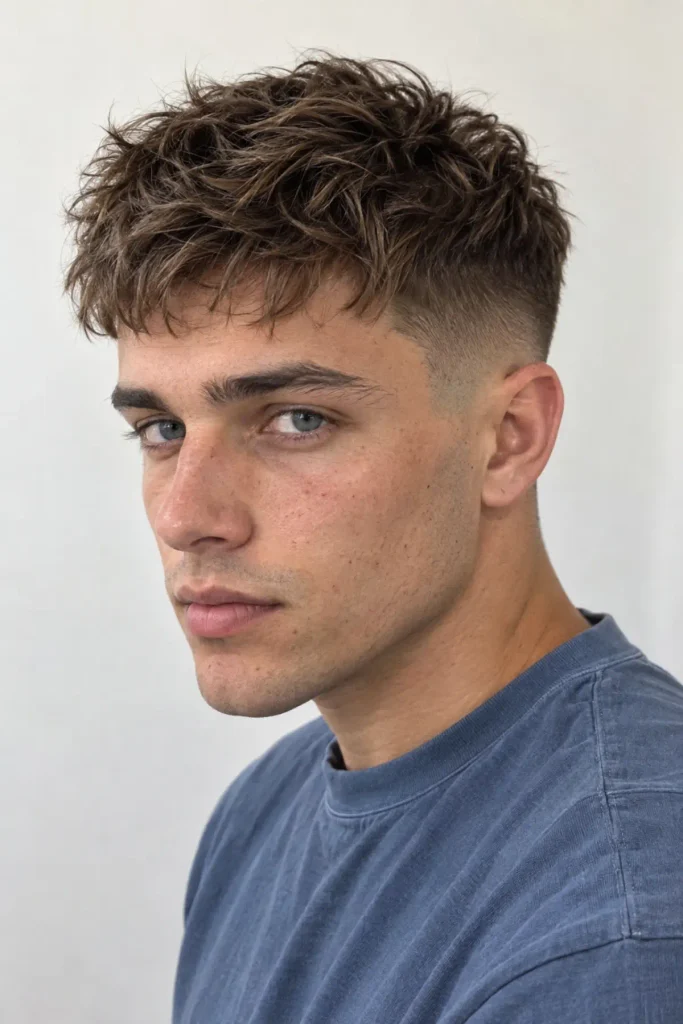
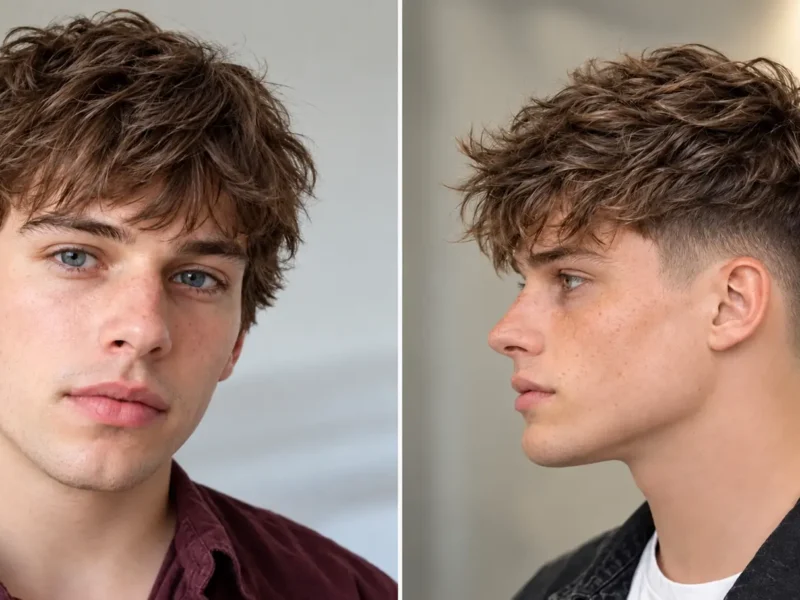
Short, choppy layers on top, clean mid fade on the sides — casual but sharp. Work a small amount of matte clay or paste through the top with your fingers and you’re done; it gives movement without looking overdone. Works across nearly every face shape and most hair textures. Tell your barber: textured crop on top with a mid fade, top kept choppy rather than heavy. If you want more length up top, these medium length haircuts for men have more ideas.
Maintenance: Every 3 weeks
Mid Fade Pompadour
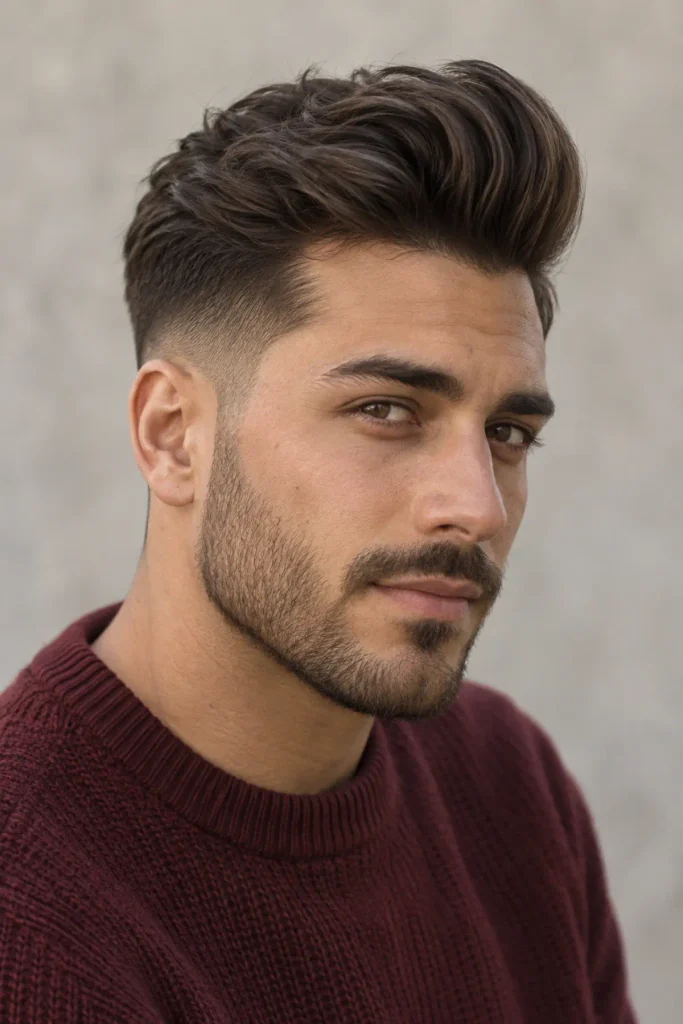
Four to six inches on top, blown up and back into that rounded shape, sides fading from around the ears. Bolder, more formal, and it suits oval and heart-shaped faces especially well. Fair warning: it takes more morning styling time than most cuts on this list. Ask for a mid fade pompadour with plenty of length up front for volume.
Maintenance: Every 2 to 3 weeks
Mid Fade Slick Back
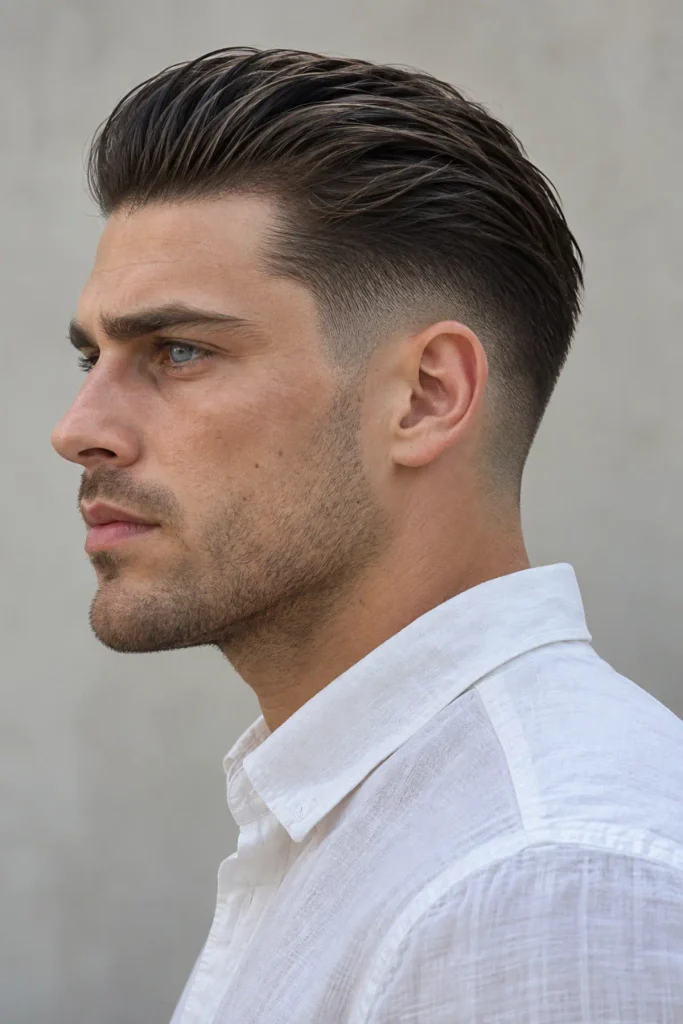
Three to five inches of top hair combed straight back for that sleek, classic finish, sides fading cleanly from the temple. Flatters oval and square faces and holds especially well on medium-to-thick straight hair. Pomade or a strong cream keeps it in place all day. “Mid fade slick back, enough length on top to comb straight back.”
Maintenance: Every 2 to 3 weeks
Mid Fade Quiff
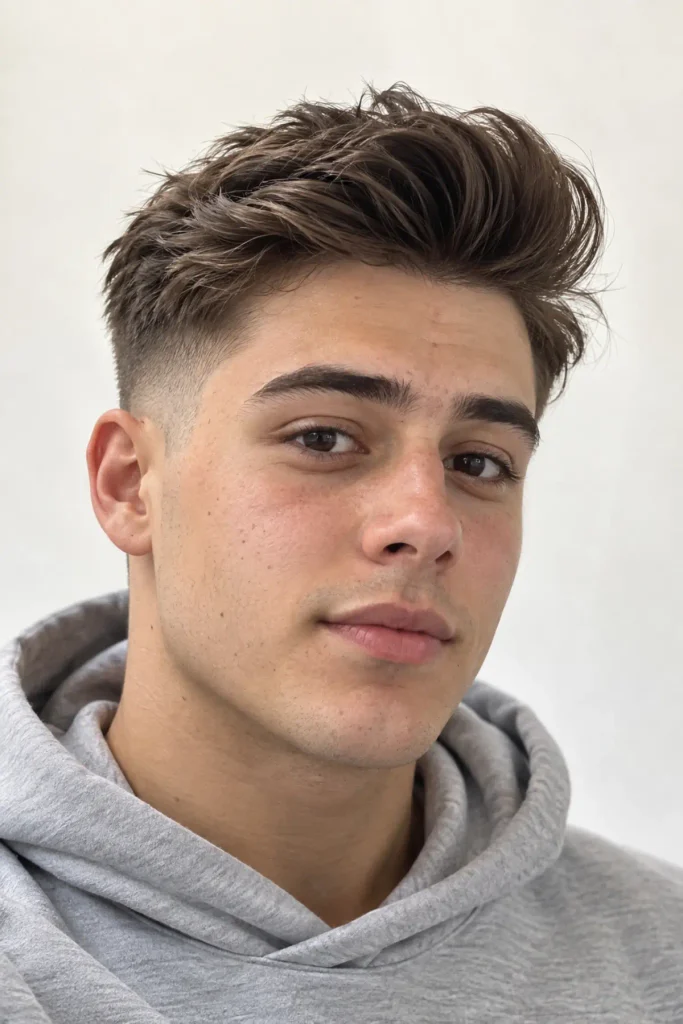
The quiff lifts the front section up and back into a contained wave, balanced by fading sides. Confident enough to stand out, still clean enough for most offices. Round and oval faces get the most out of the added height. Ask for a mid fade quiff with the length concentrated at the front for lift.
Maintenance: Every 2 to 3 weeks
Mid Fade Curly Top
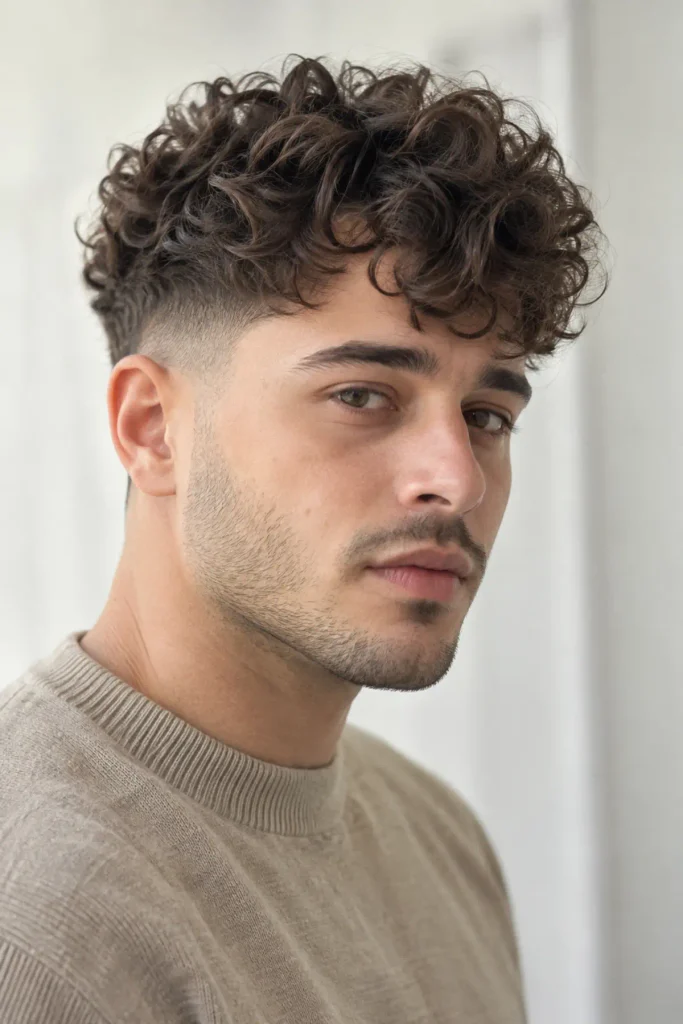
Natural curls kept full and defined on top, mid fade cleaning up the sides for contrast. One of the most requested combos for curly and coily hair — it controls the bulk on the sides without touching the curl pattern up top. Curl cream or defining gel on damp hair, then air-dried or diffused, keeps the curls looking their best. Make it clear to your barber: blend the fade into the curls, but the curl pattern on top stays untouched.
Maintenance: Every 2 to 3 weeks
Mid Fade Caesar Cut
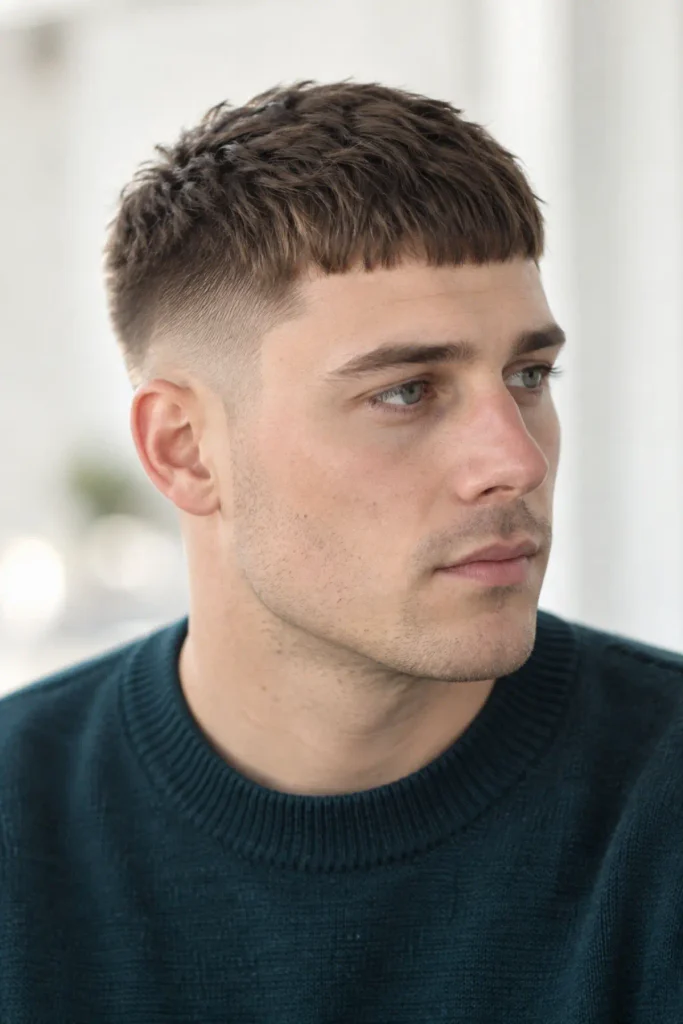
The classic Caesar — short, blunt fringe across the forehead, sides sharpened with a fade. Short, low-effort, and it looks polished the second you leave the chair. Especially good for fine or thinning hair, since short length hides thin areas better than longer styles do. It also sits well alongside other short haircuts for men with fine hair. Just ask for a Caesar on top with a mid fade on the sides.
Maintenance: Every 2 to 3 weeks
Mid Fade Faux Hawk

A ridge of height down the center of the head, sides fading down from the temple — the look of a mohawk without shaving the sides completely. Oval and round faces benefit from the extra height. Matte clay or paste, worked through with fingers, holds the shape. “Mid fade faux hawk, height through the center, sides faded clean.”
Maintenance: Every 2 to 3 weeks
Mid Burst Fade Mohawk
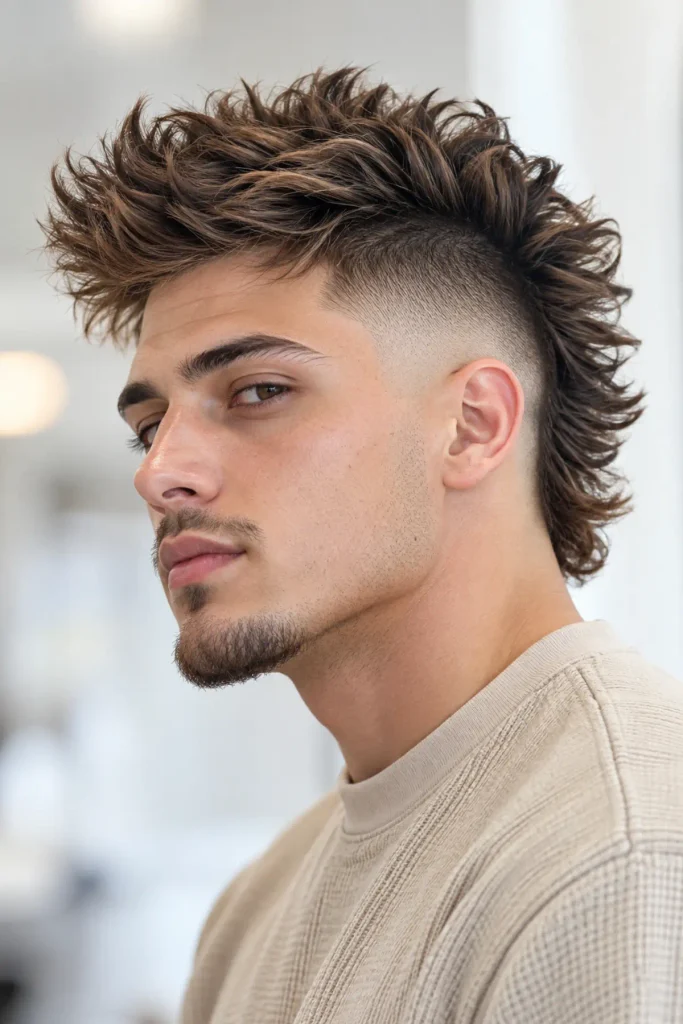
A true mohawk strip down the center with a burst fade curving around the ears. One of the bolder options here, and it tends to suit oval and square faces best. Curly hair can go natural through the center; straighter hair usually needs a strong-hold product for the spikes. This one’s a two-week commitment at most between cleanups.
Maintenance: Every 2 weeks
Mid Fade Mullet

The modern mullet keeps the sides sharp with a mid fade while leaving noticeably more length at the back. It’s become one of the most requested retro revivals in barbershops — especially among younger guys with wavy or curly hair — and sits close to a wolf cut for men in overall shape. The back needs fewer trims, though the fade itself still needs its usual refresh. Ask for a modern mullet with a mid fade, back kept longer than the sides.
Maintenance: Fade every 2 to 3 weeks
Mid Fade Hard Part
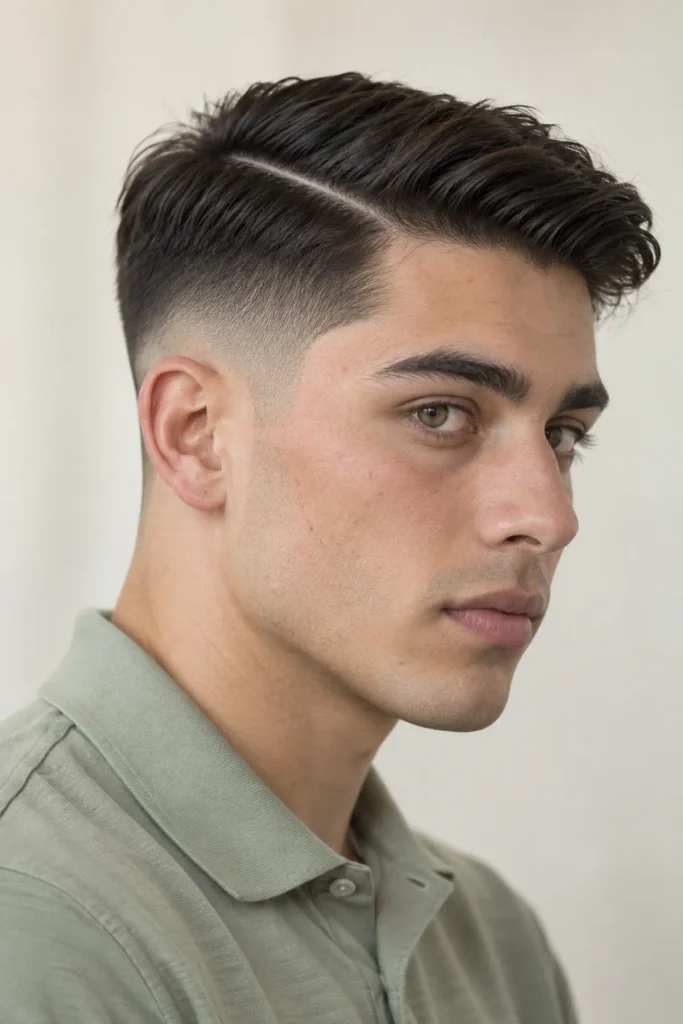
A thin shaved line separating the top from the sides gives an otherwise simple cut a sharper, more deliberate look. Pairs especially well with comb overs and textured crops, and straight or slightly wavy hair holds the part most cleanly. Ask for a mid fade with a hard part, shaved where your natural part falls.
Maintenance: Every 2 to 3 weeks
Mid Fade with Shaved Design
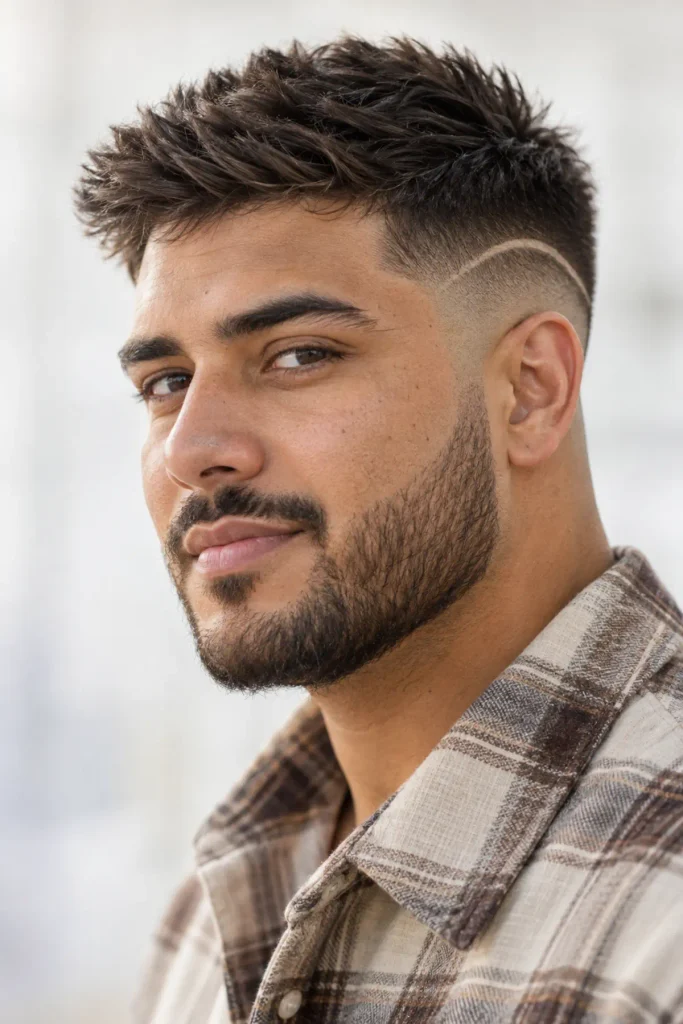
Turns the faded sides into a small canvas — lines, curves, geometric shapes. Works best on straight or wavy hair, where the lines stay crisp and visible. One catch: a design softens fast as hair grows in, so plan a touch-up within one to two weeks. Keep it simple — ask for a mid fade with a single understated line design on one side.
Maintenance: Every 1 to 2 weeks
Mid Fade Edgar Cut
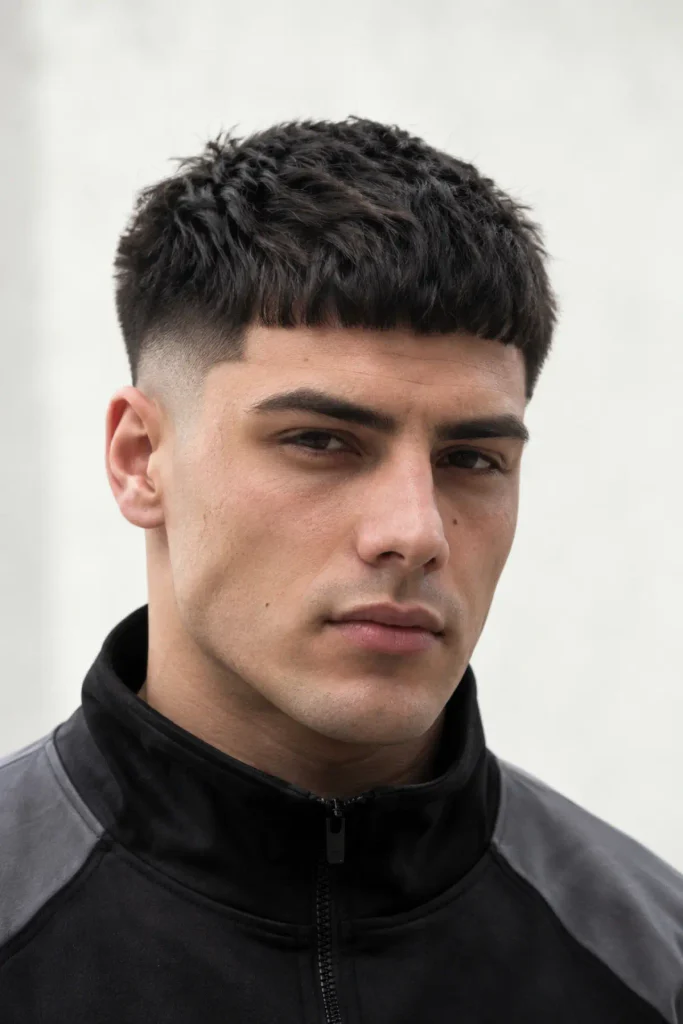
Straight, squared line across the front, mid fade on the sides. The Edgar has roots in Mexican American youth culture and has become one of the most requested cuts among younger men in recent years. It holds its shape well without much product and shows up most clearly on thicker, straighter hair. “Edgar cut with a mid fade, straight line across the front.”
Maintenance: Every 2 to 3 weeks
Mid Fade Two Block
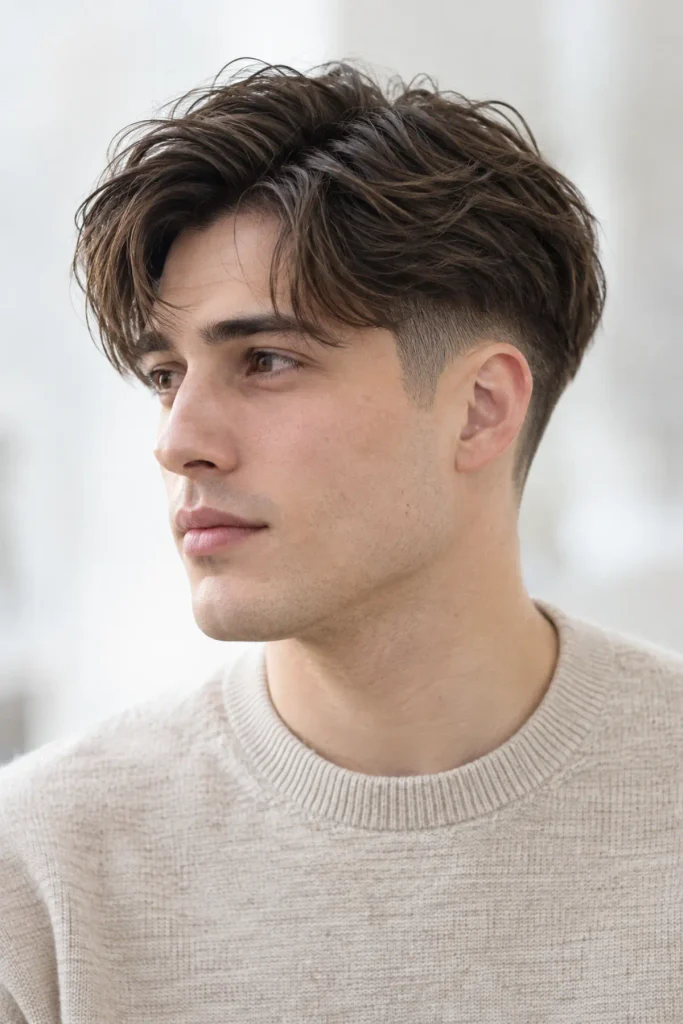
The two block is a Korean-inspired cut: noticeably longer, textured hair on top with a mid fade sharply contrasting the sides — similar in spirit to long layered hair for men. The visual jump between the two lengths is the whole point. Best on straight to wavy hair with enough thickness to hold shape on top. Ask for a two block: top kept long and textured over a mid fade.
Maintenance: Every 3 to 4 weeks
Mid Fade Waves
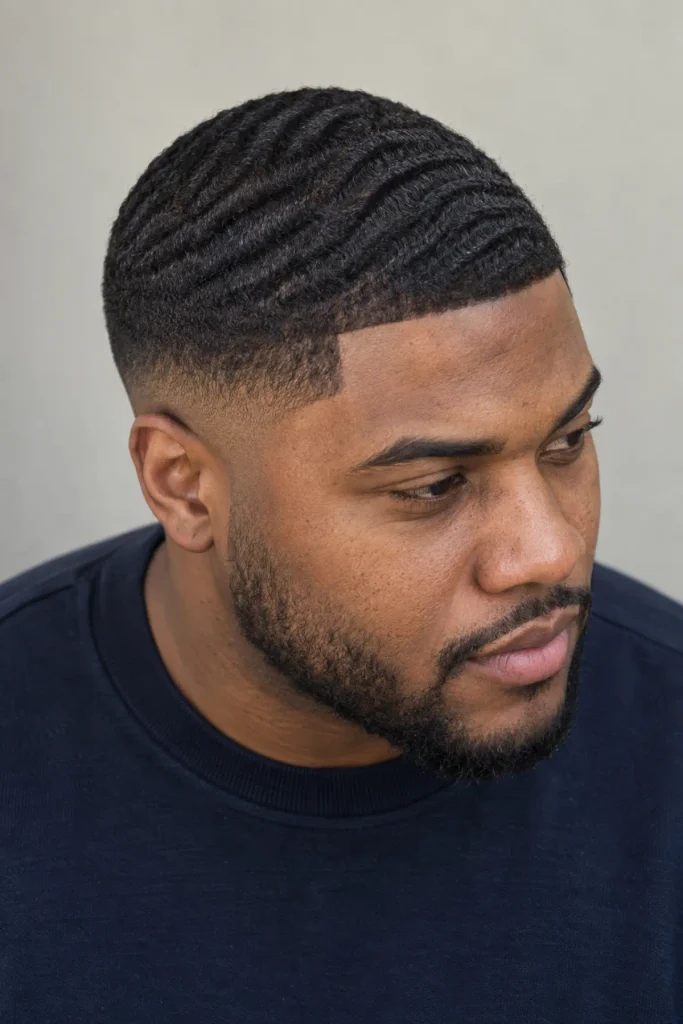
The ripple-like wave pattern brushed into coarse or curly hair, with a clean mid fade on the sides for contrast. A longtime favorite in Black barbershops. It does need daily brushing plus a durag or wave cap at night to keep the pattern defined — no way around that. Ask for a mid fade with waves on top, and keep brushing between visits.
Maintenance: Every 2 to 3 weeks
Best Mid Fade by Face Shape
A mid fade is forgiving on nearly every face shape, but a little matching still goes a long way. For cuts organized this way more broadly, see this guide to triangle face shape hairstyles.
- Round: add height on top — a quiff, pompadour, or faux hawk — so the fade doesn’t widen the face further.
- Oval: nearly everything on this list works, from a buzz cut to a slick back. Lucky you.
- Square: clean short tops like a Caesar or buzz cut, or a longer textured style to soften strong angles.
- Heart: a side part, comb over, or pompadour adds width up top and balances a narrower chin.
- Long or rectangular: keep the top at a moderate length rather than very tall, so the cut doesn’t add extra height.
- Diamond: a textured crop or curly top adds width right at the cheekbones.
Best Mid Fade by Hair Type and Density
Texture changes how a mid fade should be cut and styled just as much as face shape does. Guys working with curls specifically might also want to browse this guide to curly hairstyles for men.
- Straight hair: shows off the fade’s precision clearly; pairs well with structured tops like a side part, comb over, or slick back.
- Wavy hair: naturally stylish against a clean fade, especially with brushed-forward or textured tops.
- Curly hair: benefits from the contrast — clean sides let the curls on top stand out instead of blending into bulk.
- Coily hair: works well with fuller, sculptural tops and needs consistent hydration between visits to keep the texture defined.
- Thick hair: point cutting or thinning shears remove bulk so a longer top doesn’t look heavy.
- Fine or thin hair: shorter styles like a Caesar hide thin areas better than long, heavy tops do.
Quick Match Table: Face Shape and Hair Type Together
Want the fast answer without reading every section? This lines up face shape with the strongest mid fade pairings:
| Face Shape | Strongest Mid Fade Pairings |
|---|---|
| Round | Mid fade quiff, pompadour, or faux hawk. Extra height on top balances the roundness. |
| Oval | Nearly everything on this list, from a buzz cut to a slick back. |
| Square | Caesar cut or buzz cut for a clean look, textured crop for a softer one. |
| Heart | Side part, comb over, or pompadour — width up top balances a narrower chin. |
| Long or rectangular | Moderate length on top rather than very tall, like a textured crop. |
| Diamond | Curly top or textured crop adds width right at the cheekbones. |
Who Might Want to Think Twice About a Mid Fade
Most guides present the mid fade as a near-universal fit. It usually is — but an honest barber would flag a few exceptions before you book.
- If you can’t commit to a visit every two to three weeks, you’ll be happier long-term with a low fade or a mid taper. Both grow out far more gracefully than a skin fade.
- If your hairline is receding fast or thinning near the temples, talk to your barber about a lower fade height first. Strong contrast right at a receding hairline can draw more attention to it, not less.
- If you want zero daily styling time, go with a mid fade buzz cut or Caesar rather than the longer, product-dependent styles on this list.
How to Ask a Barber for a Mid Fade
A little prep before you sit in the chair goes a long way. Here’s the order that actually matters:
- Decide skin or taper first. This is the single biggest decision because it determines how often you’ll need a touch-up.
- Pick a variation. Standard, drop, burst, or temple fade changes the character of the cut more than the height does.
- Describe the top clearly. Bring a reference photo if you can — ideally someone with a similar hair type and texture to yours.
- Be honest about maintenance. A barber who knows you can only come back every five or six weeks will steer you toward a taper instead of a skin fade. No shame in it.
How Often a Mid Fade Needs a Touch-Up (and What It Actually Costs)
A mid fade looks sharpest in the first week or two, starts to soften by week three, and generally needs a refresh by week four to six depending on the variation. According to national men’s haircut pricing data, a standard barbershop haircut in the US typically costs between thirty and forty-five dollars, with plenty of regional variation. Fades usually add another ten to twenty dollars on top of a basic cut because of the extra blending time and skill involved — which puts a typical mid fade somewhere between thirty-five and sixty-five dollars depending on the city, the barbershop tier, and the finish.
If you want a lower-cost, lower-effort routine overall, this guide to low maintenance haircuts for men covers styles built around fewer barbershop visits.
How to Style a Mid Fade at Home
The sides are already clean, so styling a mid fade mostly comes down to the top:
- Wash or rinse, then towel-dry until damp rather than soaking wet.
- Work a small amount of product through the top with your palms.
- Style with fingers, a comb, or a brush depending on the look you want.
- Short tops like a buzz cut or Caesar need only a pea-sized amount of matte clay — or nothing at all.
- Medium tops like a textured crop or comb over hold best with matte clay or paste, blow-dried first for extra lift.
- Curly tops respond best to curl cream on damp hair, then air-dried or diffused.
- Slicked tops like a slick back or side part need pomade and a fine-toothed comb for a smooth, controlled finish.
Pairing a Mid Fade with a Beard
A sharp, fresh mid fade next to an overgrown, untrimmed beard looks unbalanced rather than intentional — like you only finished half the job. Get both trimmed in the same visit to keep the proportions consistent, and match the beard’s density to the haircut’s overall formality: tighter and more defined for a comb over, a bit more relaxed for a curly top or mullet. For more ideas, this guide to beard styles for men breaks down options by face shape and beard density.
Common Mid Fade Mistakes to Avoid
- Getting a mid skin fade with no plan to return every 10–14 days. By week three it doesn’t look like a fade anymore.
- Skipping the line-up at the hairline and temples. That’s what makes the whole cut look intentional instead of unfinished.
- Pairing a fresh, sharp fade with a shaggy, neglected top. The formality of the top should roughly match the crispness of the fade.
- Trying to touch up the blend at home between visits. Blending is one of the hardest techniques in barbering, and home attempts almost always leave a visible step in the fade line.
- Bringing a reference photo of someone with a completely different hair type. A mid fade that looks great on coily hair won’t translate the same way onto fine, straight hair.
- Asking for it shorter than you actually want, assuming it’ll grow out. A haircut usually needs about a week to settle into what you really asked for — going too short just buys you a week of regret.
FAQs
What is a mid fade haircut?
A mid fade is a men’s cut where the sides and back taper from long to short starting around the temple, roughly halfway between the ears and the crown. It sits between a low fade and a high fade, which is why barbers call it the most balanced, versatile fade you can get.
What is the difference between a mid fade, a low fade, and a high fade?
It all comes down to where the fade starts. A low fade starts just above the ears for a subtle, conservative look. A mid fade starts at the temple for a balanced, noticeable transition. A high fade starts above the temple, closer to the crown, for the boldest contrast.
Is a mid fade good for curly or coily hair?
Yes — it’s one of the most popular fades for curly and coily hair. It clears the bulk from the sides without messing with the curl pattern on top, so your natural texture stands out against a clean, tapered frame.
Is a mid fade appropriate for work?
Generally, yes. A mid fade with a conservative top — side part, comb over, classic taper — reads polished and professional in most workplaces. A mid skin fade or a shaved design leans more casual, so match the finish to your office culture.
How often does a mid fade haircut need a touch-up?
Most mid fades need a refresh every two to three weeks. A mid skin fade grows out faster and usually needs attention every ten to fourteen days, while a softer mid taper can often stretch to four or five weeks between visits.
How much does a mid fade haircut cost?
A standard barbershop cut in the US typically runs thirty to forty-five dollars, and a fade usually adds another ten to twenty because of the extra blending time involved — so a mid fade generally lands between thirty-five and sixty-five dollars depending on location and barbershop tier.
What is the difference between a mid fade and a mid taper?
A mid fade blends down to very short stubble or bare skin at the bottom for strong contrast. A mid taper stops short of that and keeps a bit more length throughout, which looks softer and grows out more gracefully.
Can a mid fade work with thinning hair or a receding hairline?
It can, but it needs a careful approach. Most barbers suggest a slightly lower fade height or a mid taper instead of a mid skin fade for thinning hair, since strong contrast near a receding hairline tends to draw more attention to it, not less.
Final Thoughts
The mid fade earns its popularity honestly. It flatters more face shapes than almost any other fade height, it sits under nearly any top style a guy wants to wear, and the maintenance schedule is one most men can actually stick to. The real work is matching the right variation — skin or taper, drop or burst — to your hair type, your schedule, and your budget, then communicating it clearly in the barber’s chair. For more ideas, browse the full collection of men’s haircut ideas on MenHairInspo.
One thought on “22 Mid Fade Haircuts for Men: The Complete 2026 Style and Barber Guide”