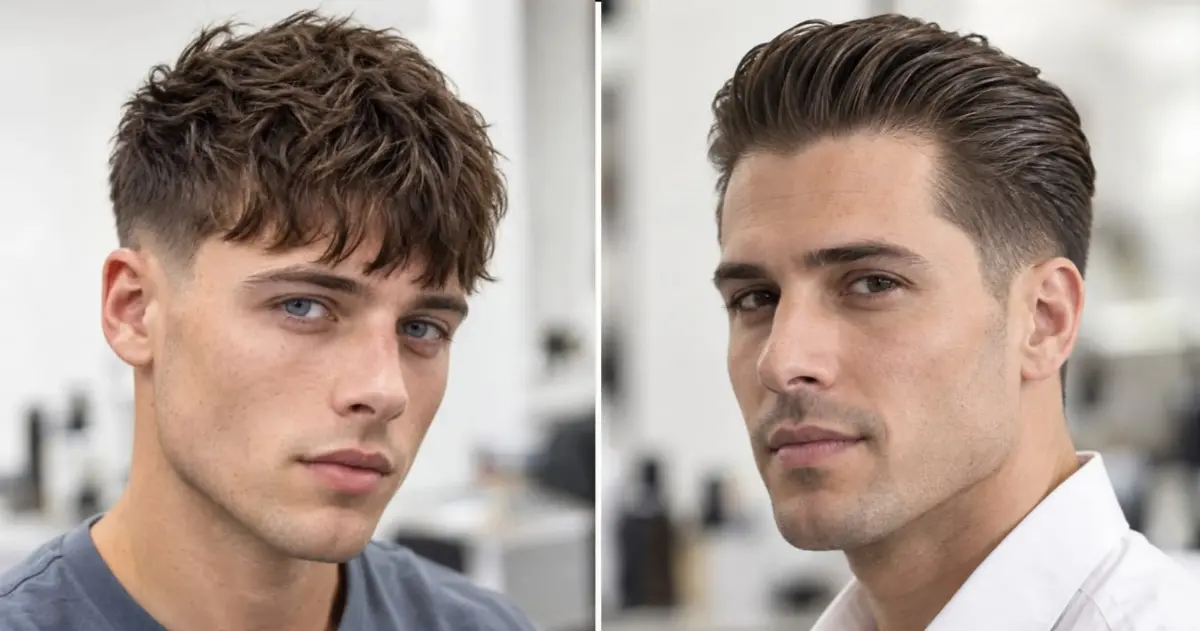
Fine hair gets blamed for a lot of bad hair days, but the real problem is usually the haircut, not the hair itself. Long layers pull fine strands flat against the scalp, and weight collapses whatever volume was there by mid morning, so a full head of hair can end up looking thin even when it isn’t.
This guide was built for men who have fine hair, not necessarily thinning hair, though there is crossover advice for both. It covers twenty of the best short haircuts for fine hair in 2026, broken down by face shape, hair texture, and what to actually say in the barber’s chair. Every cut below includes an honest note on who should skip it, because a genuinely useful haircut guide should say what doesn’t work just as clearly as what does.
The best short haircuts for fine hair are the textured crop, French crop, buzz cut, crew cut, and skin fade with a textured top. These work because shorter length removes the weight that flattens fine strands, while point cutting and texturizing create the illusion of density. A trim every four to six weeks keeps the shape from growing into a flat, stringy stage.
| Haircut | Best For | Styling Effort |
|---|---|---|
| Textured Crop | Oval, square, heart faces; straight to wavy hair | Low to medium |
| French Crop | Oblong faces, slightly receding hairlines | Low |
| Buzz Cut | Round to oval heads, zero-effort lifestyles | Very low |
| Crew Cut | Classic, professional settings | Low |
| Skin Fade with Textured Top | Sharp contrast that distracts from thin-looking strands | Medium |
Fine Hair vs. Thin Hair vs. Thinning Hair: Know the Difference First
Fine hair, thin hair, and thinning hair are three different things, though most articles online use the words interchangeably. Sorting this out first changes which haircut actually works.
Fine hair describes the diameter of each individual strand. A fine strand is narrow, sometimes almost see-through when held up to the light, and it has less internal structure to hold a shape. Density has nothing to do with it. A man can have fine hair and still have a full, thick-looking head of hair if his follicle count is high. As dermatologists interviewed by PureWow explain it, fine hair is about strand width, and thin hair is about how many strands are actually growing.
Thin hair describes density, meaning how many strands are actually growing per square inch of scalp. A man can have coarse, thick individual strands and still have thin overall coverage if he simply does not have many follicles to begin with. A healthy scalp typically carries somewhere in the range of 124 to 200 hairs per square centimeter, though this varies widely by genetics and ethnicity.
Thinning hair is different again. It refers to density that is actively decreasing over time, usually tied to genetics, hormonal changes, stress, or an underlying health issue. This is the territory where a dermatologist becomes useful, and where medical routes like minoxidil enter the conversation rather than a haircut alone.
The distinction matters for haircut choice because fine, non-thinning hair is largely a styling problem, solved with the right cut and the right product. Thinning hair is partly styling and partly medical. A man with naturally fine but fully dense hair does not need to worry about a hairline story, he simply needs a cut that stops the hair from lying flat.
A simple way to check: roll a single strand between thumb and forefinger. If it is barely noticeable, that points to fine hair. Then check the scalp under bright light with the hair styled normally. If the scalp is easily visible at the part or crown, that points toward thinning as well. Many men have both traits at once, since fine strands and lower density often travel together, but the two problems call for different solutions, and this guide focuses mainly on styling for fine hair rather than genuine hair loss.
Why Short Haircuts Work So Well for Fine Hair
Fine hair has a physics problem before it has a style problem. Each strand is light, and light strands cannot support their own weight past a certain length. Once hair gets past the ears, gravity wins, oils travel down the shaft faster, and the whole style collapses into a flat sheet by early afternoon. This is why so many men with fine hair say it looks fine at eight in the morning and flat by noon.
Cutting the hair shorter removes the leverage gravity needs. Less length means less weight pulling down on each strand, so the hair has a better chance of standing away from the scalp, especially around the crown and front hairline where volume matters most visually.
Texture is the second half of the equation. A blunt, one-length cut makes fine hair look like a solid sheet, which draws attention to how flat it is. Texturizing techniques such as point cutting, where the barber cuts into the ends at an angle instead of straight across, break that solid edge into separated pieces. Those pieces catch light differently and create the visual impression of more hair than is actually there, which is the same trick a textured crop or French crop relies on.
Shorter hair also styles faster and holds a shape longer, since there is less length for product to weigh down. A light matte clay or texture powder on two inches of hair goes a long way. The same amount of product on five inches of fine hair often just makes it greasy and flatter than doing nothing at all. This is the core reason barbers reach for short, textured cuts first when a client mentions fine hair, not because long hair is impossible, but because it fights the hair’s natural behavior instead of working with it.
How to Choose the Right Short Cut for Hair Texture
Fine hair is not one texture. Straight fine hair, wavy fine hair, and curly fine hair behave differently under the clippers, and the best cut changes depending on which one applies.
Straight Fine Hair
Straight fine hair has the least natural lift of the three, since there is no wave pattern pushing it away from the scalp. This texture benefits most from cuts with built-in texture, like the textured crop or spiky crop, where point cutting and texturizing shears do the volume work the hair cannot do alone. A blow-dry lift at the root, using a round brush and a volumizing mousse, helps before applying any matte product. Straight fine hair also tends to look better kept shorter overall, since it has no wave to disguise growth between trims, and it falls flat again quickly once it passes a certain length.
Wavy Fine Hair
Wavy fine hair has a built-in advantage: the wave pattern lifts the hair off the scalp and adds movement without extra effort. Cuts like the French crop, choppy fringe, and curly crop let that wave show rather than fighting it with a straightener or heavy pomade. Sea salt spray is the go-to product here, since it enhances the natural bend and adds grip without weighing the hair down the way a cream or gel can. Wavy fine hair also tends to hide regrowth better than straight fine hair, since the wave pattern breaks up the outline of the cut as it grows, which can stretch the gap between trims by a week or so.
Curly Fine Hair
Curly fine hair has the most natural volume of the three but is also the most fragile, since the curl pattern already puts stress on a strand that has less internal structure to begin with. Shorter curly crops that let the curl pattern do the work, rather than cuts that rely on straight lines and hard parts, tend to look best. A curl cream or light leave-in, applied to damp hair and scrunched rather than brushed, keeps the curl defined without frizz. Heavy thinning shears should be used carefully on curly fine hair, since removing too much bulk can leave patchy, uneven-looking curls instead of a clean, full shape.
The 20 Best Short Haircuts for Men with Fine Hair
Each cut below is built for fine hair specifically, not just short hair in general. They are organized loosely from lowest to highest daily effort, though styling difficulty always depends somewhat on how straight, wavy, or curly the hair is underneath. Bring the exact wording in quotation marks to the next barber appointment, since specific language gets a far more consistent result than a photo alone.
1. Textured Crop
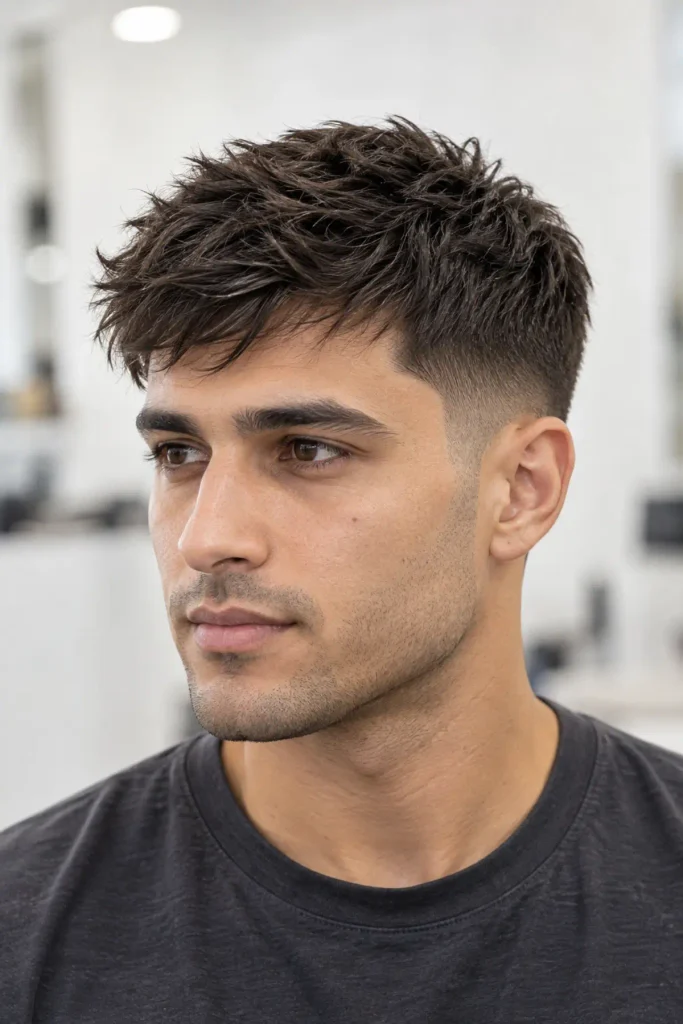
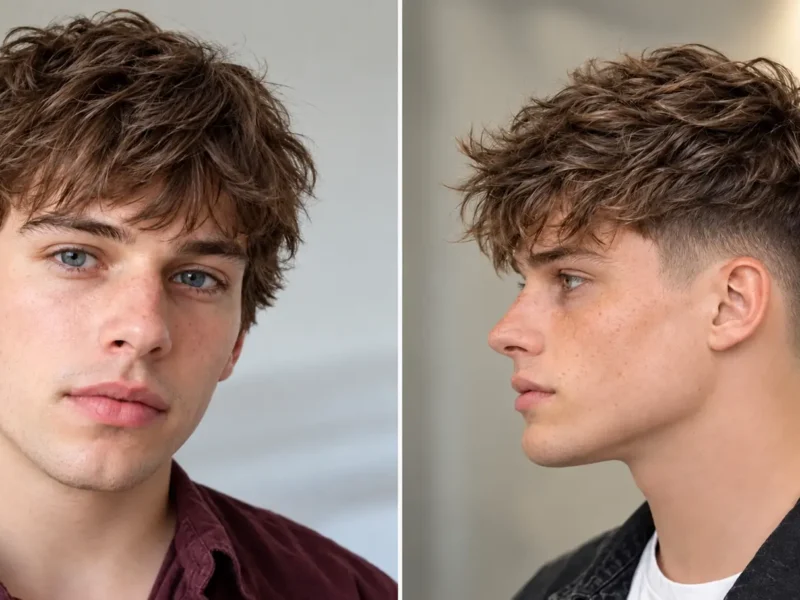
The most requested short cut in barbershops right now, and for good reason on fine hair. Short, point-cut layers on top break up the surface so light catches unevenly, creating a real illusion of density. Ask for a taper or fade on the sides. Skip it on very limp hair.
2. French Crop
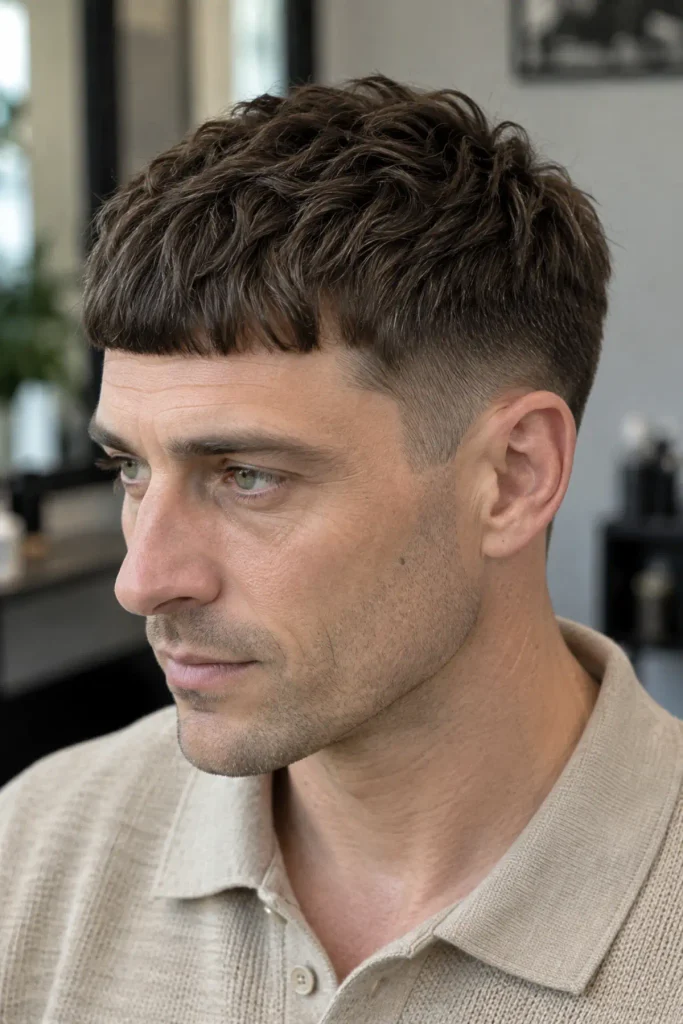
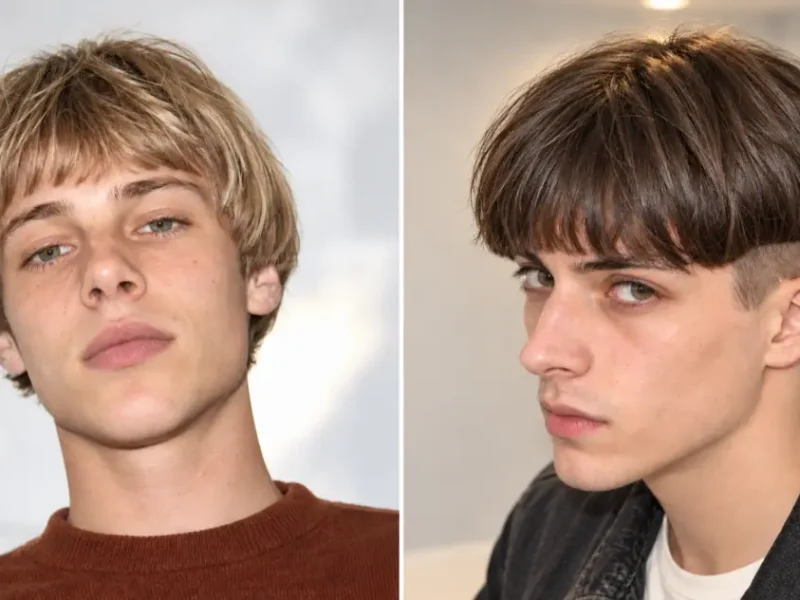
Tapered sides lead into a short, blunt fringe across the forehead, genuinely useful for fine hair with a slightly receding line since the fringe covers it without extra length. Works on most textures. Ask for sides tapered, fringe cut to mid-forehead. Skip it once the hairline recedes past the temples.
3. Buzz Cut
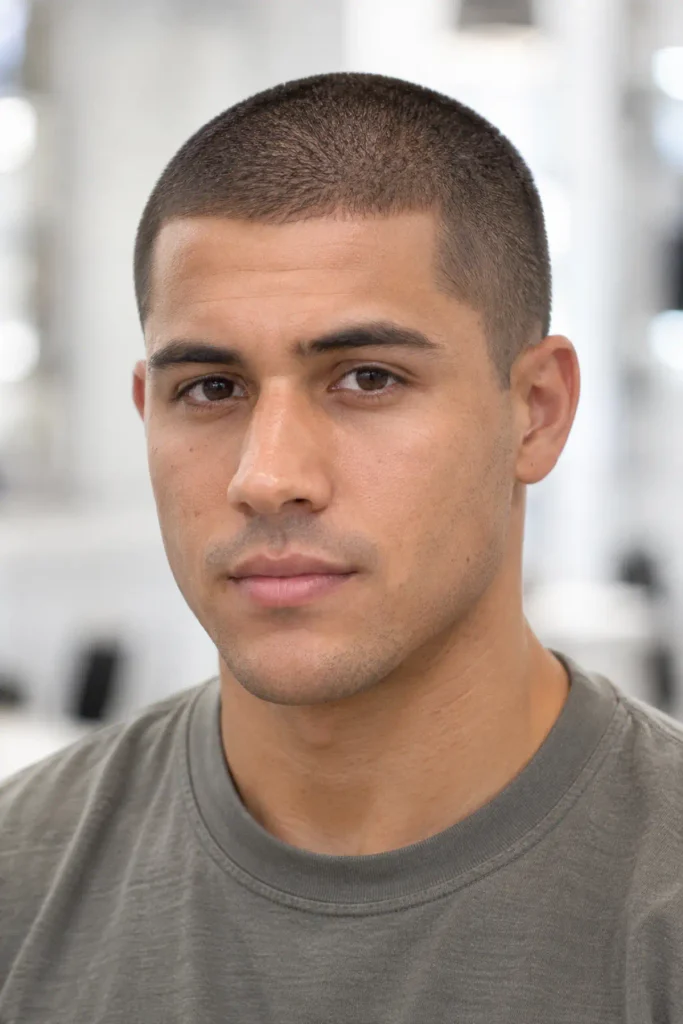
The lowest-maintenance option here and arguably the most honest fix for fine hair, since no length remains for gravity to flatten. One guard number all over removes styling entirely. Good for round to oval heads. Skip it if the scalp looks noticeably paler or uneven next to the face, though.
4. Crew Cut
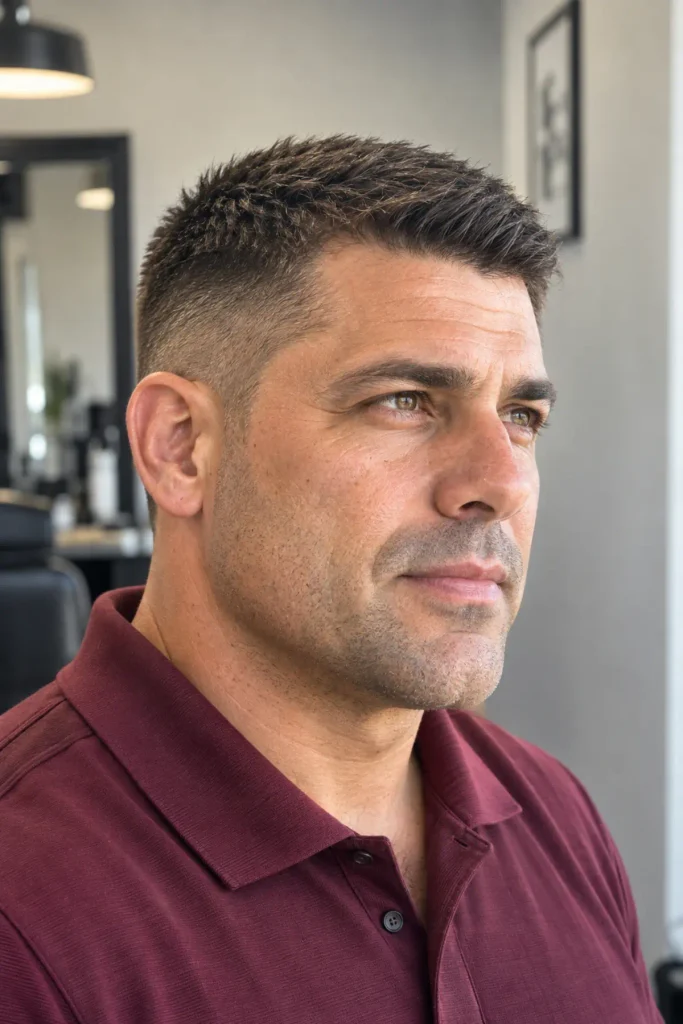
A short, tapered classic kept slightly forward or up with almost no product. Clean and forgiving of straight or wavy fine strands. Ask for a short taper, top around an inch, textured rather than blunt. Good for office settings. Skip it if a bolder, statement look is the actual goal.
5. Caesar Cut
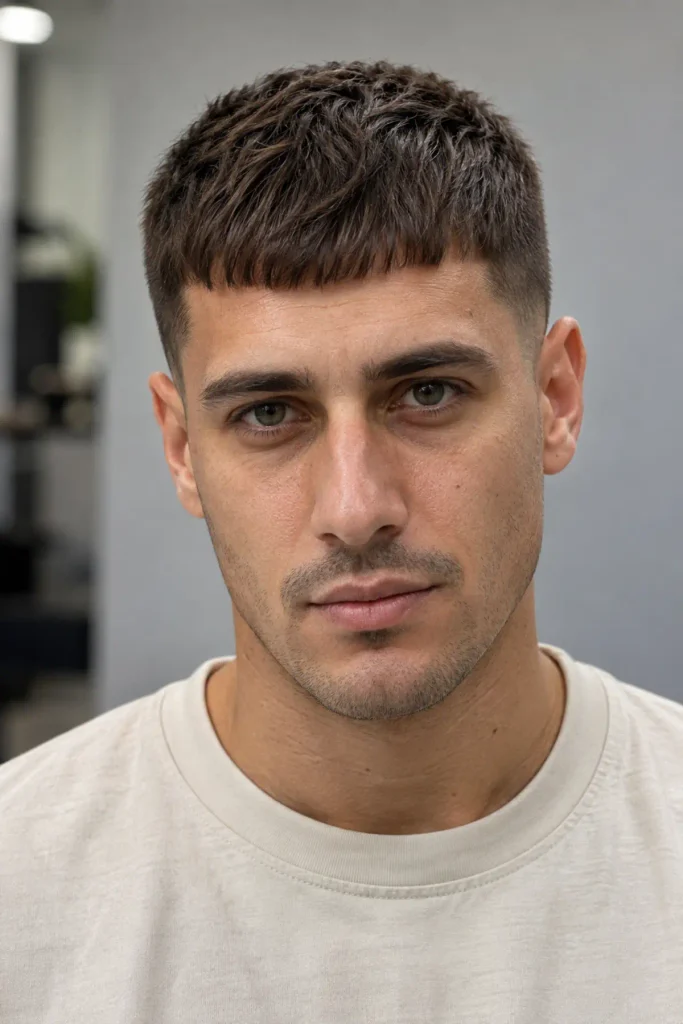
Short, uniform length on top combed forward into a straight fringe, giving fine hair structure instead of relying on volume it lacks. Handles a receding hairline well since the fringe sits low. Ask for one to two inches on top, combed forward. Skip it on very curly, springy hair textures.
6. Ivy League
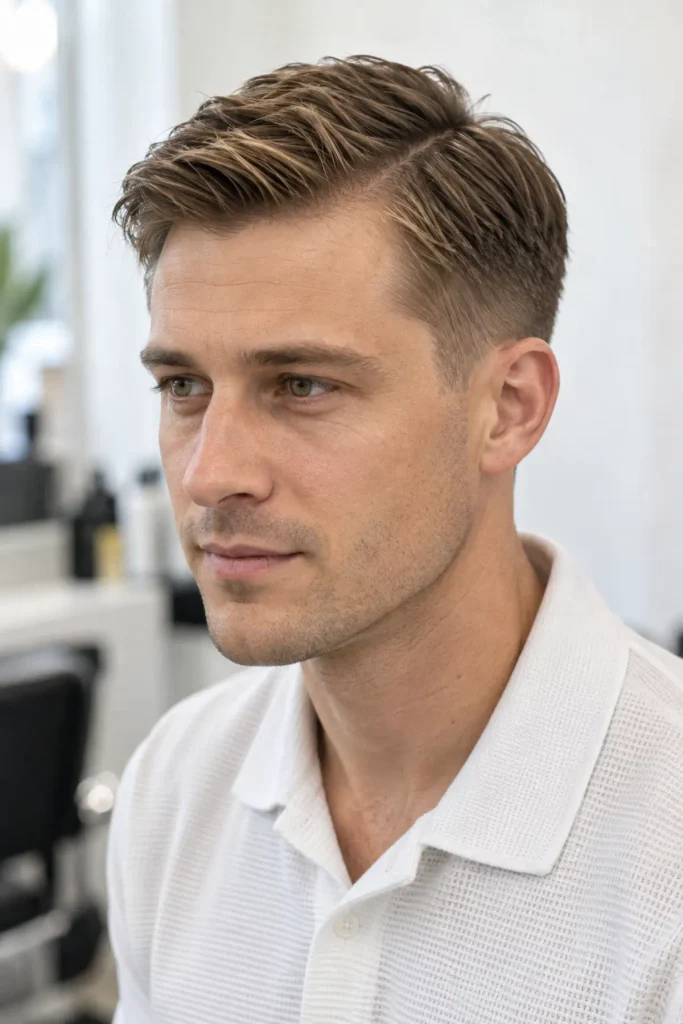
A longer, more versatile crew cut with enough top length for a light side part. Suits fine hair with slightly more density, since it needs some natural body to hold shape. Ask for tapered sides, two to three inches on top. Skip it if the hair is extremely limp overall.
7. Textured Quiff
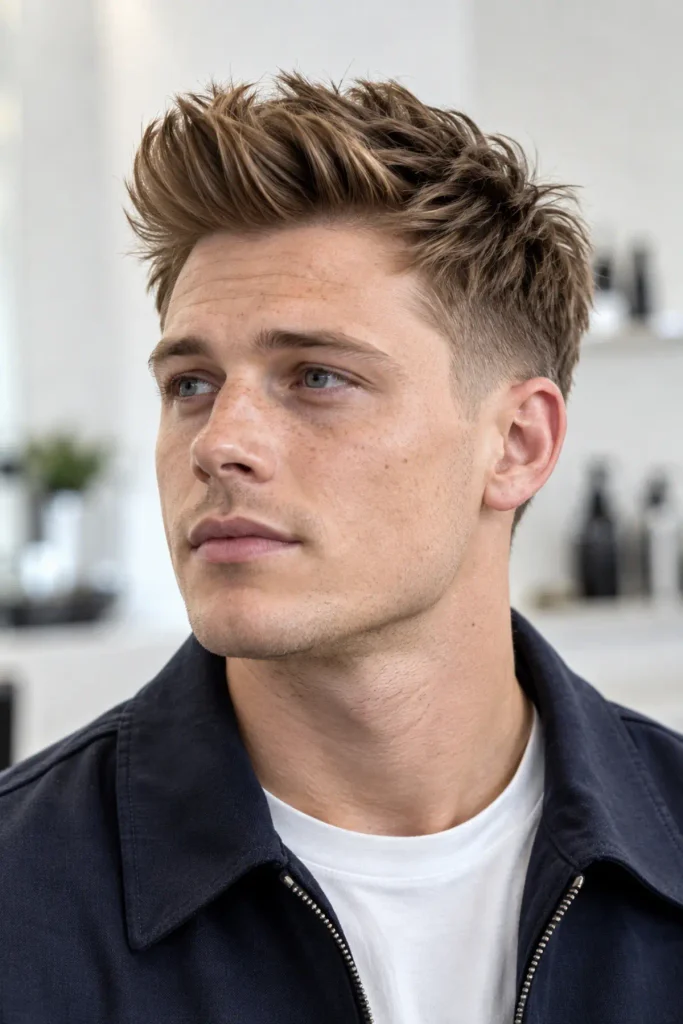
Height at the front with texture through the crown, built to fake volume fine hair lacks on its own. Needs a blow-dry lift and light texture powder to hold through the day. Good for round and square faces wanting more presence up top. Skip it without ten spare morning minutes.
8. Short Pompadour
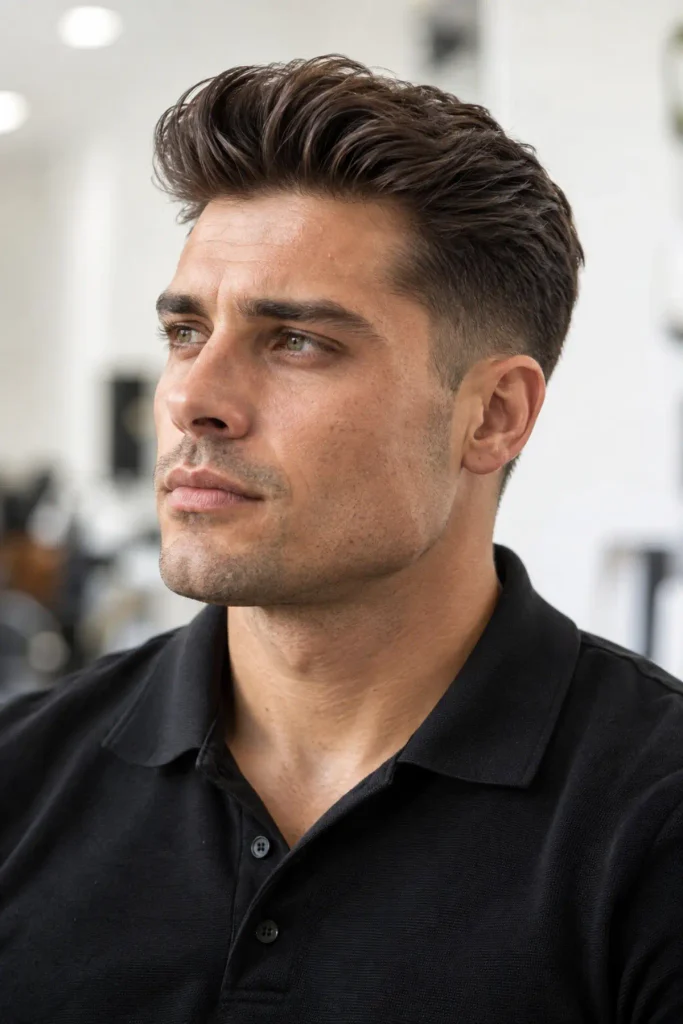
A swept-back top with real front lift, relying on a blow-dry and firm-hold product to fight fine hair’s tendency to fall flat by afternoon. Looks sharp when maintained. Ask for length retained on top, tapered sides. Good for square faces. Skip it if daily blow-drying feels like too much effort.
9. Side Part
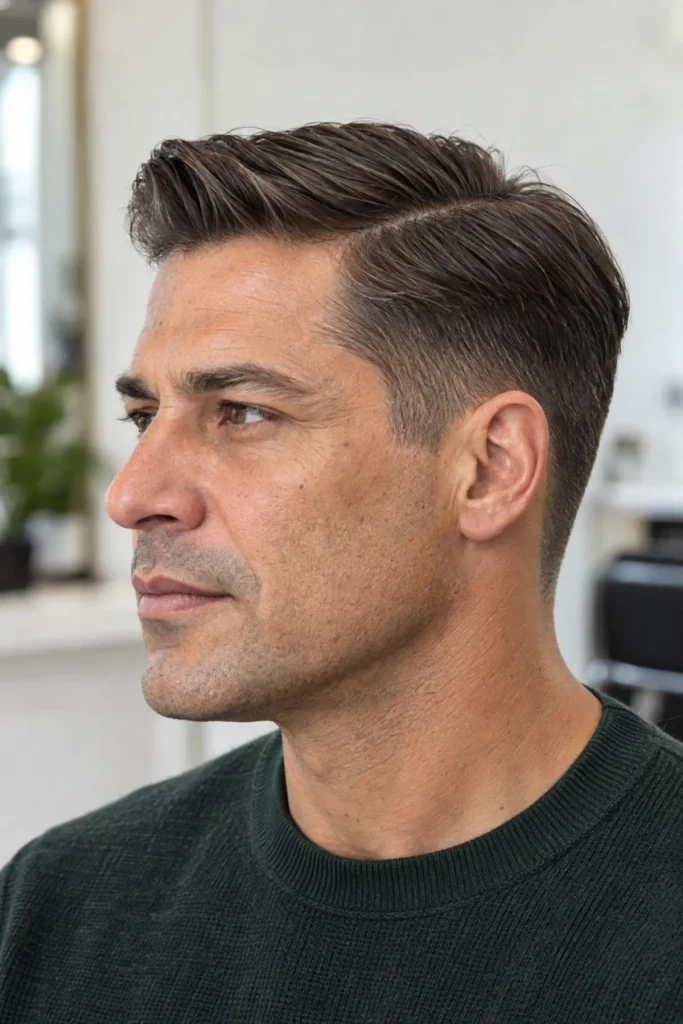
A clean, classic part with tapered sides, giving fine hair a defined line that reads as intentional rather than accidental. A light pomade holds the part without greasy shine. Suits straight to wavy fine hair best. Skip it on cowlick-prone hairlines, where the part tends to fight natural growth patterns.
10. Faux Hawk
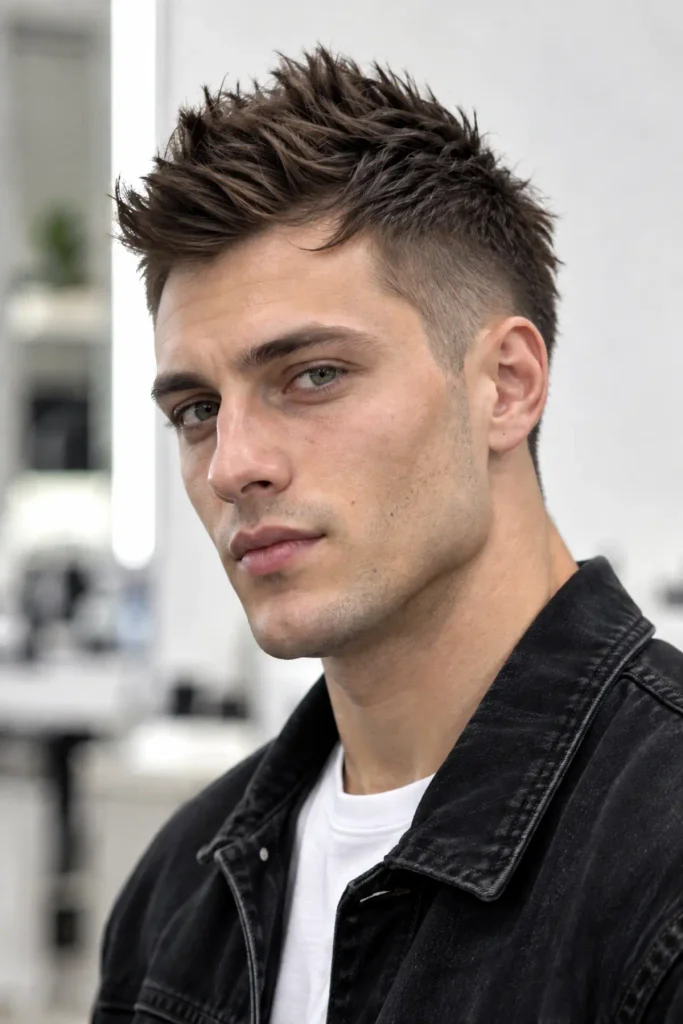
A textured strip through the center with shorter, tapered sides, giving fine hair a bolder shape without a full mohawk. Texture paste worked through damp hair holds the center strip. Good for an edgier everyday look. Skip it in conservative workplaces, or on hair too fine to hold a peak.
11. High and Tight
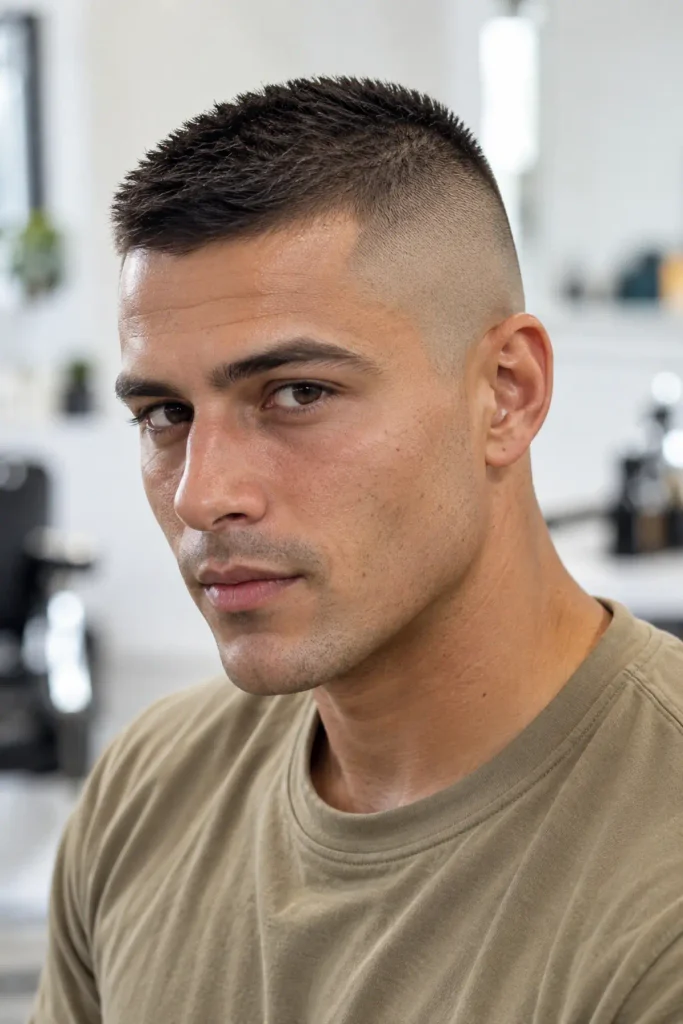
An ultra-short military-inspired cut with closely clipped sides and back, leaving just a short length on top. About as low-maintenance as it gets, and regrowth barely shows between visits. Ask for a high, tight taper with minimal top length. Skip it if a softer silhouette suits the face better instead.
12. Skin Fade with Textured Top
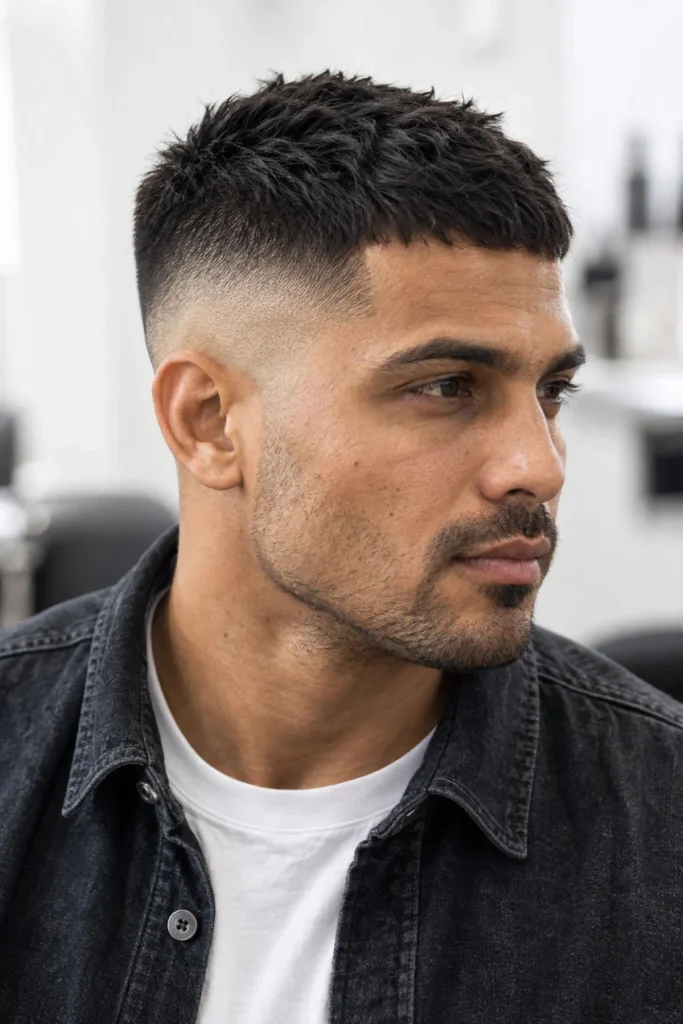
A sharp skin fade on the sides paired with a choppy, textured crop up top, using contrast to distract from thinner-looking strands. One of the most requested cuts this year for that reason. Ask for a skin fade blending into a point-cut top. Skip it without time for fade touch-ups.
13. Choppy Fringe
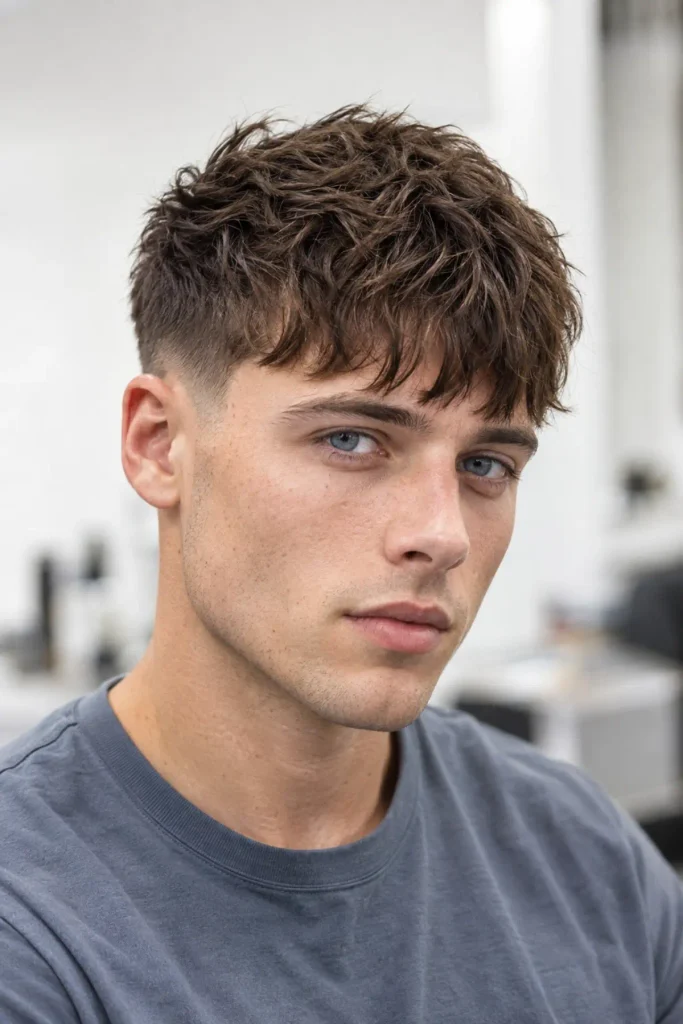
A piece-y, texturized fringe cut with shears rather than a straight blade, giving fine hair movement instead of one flat sheet. Works especially well on wavy fine hair, where natural bend adds separation. Ask for a choppy, textured fringe with tapered sides. Skip it on straight hair without daily styling.
14. Angular Fringe
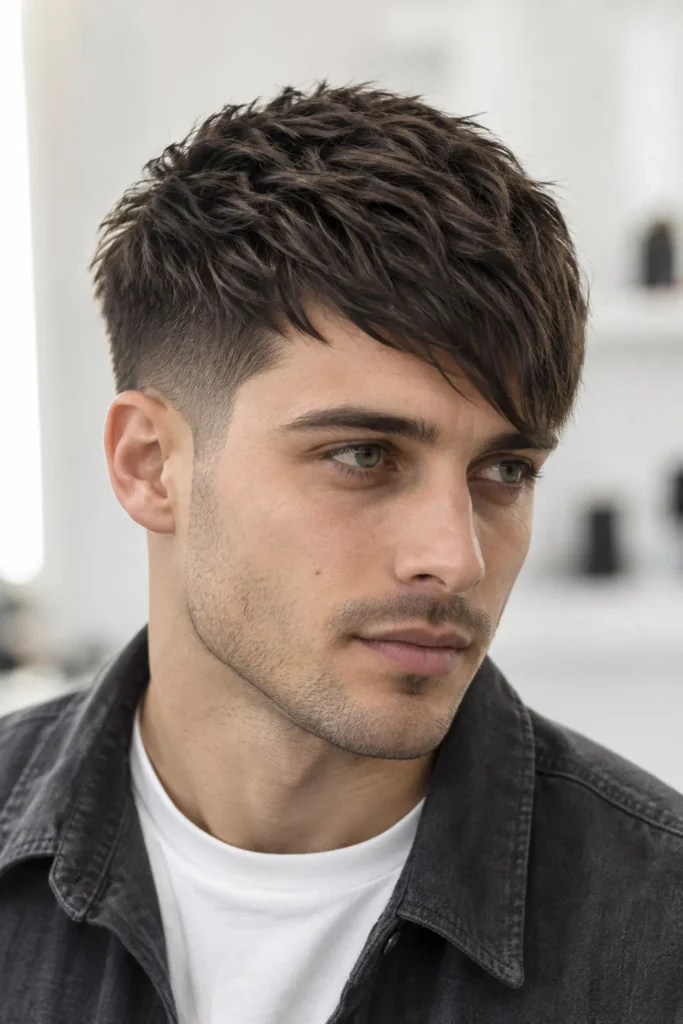
A diagonal fringe line cut across the forehead instead of straight, adding asymmetry that gives fine hair a sense of structure and direction. Reads as more deliberate than a standard fringe. Ask for an angled fringe, tapered sides. Good for oval faces. Skip it if a symmetrical look is preferred.
15. Short Slick Back
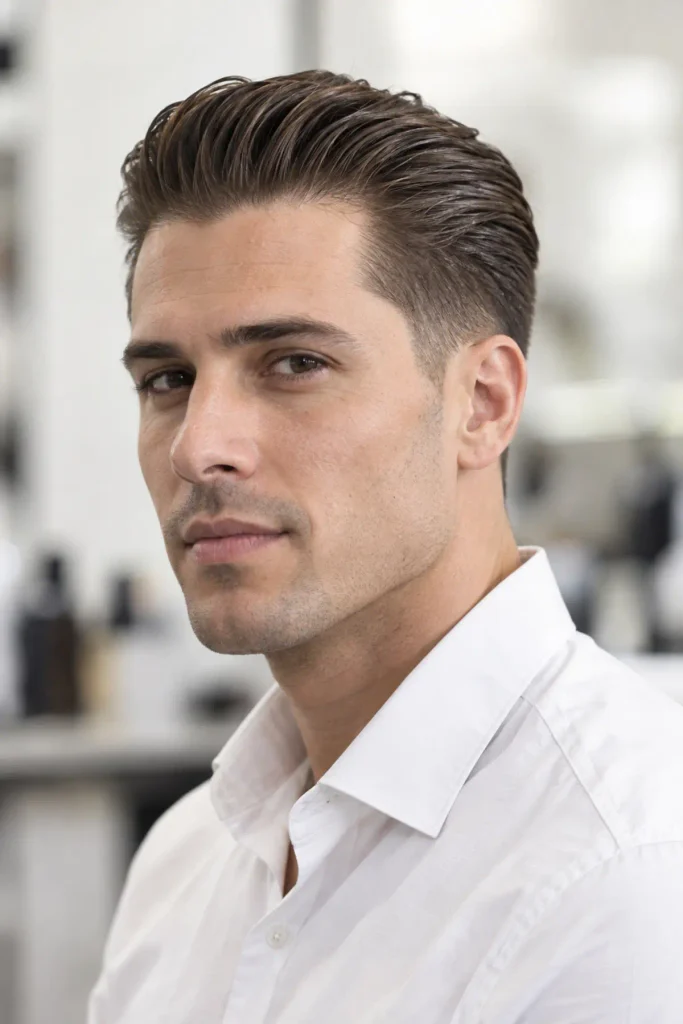
Top hair combed straight back with a light pomade, a polished look that works well on fine hair since less length needs less product to hold it. Ask for length retained on top, tapered sides, low shine finish. Good for formal settings. Skip it for a casual, everyday low-effort routine.
16. Spiky Crop
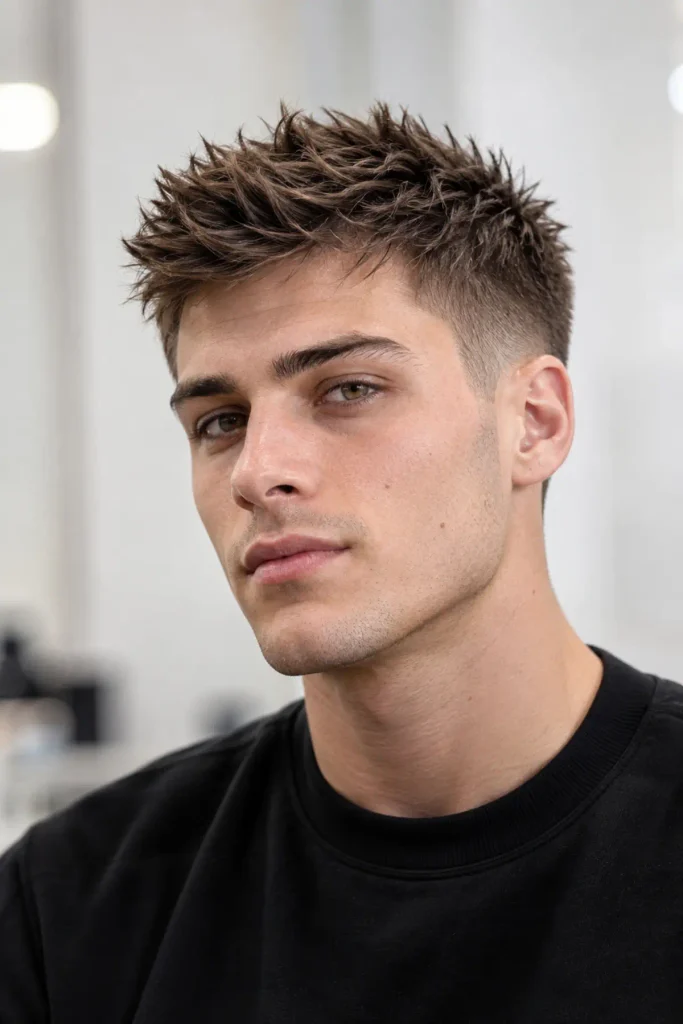
Short, textured spikes styled with a firm-hold wax or clay, giving fine hair a youthful shape that visually adds height. Needs a strong-hold product, since fine strands won’t hold a spike alone. Ask for a short crop with texturizing shears through the top. Skip it without firm-hold product on hand.
17. Business Short Back and Sides

The safest, most timeless option here: tapered sides, a tidy top, minimal daily styling. Genuinely low effort and forgiving of fine hair in any texture, since there’s no dramatic shape to maintain. Ask for a classic taper, scissor-trimmed top. Skip it if a bolder, more textured shape is the goal.
18. Curly Crop
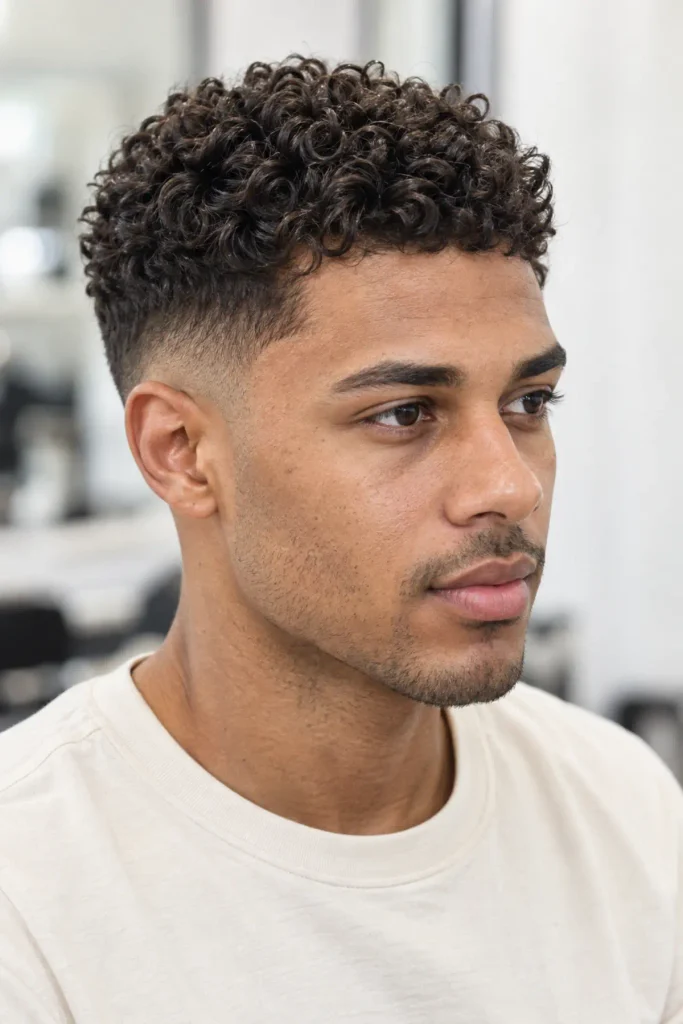
A short crop that lets natural curl or wave do the volume work fine hair can’t manage alone, since curl pattern lifts hair off the scalp automatically. A light curl cream on damp hair keeps definition without frizz. Best for wavy to curly hair. Skip it on straight fine hair.
19. Regulation Cut
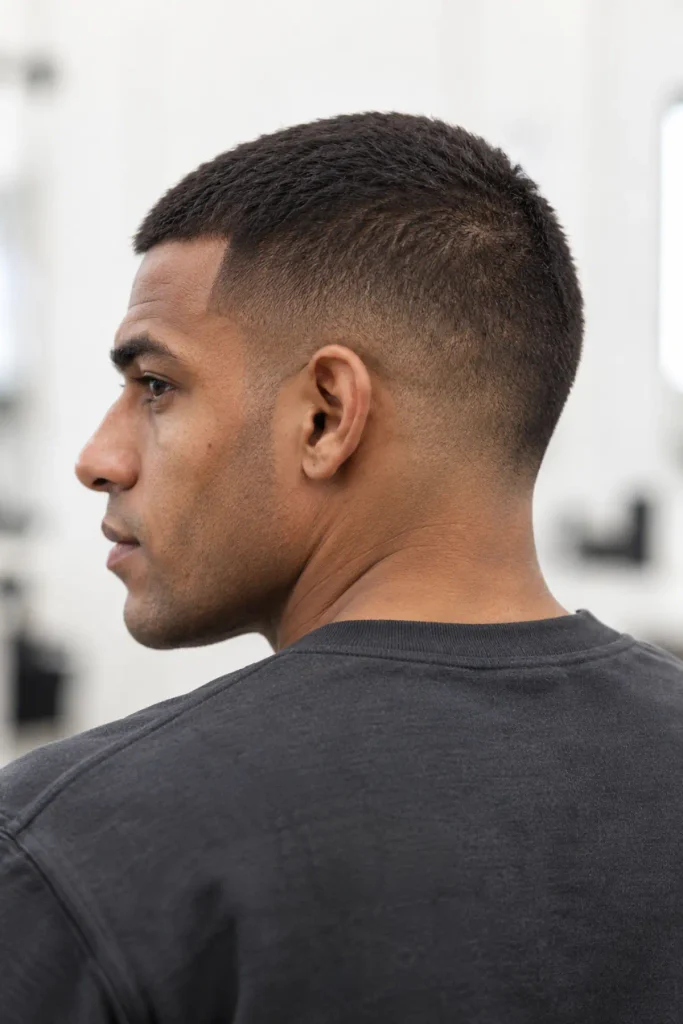
An extremely short, uniform length all over with a slight taper, offering near-zero styling time and regrowth that barely registers between visits. About as practical as a fine-hair cut gets. Ask for a short, even length with a tapered edge. Skip it if length or versatility matters more than ease.
20. Soft Taper with Natural Texture
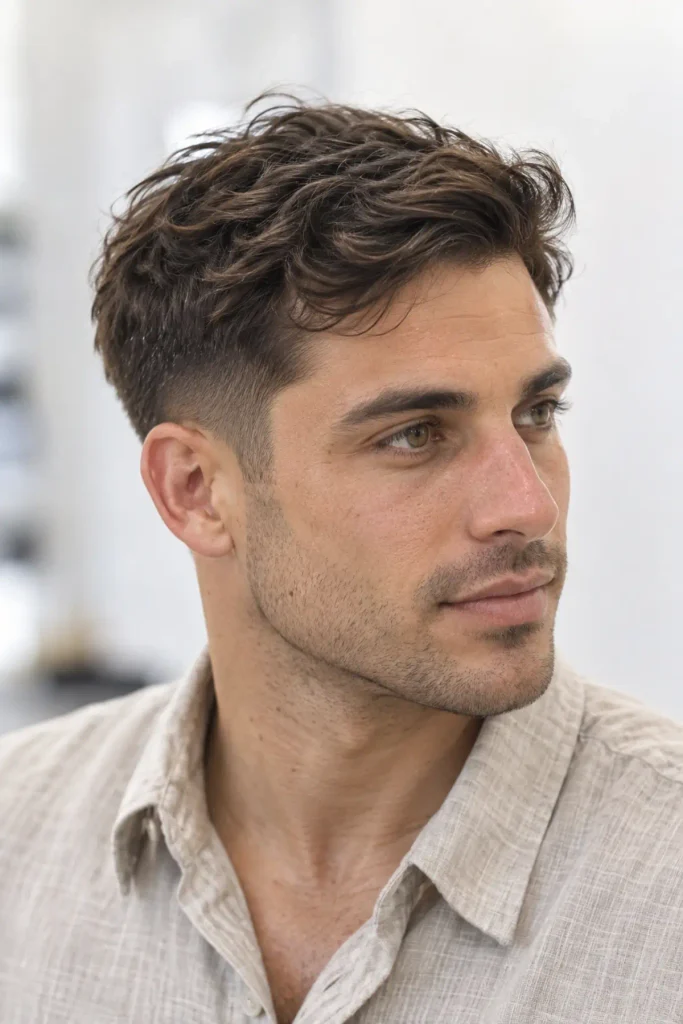
A gentle taper on the sides blends into a natural, lightly textured top, letting fine hair’s actual texture show instead of forcing a rigid shape on it. Versatile and forgiving as it grows out. Ask for a soft taper, light texturizing through the top only. Skip it for bolder looks.
Every cut above assumes a short length is the goal. For men with fine hair who eventually want to experiment with more length and shape once the hair has grown out a little, the wolf cut guide is a useful next stop, since it covers how texture and layering work once there’s more length to play with.
Short Haircuts by Face Shape: Quick Reference
Face shape is not the only factor in choosing a cut, but it narrows the list fast. Here is a simple reference table pairing common face shapes with the cuts from this guide that tend to work best, and a few to be cautious with.
| Face Shape | Recommended Cuts | Use Caution With |
|---|---|---|
| Oval | Textured crop, angular fringe, side part | Most cuts work; few restrictions |
| Round | Textured quiff, high and tight, spiky crop | Caesar cut, anything adding width at the sides |
| Square | Short pompadour, crew cut, business short back and sides | Very blunt, boxy fringes |
| Oblong / Long | French crop, Caesar cut, choppy fringe | High and tight, regulation cut |
| Heart | Textured crop, faux hawk, curly crop | Heavy volume at the crown |
| Diamond | Side part, soft taper with natural texture | Severe high and tight styles |
How Often Should Men with Fine Hair Get a Haircut?
Short cuts grow out faster visually than long ones, since even a small amount of length change is proportionally larger on a two-inch cut than on a six-inch one. Hair grows at roughly half an inch, or about one and a quarter centimeters, per month on average, which is the number barbers use when setting a trim schedule.
| Cut Category | Trim Frequency | Why |
|---|---|---|
| Buzz cut, high and tight, regulation cut | Every 2 to 3 weeks | Very short guard lengths show stubble regrowth fastest |
| Crew cut, Caesar cut, side part | Every 3 to 4 weeks | Sides grow out of shape before the top loses form |
| Textured crop, French crop, skin fade styles | Every 4 to 6 weeks | Texture and fringe length hide regrowth longer |
| Curly crop, choppy fringe (wavy or curly hair) | Every 5 to 6 weeks | Natural curl or wave disguises the outline as it grows |
A cut growing out between visits is not necessarily a problem. Most of the textured, point-cut styles on this list, like the textured crop or soft taper, are designed to grow into a slightly longer, still-wearable version of themselves rather than an awkward in-between stage. The cuts that grow out least gracefully are the sharpest, most structured ones, such as the Caesar cut or short slick back, where a crisp line depends on regular upkeep.
What to Tell the Barber: A Simple Script
Barbers work faster and more accurately from specific language than from a vague description or a single photo, since photos rarely show the back or the exact fringe length. A short script that covers texture, length, and the sides tends to get the most consistent result.
- “My hair is fine, so please keep it short and use point cutting or texturizing shears rather than a blunt cut, since that adds volume.”
- “Keep the top around [X] inches and taper or fade the sides to [guard number or skin].”
- “I want it to still look intentional as it grows out, so please avoid a hard, straight line at the fringe unless I ask for one.”
- “I’m open to a lighter texture powder or matte clay recommendation for daily styling, since I want to avoid anything heavy.”
Bringing one or two reference photos alongside this script still helps, since barbers interpret words like short or textured differently. A photo paired with specific wording removes almost all the guesswork.
Styling Products That Actually Help Fine Hair
Fine hair is easily overwhelmed by product. Heavy waxes, thick pomades, and anything oil-based tend to weigh strands down rather than lift them, which is the opposite of what most short cuts for fine hair are trying to achieve. A few lighter categories work far better.
- Texture powder: Applied dry at the roots, it grips fine strands and creates lift without any visible product residue. Works especially well on textured crops and quiffs.
- Sea salt spray: Adds grit and texture without heaviness, and enhances natural wave or curl on damp hair before air drying or diffusing.
- Matte clay: A small amount worked through damp hair holds texturized styles like the French crop or choppy fringe without shine or grease.
- Volumizing mousse: Applied to damp roots before a blow-dry, it gives straight fine hair the lift it cannot generate on its own.
- Light, water-based pomade: Best for polished looks like a side part or short slick back, since it holds without the greasy finish older oil-based formulas leave behind.
A rule of thumb that barbers repeat often: use about half the amount of product that feels natural, then add more only if needed. Fine hair reaches its saturation point fast, and once it does, more product just makes it look wet and flat rather than styled.
Mistakes to Avoid with Fine Hair
- Growing it too long. Past a certain length, gravity always wins, and even the best texturizing cannot fight the weight of longer fine strands.
- Using too much product. Fine hair saturates quickly. A heavy hand with clay, wax, or gel usually looks worse than using nothing at all.
- Choosing a blunt, one-length cut. A solid edge with no texture highlights flatness instead of disguising it, which is the opposite of the goal.
- Over-washing or under-washing. Washing daily with a heavy, moisturizing shampoo can leave fine hair limp, while going too long between washes lets natural oils weigh it down instead.
- Skipping the barber conversation. Walking in with only a photo and no context about hair type often leads to a cut that looks great on the model and flat on fine strands.
- Assuming thinning is the same problem as fine hair. Treating naturally fine but fully dense hair with thinning-hair products or panic is unnecessary, and it can lead to spending money on the wrong solution.
Fine Hair by Age: What Changes at 20s, 30s, and 40s Plus
20s
Fine hair in the 20s is usually at its most forgiving, since density has not typically started to shift yet and the hairline is often still in its original position. This is a good decade to experiment with texture-heavy cuts like a faux hawk, spiky crop, or textured quiff, since there is more room for trial and error before settling on a long-term go-to style.
30s
Hormonal and lifestyle changes can start to affect hair texture subtly in the 30s, and some men notice their fine hair becoming slightly more resistant to styling or a touch drier. This is often the decade professional settings matter more too, which makes cuts like the crew cut, Ivy League, or business short back and sides practical choices that still look current.
40s and Beyond
By the 40s and beyond, it becomes more common for fine hair and early density changes to overlap, even without full pattern hair loss. Cuts that create the illusion of density through texture, such as the textured crop, skin fade with a textured top, or soft taper with natural texture, tend to age well because they work with a changing hairline rather than fighting it. This is also the point where a conversation with a dermatologist is worth having if shedding or scalp visibility increases noticeably rather than gradually.
Frequently Asked Questions
What is the best short haircut for men with fine hair?
The textured crop is generally considered the best overall option, since short, point-cut layers create visual density without adding weight that flattens fine strands. The French crop and buzz cut are close runners-up depending on hairline and lifestyle.
Does short hair make fine hair look thicker?
Yes, in most cases. Shorter length removes the weight that pulls fine strands flat, and texturizing techniques like point cutting break up the surface so hair looks fuller than it would at a longer length.
Is a buzz cut good for fine hair?
A buzz cut is one of the most effective options for fine hair, since there is no length left for gravity to flatten. It suits round to oval head shapes best and works with any hair texture.
What is the difference between fine hair and thinning hair?
Fine hair refers to the diameter of each strand and is a texture trait. Thinning hair refers to decreasing density over time, often tied to genetics or hormones. A man can have one, both, or neither.
How often should men with fine hair get a haircut?
Most short cuts for fine hair need a trim every four to six weeks, though very short styles like a buzz cut or high and tight often need touch-ups every two to three weeks.
Can men with fine hair get a fade or skin fade?
Yes. A skin fade paired with a textured top is one of the more popular choices for fine hair in 2026, since the sharp contrast on the sides draws attention away from strand thinness on top.
What products work best for fine, flat hair?
Lightweight options work best: texture powder, sea salt spray, matte clay, and volumizing mousse. Heavy pomades, waxes, and oil-based products tend to weigh fine hair down rather than lift it.
Should men with fine hair use volumizing shampoo?
A volumizing or thickening shampoo can help temporarily, since it coats each strand and increases its apparent diameter, though it will not change the natural texture or density of the hair long term.
The Bottom Line
Fine hair and short haircuts are a genuinely good match, not a compromise. The textured crop, French crop, buzz cut, and skin fade with a textured top cover most face shapes, textures, and lifestyles from this list, and each works by removing weight and adding texture rather than fighting the hair’s natural behavior. The honest next step for most men is a specific, written-down request for the next barber visit rather than a vague photo, since that single change does more for the final result than almost anything else on this page. For more hairstyle breakdowns and cut guides, browse the full collection on MenHairInspo.
6 thoughts on “20 Short Haircuts for Men with Fine Hair That Actually Work”