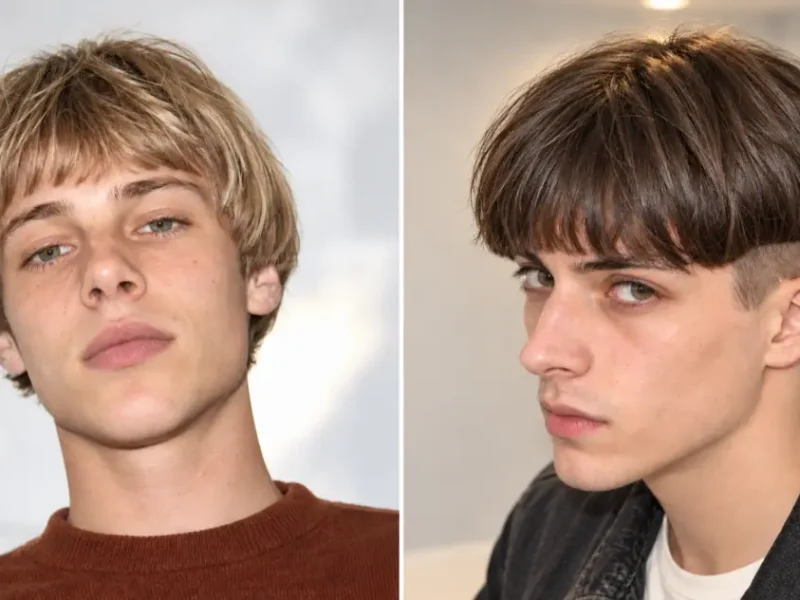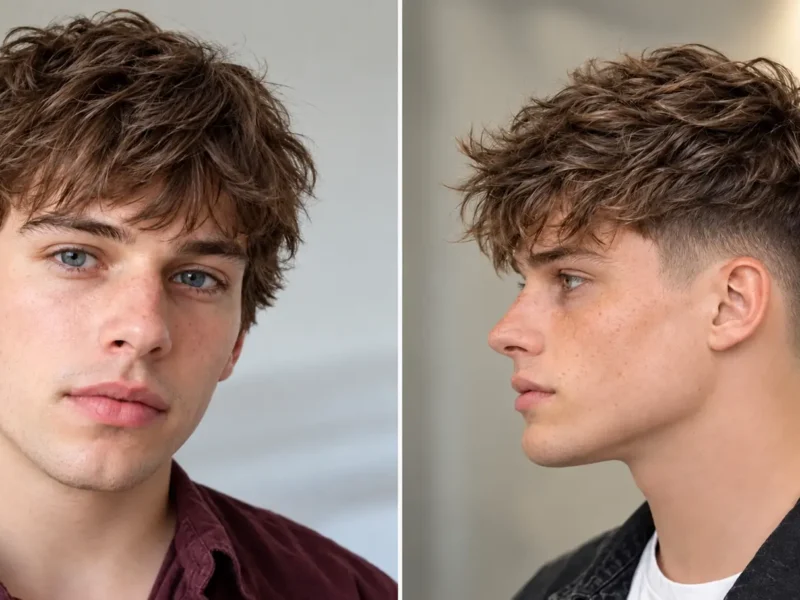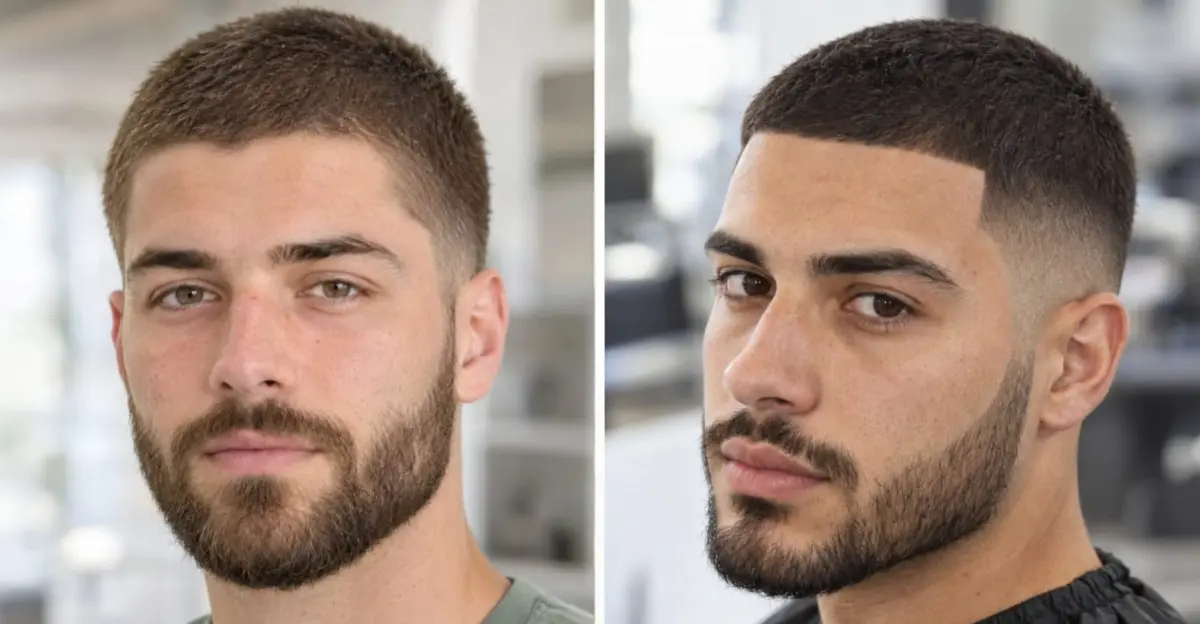
A buzz cut fade with beard combines very short clippered hair on top, usually a number 1 to number 4 guard, with a fade that gradually shortens the sides and back, then connects smoothly into a trimmed or full beard. Low fades sit close to the ears and suit rounder faces and conservative workplaces. Mid fades sit near the temple and flatter nearly every face shape. High and skin fades create the boldest contrast and work best on square or angular faces. Most men need a trim every two to three weeks, and a fade paired with a beard service typically costs between forty five and eighty five dollars at a barbershop in the United States.
At a Glance
| Fade Height | Best Face Shape | Barber Visit Frequency | Typical US Price |
|---|---|---|---|
| Low Fade | Round, Oval | Every 3 weeks | $40 to $65 |
| Mid Fade | Nearly all shapes | Every 2 to 3 weeks | $45 to $70 |
| High Fade | Square, Diamond | Every 2 weeks | $50 to $75 |
| Skin Fade | Any shape, high contrast | Every 1 to 2 weeks | $55 to $85 |
Table of Contents
Why This Style Has Become So Popular
The buzz cut fade with beard has become one of the most requested combinations at American barbershops, and it is easy to see why. The short hair on top takes almost no time to style, the fade gives it a sharp, intentional finish instead of a flat military look, and the beard adds shape and warmth to the face that a buzz cut alone can lack. Together, the two elements create a look that reads as put together with almost no daily effort.
This guide pulls together real barbering data, current pricing from barbershops across several states, and grooming science, rather than recycling the same handful of photos most style galleries use. It covers which fade height and beard length actually suit each face shape and hair type, what the look costs and how often it needs upkeep, exactly what to say in the chair, and the skin care details most guides skip entirely.
What Is a Buzz Cut Fade with Beard, Exactly?
Three separate choices come together to make this look: the buzz length on top, the fade through the sides and back, and the beard itself. The buzz refers to how short the hair on top is clippered, described by guard number. A number 1 guard leaves about an eighth of an inch of hair, a number 2 leaves roughly a quarter inch, and a number 3 or number 4 leaves closer to half an inch with more texture to work with.
The fade describes how that top length blends into the sides and back. It can start low near the ears, in the middle around the temple, or high near the crown, and it can either taper gradually to a shorter length or blend all the way down to bare skin, which is what barbers call a skin fade. The beard is the third variable, and it is what separates this look from a plain buzz cut fade. When the beard connects cleanly into the sideburns and the fade line, the whole head reads as one deliberate style rather than two separate grooming decisions.
Key Terms Worth Knowing
| Term | What It Means |
|---|---|
| Guard number | The clipper attachment that sets cutting length, numbered 000 through 8 |
| Fade | A gradual blend from short to shorter hair, ending anywhere from a longer length to bare skin |
| Taper | A gentler, more gradual length reduction than a fade, usually leaving some hair rather than going to skin |
| Skin fade | A fade that blends all the way down to bare skin |
| Line up | Sharp, clipper defined edges along the hairline, temple, or beard border |
| Blend point | The spot on the head where the fade transition happens |
| Disconnect | A haircut with no blended transition, creating a visible line instead of a smooth fade |
| Beard fade | The same fading technique applied where the beard meets the sideburns and neckline |
Choosing a Fade Height: Low, Mid, High, or Skin
Low Fade with Beard
A low fade starts just above the ear and keeps more length through the middle of the head before tapering down near the neckline. It is the most understated option and the easiest to keep looking sharp between trims, since the blend line sits in an area that grows out slowly. Low fades work especially well on round faces, since they avoid drawing a hard line of contrast at eye level, and on men in conservative workplaces who want a groomed look without a lot of visible skin.
Mid Fade with Beard
A mid fade begins around temple height and is the most versatile of the four options. Because the transition point sits in a naturally flattering spot on nearly every head shape, it is the height MenHairInspo recommends whenever someone is unsure which fade to ask for. Readers who want a full breakdown of how this height is cut, styled, and maintained can see the complete mid fade haircuts for men guide.
High Fade with Beard
A high fade moves the transition point well above the temple, leaving a stark contrast between the short sides and the top. It is the boldest of the standard fade heights and suits square or diamond faces especially well, since the sharp line echoes the angles already present in the jaw and cheekbones.
Skin Fade with Beard
A skin fade takes the sides all the way down to bare skin before blending up into the top length. It is the highest maintenance version of the four, because new growth is visible fastest at the skin line, but it also delivers the most dramatic, editorial look of any fade height.
Matching Your Buzz Cut Guard to Your Beard Length
The shorter the hair on top, the more visual weight the beard needs to carry to keep the whole look balanced, and the reverse is also true.
| Guard Number | Hair Left on Top | Best Paired Beard Length |
|---|---|---|
| #1 (about 1/8 inch) | Very short, scalp visible | Medium to long beard, 1 to 3 inches |
| #2 (about 1/4 inch) | Classic buzz length | Short to medium beard, 1/2 inch to 2 inches |
| #3 (about 3/8 inch) | Noticeable texture | Heavy stubble to short beard |
| #4 (about 1/2 inch) | Softest buzz length | Stubble or a tightly kept short beard |
A very short number 1 buzz next to a thin, patchy beard tends to look unfinished, while a longer number 4 buzz next to a very thick, long beard can start to look bottom heavy. Most barbers suggest going one guard shorter on the beard than on the buzz for balance, then adjusting from there.
The Face Shape, Beard Length, and Fade Height Matrix
This is the single most useful decision tool in this guide, and it is the piece missing from almost every other buzz cut fade article online. Instead of treating face shape and beard length as separate topics, each section below lines them up together.
Oval Face
An oval face can wear almost any combination in this guide without a downside. A mid fade with a short boxed beard is the safest starting point, but square or diamond pairings work just as well here.
Round Face
A round face benefits from added vertical structure. A low or mid fade paired with a beard that is shorter on the cheeks and longer at the chin adds length to the face and softens the roundness rather than emphasizing it.
Square Face
A square jaw already has strong natural angles, so a high fade or skin fade plays that up nicely. Keeping the beard fuller on the chin but tighter on the sides prevents the look from feeling too heavy or boxy.
Rectangular or Long Face
Longer faces do best with a low or mid fade, since a high fade can stretch the face even further. A fuller beard along the jawline and a touch more length on top helps balance out the proportions.
Diamond Face
A diamond face has a narrower forehead and chin with wider cheekbones. A beard with some width at the jaw and chin softens those cheekbones, and a mid or high fade keeps the top from adding unnecessary bulk. Men working out this shape specifically may also want to look at MenHairInspo’s dedicated guide to triangle face shape hairstyles for men, since triangle and diamond shapes share a lot of the same styling logic around balancing a narrower forehead.
Heart Shaped Face
A heart shaped face is widest at the forehead and narrows toward the chin. A fuller beard at the jaw adds width exactly where a heart shaped face needs it, and a low or mid fade keeps the top from drawing extra attention to the forehead.
Does It Work with Every Hair Type?
Most articles on this topic assume straight or wavy hair by default. Here is how the look actually performs across textures.
Straight Hair
Straight hair produces the cleanest, most uniform buzz cut fade of any texture, since every strand lies in the same direction and length. The fade line reads sharp and even with very little product needed.
Wavy Hair
Wavy hair adds a bit of natural texture and movement to the top length, which can look great with a slightly longer guard such as a number 3 or number 4. A small amount of matte clay helps keep flyaways in check without flattening the texture.
Curly Hair
Curly hair tends to look fuller than straight hair at the same guard number, because each strand takes up more visual space, so a curly haired man may want to go one guard shorter on top than he would with straight hair to get a comparable look. Curls also blend beautifully into a high or skin fade, since the contrast between tight curls and bare skin reads as very intentional.
Coily or Very Textured Hair
Coily hair holds its shape exceptionally well at very short lengths, which makes it one of the best textures for a true skin fade or an induction length buzz. Men with coily hair and a beard should pay close attention to the scalp and skin care section below, since this hair type is also the one most prone to ingrown hairs from close shaving.
Men with finer or thinner hair on top who want to compare this style against other short, low maintenance options may also want to look at MenHairInspo’s guide to short haircuts for men with fine hair, since a buzz cut fade is one of the most forgiving styles for lower density hair.
20 Buzz Cut Fade with Beard Styles to Try
Every style below is still a buzz cut fade at its core. What changes is the fade height, the guard length on top, and how the beard is shaped and connected.
1. Low Fade with Full Beard

This pairing keeps the fade starting just above the ear, so the transition stays subtle and professional. It suits round or oval faces especially well and looks sharp with straight or wavy hair. The buzz needs a trim every three weeks, and the full beard holds its shape with a weekly edge up.
2. Mid Fade with Full Beard
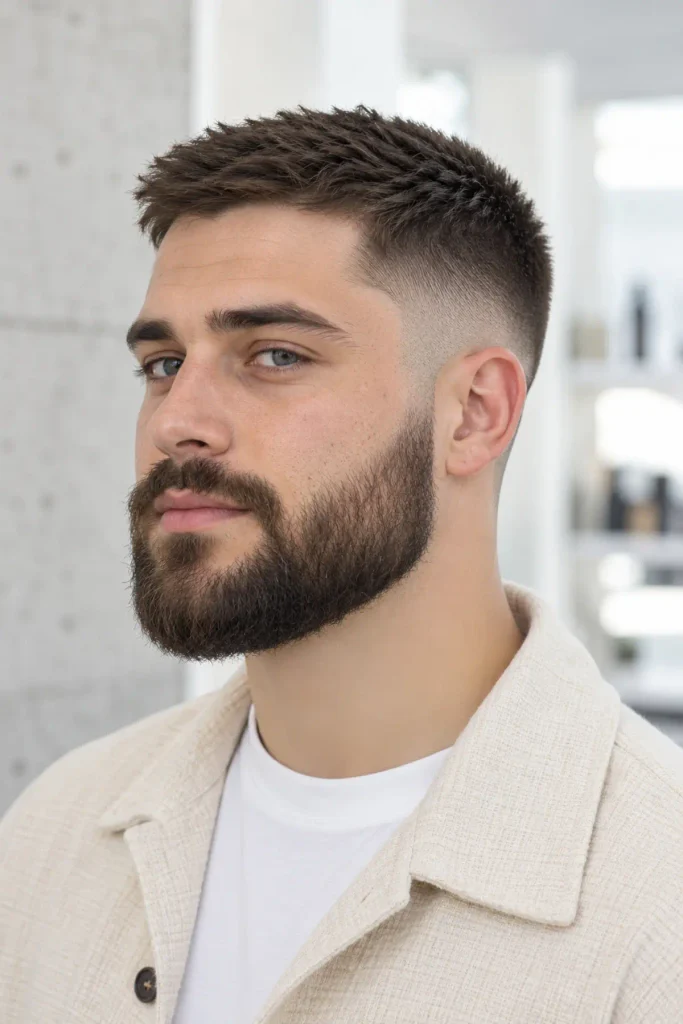
A temple-height fade blends into a full, evenly grown beard for one of the most balanced combinations in this guide. It flatters nearly every face shape and hair texture, from straight to curly, and only needs a barber visit every two to three weeks to stay sharp and connected.
3. High Fade with Full Beard
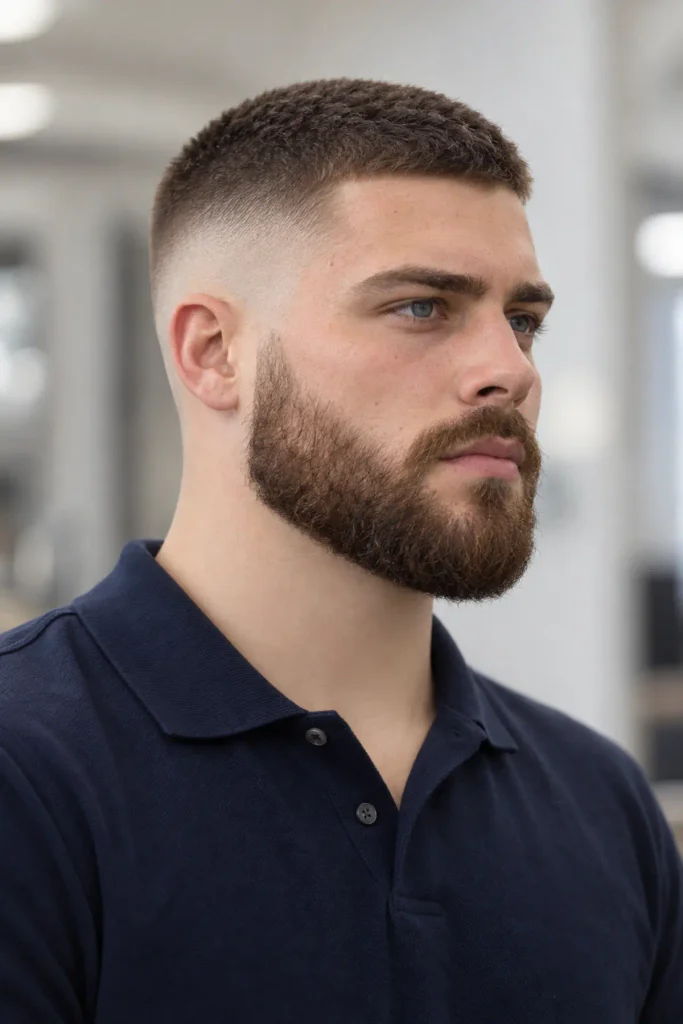
The fade starts well above the temple for maximum contrast against the top length, then connects into a thick, full beard for balance. Square and diamond faces benefit most from the added structure, and thick or coarse hair holds this shape especially well between the two- to three-week trims it needs.
4. Skin Fade with Full Beard
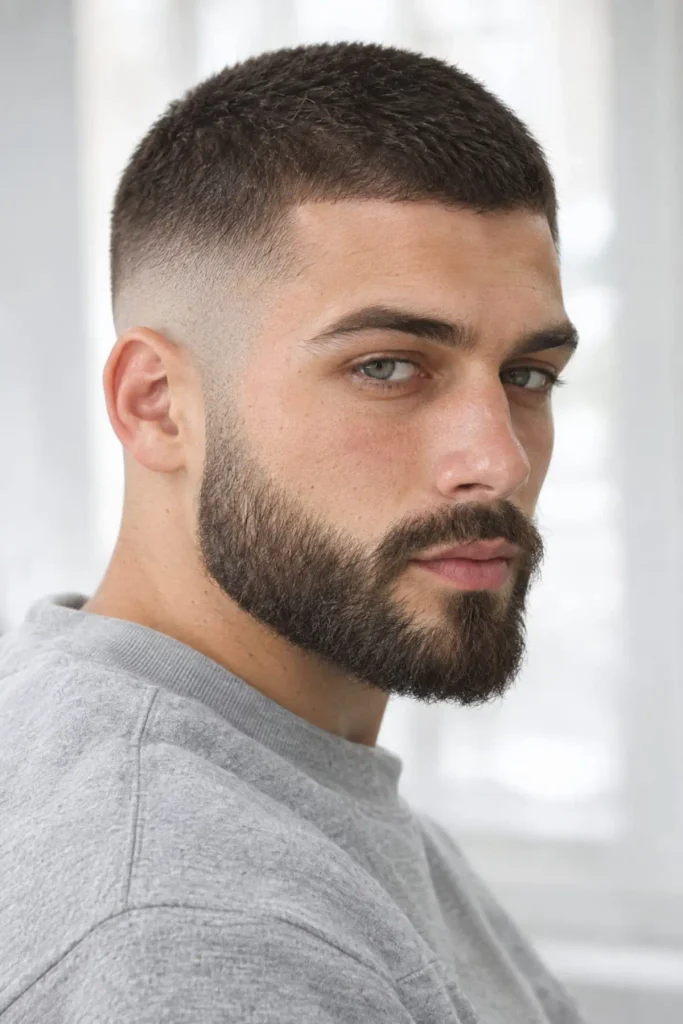
The sides fade all the way down to bare skin, creating a dramatic line next to a full beard on the jaw. This is the boldest, most editorial version in the guide and works on nearly any face shape, though it needs a touch-up every one to two weeks to stay crisp.
5. Low Fade with Heavy Stubble
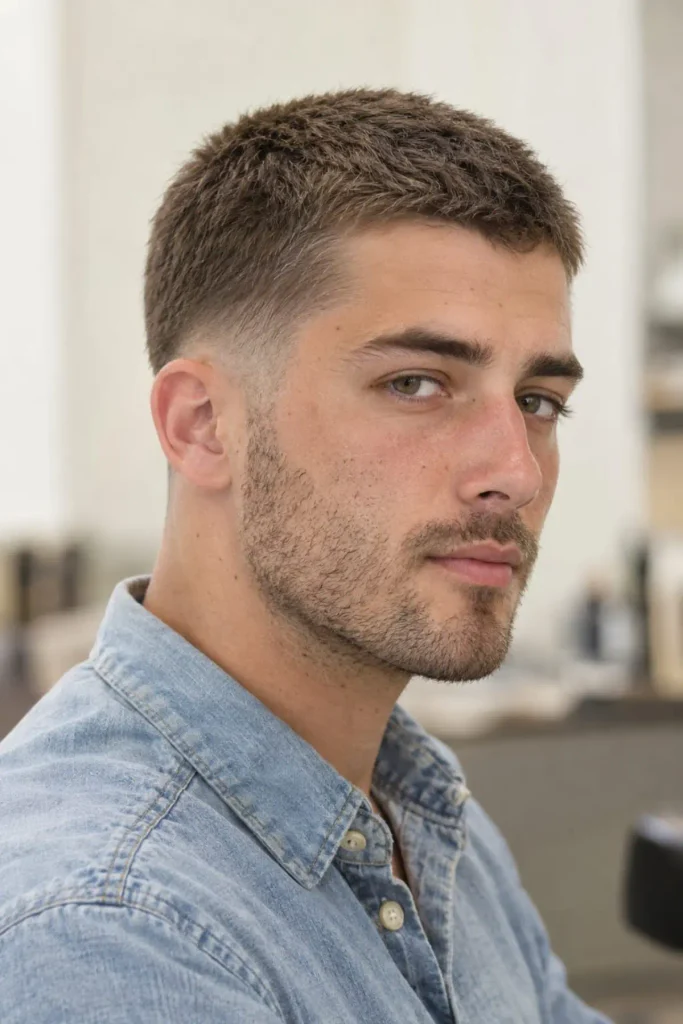
A relaxed, low-maintenance option that pairs a soft low fade with a few days of beard growth rather than a fully shaped beard. It suits oval and rectangular faces particularly well and works with straight or wavy hair, needing only occasional stubble clean-up between haircuts.
6. High Fade with Heavy Stubble
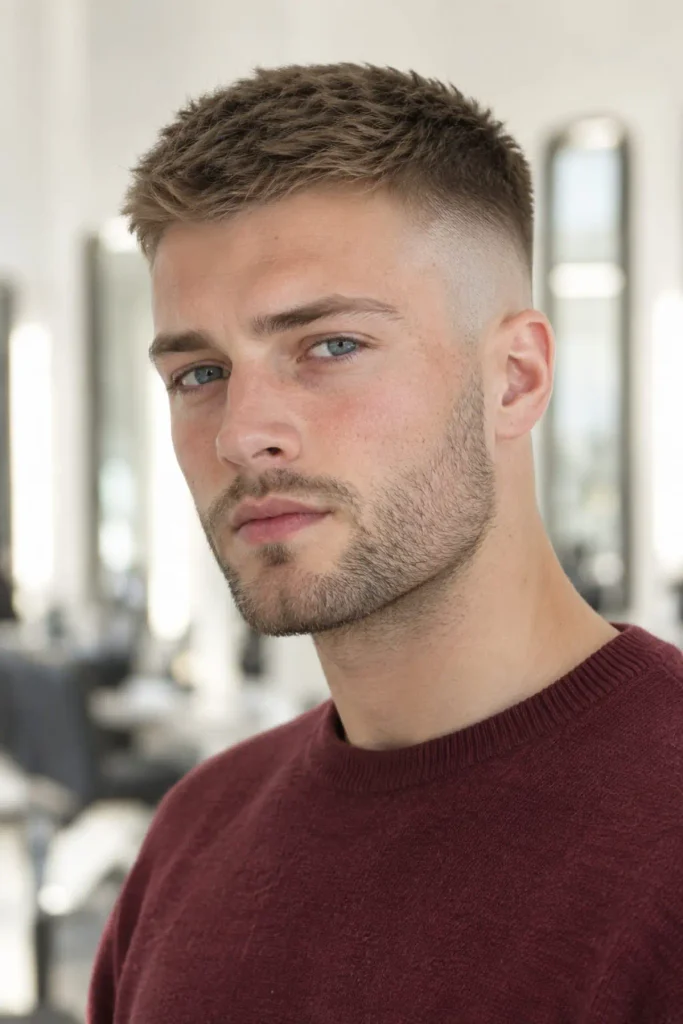
Sharp, high-contrast sides meet a casual, unshaped beard for a look that feels current without trying too hard. Square faces and thick, straight hair suit this combination best. The fade needs attention every two weeks, though the stubble itself asks for very little day-to-day upkeep.
7. Burst Fade with Beard
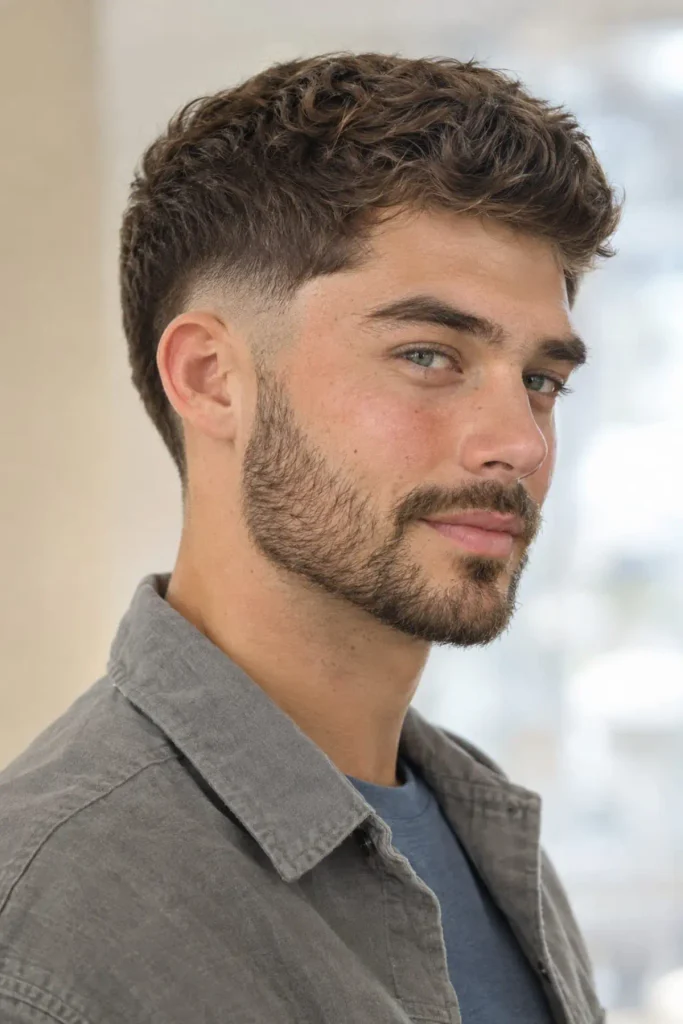
Instead of running in a straight line, the fade curves around the ear before connecting into the beard, which makes it a great match for wavy or curly hair that already has natural movement. Oval and diamond faces wear this shape especially well, and it typically holds up for two to three weeks.
8. Drop Fade with Beard
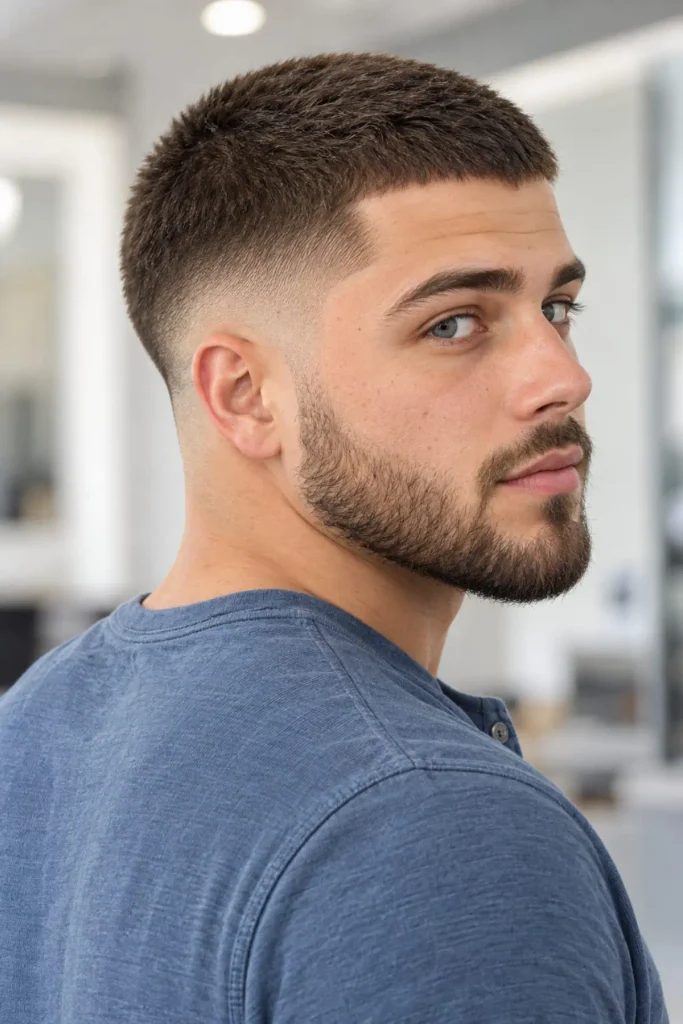
The fade line dips lower at the back of the head, following the natural curve of the skull rather than a straight path. It flatters oval and round faces by softening the transition and pairs nicely with straight or wavy hair. Most men see a barber every two to three weeks for this one.
9. Taper Fade with Beard

A gentler, more gradual blend than a true fade, this version leaves a bit more hair at the shortest point rather than going to skin, which makes it a favorite in corporate settings. It suits nearly every face shape and hair type and can often stretch to three weeks between visits.
10. Buzz Cut with Boxed Beard
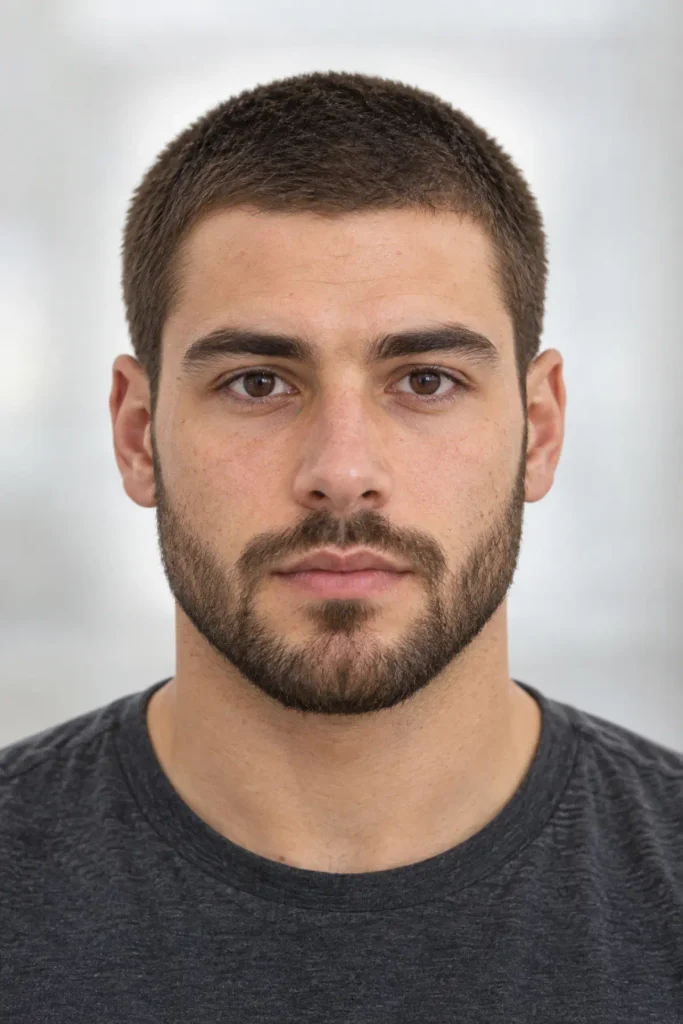
Clean, geometric beard lines against a simply buzzed top create a sharp, structured look that suits square and oval faces well. It works best for men with fairly straight, even beard growth, since the boxed shape shows every irregular patch. The beard lines need weekly upkeep to stay crisp.
11. Buzz Cut with Corporate Beard

A very short, tightly kept beard paired with a modest fade works well for offices with strict grooming standards. It suits nearly any face shape and hair type and is genuinely low-maintenance, needing only a light trim each week to keep both the beard and buzz looking neat.
12. Buzz Cut with Long Beard
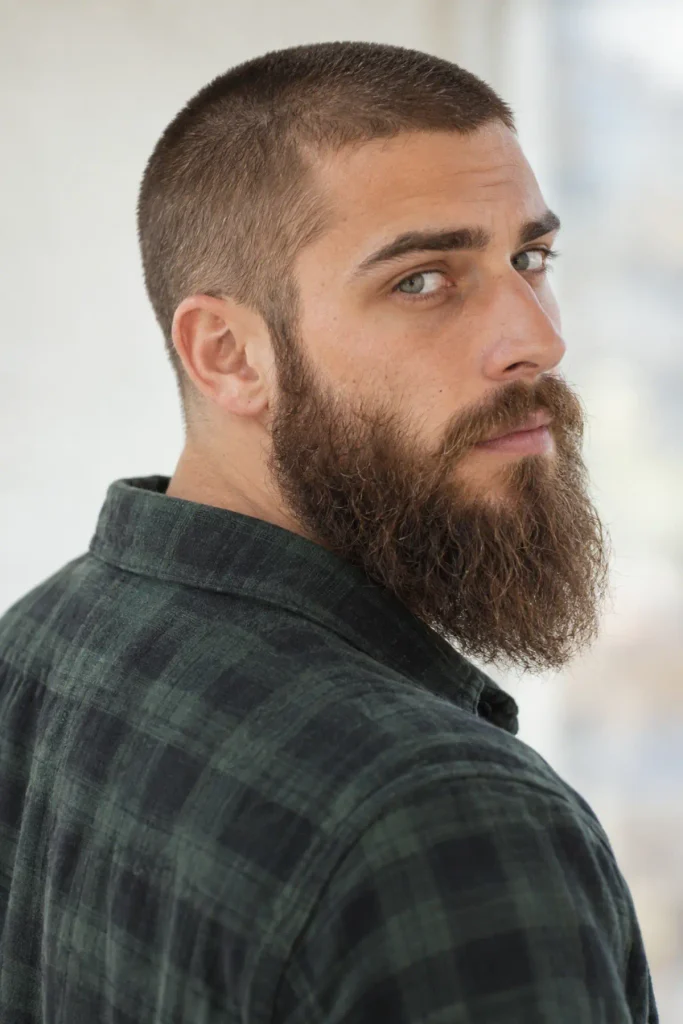
A short number 1 or number 2 buzz on top creates maximum contrast against several inches of beard length below, putting nearly all the visual weight on the jaw. This works best on oval or diamond faces and requires real beard care, including regular oiling, to look intentional rather than unkempt.
13. Induction Cut with Beard

The shortest possible buzz, almost down to the scalp, is balanced out by a fuller beard so the face does not look unfinished. It suits oval and triangle face shapes and works with any hair type, since there is barely any length left to show texture. Expect weekly touch-ups on top.
14. High and Tight with Beard
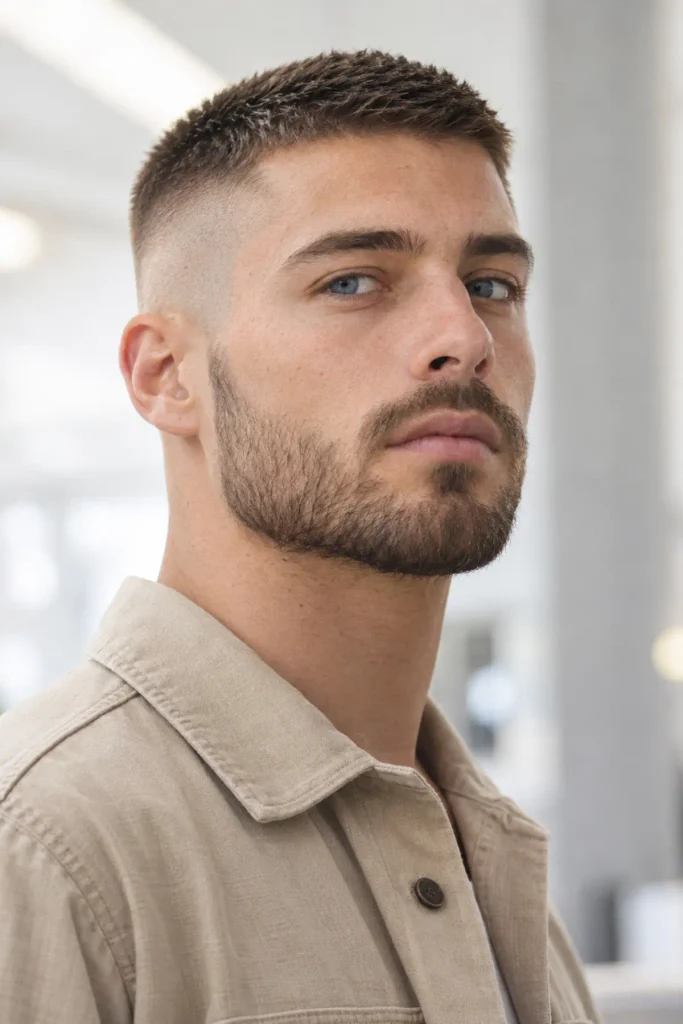
Military-inspired short sides and back meet a bit more length on top and a well-groomed beard for a rugged but polished combination. Diamond and round faces benefit most from the strong contrast, and thick, straight hair holds the shorter top length cleanly between the frequent two-week trims this style needs.
15. Textured Buzz Cut with Beard
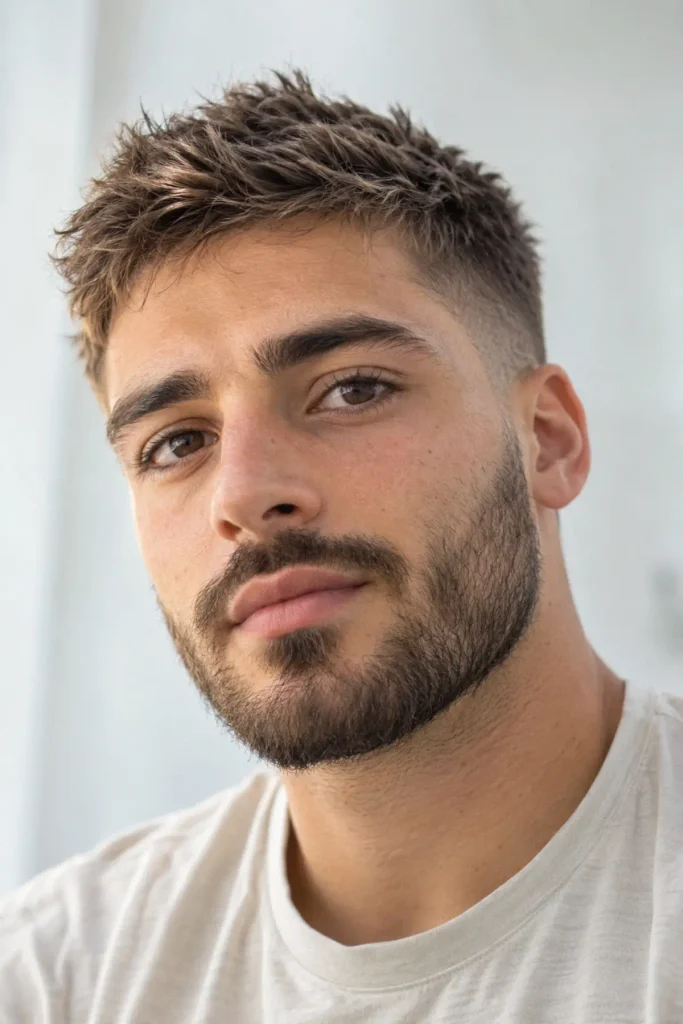
A slightly longer guard, left unblended rather than combed flat, brings out natural texture and pairs especially well with curly or wavy hair. Oval and square faces suit this relaxed, lived-in look, which needs a light styling cream and a trim roughly every three weeks.
16. Buzz Cut Fade with Beard and Line Up
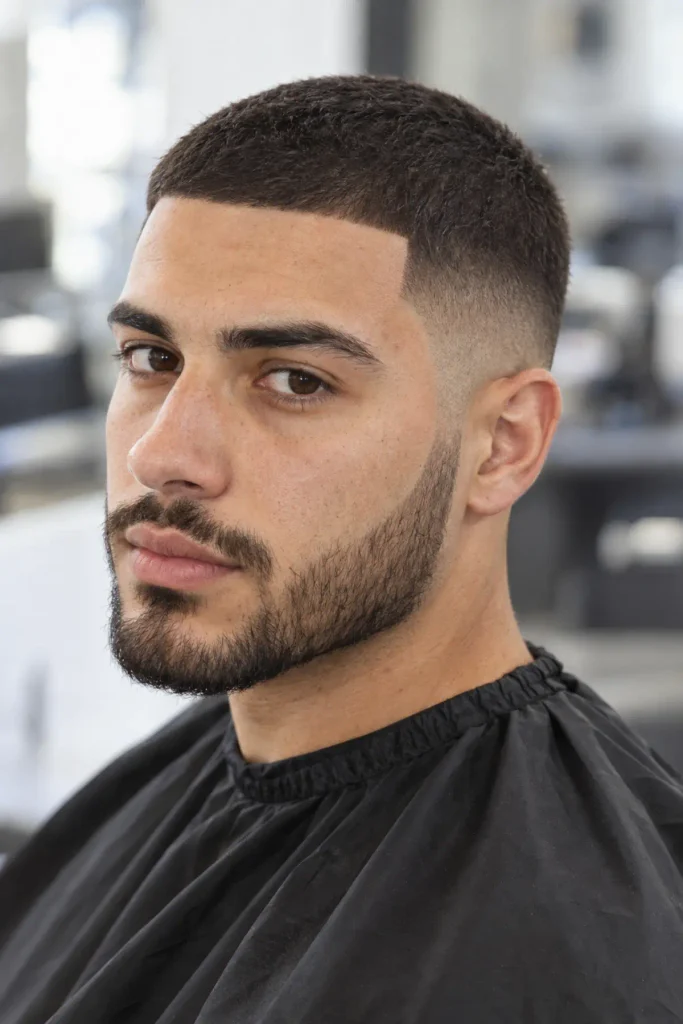
Sharp, clipper-defined edges along the hairline, temple, and beard border turn a simple fade into something more polished. This works on any face shape but shows up most clearly against dark or medium hair colors. The line-up needs refreshing weekly, more often than the fade underneath it.
17. Disconnected Buzz Cut with Beard
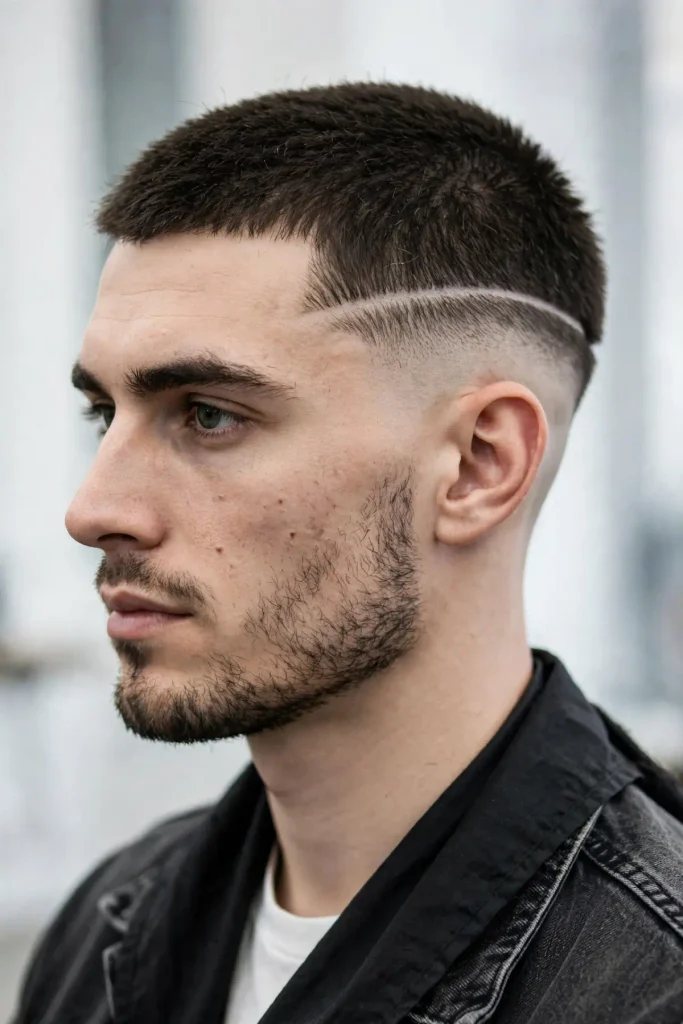
Instead of a smooth blend, a hard visible line separates the shorter sides from the top, creating a bolder, more graphic statement. Oval and diamond faces carry this well, and it suits thicker hair that holds a clean edge. The disconnect line needs a touch-up about every two weeks.
18. Buzz Cut Fade with Beard for Round Faces
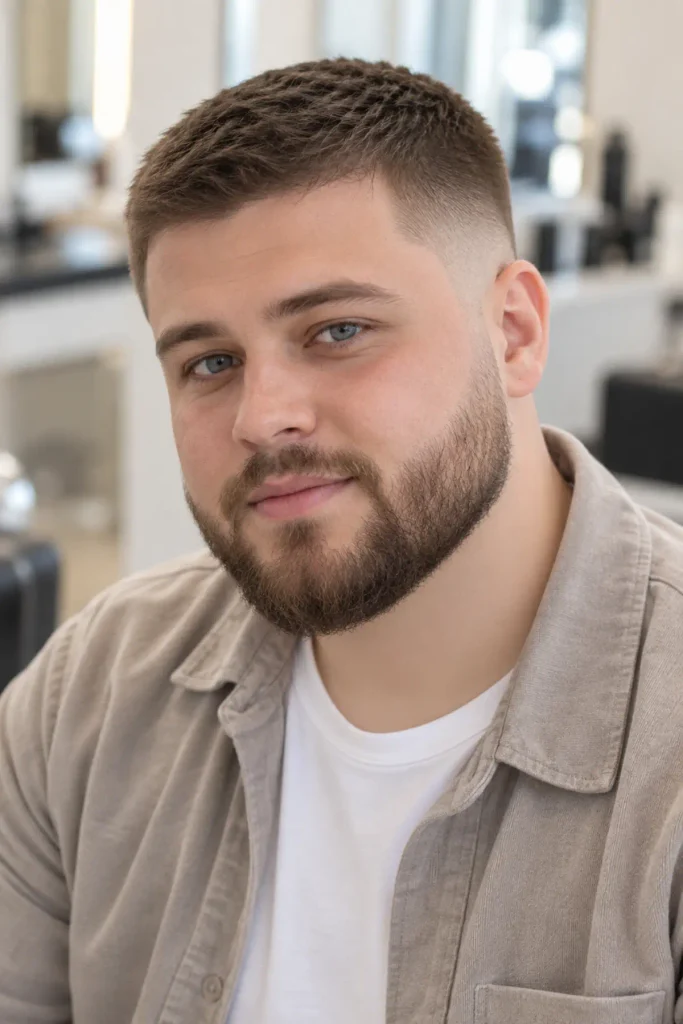
A low fade paired with a beard shaped shorter on the cheeks and fuller at the chin adds visual length to a round face and softens its width. This combination works with any hair texture and needs a barber visit roughly every three weeks to hold its shape.
19. Buzz Cut Fade with Beard for Square Faces
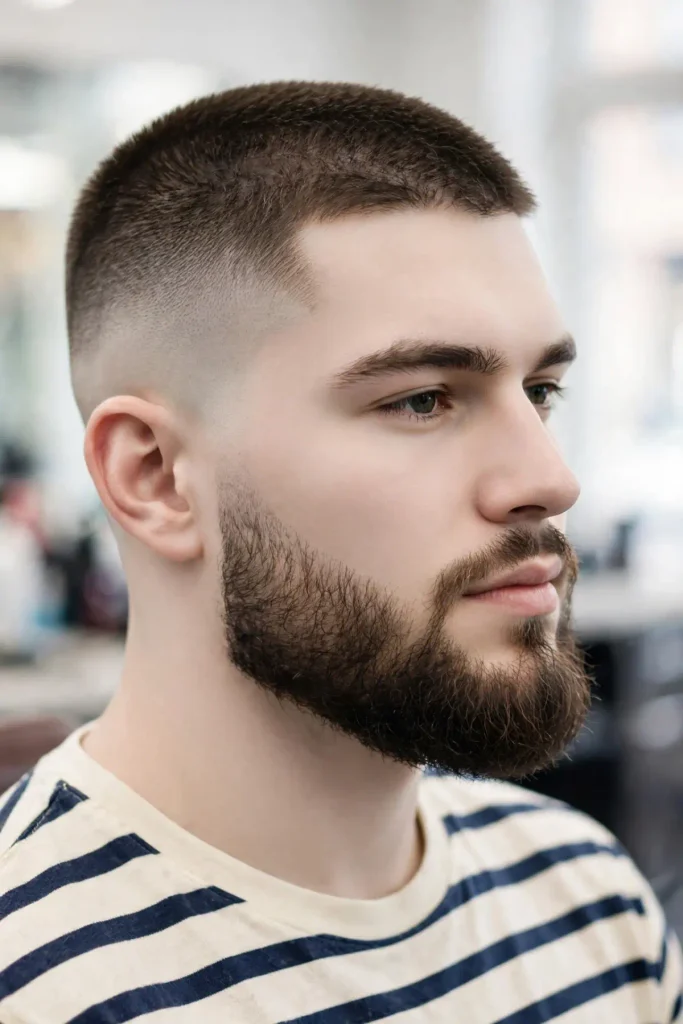
A high fade plays up an already strong jawline, while keeping the beard tighter on the sides and fuller only at the chin prevents the look from feeling heavy. Straight or wavy hair suits this pairing best, and it holds its sharp lines for about two weeks.
20. Low Contrast Buzz Cut Fade with Beard

A soft, barely-there blend between the top and sides gives a more mature, understated finish that still looks deliberate. It suits nearly every face shape, particularly men who want a subtler look for the office, and can often go three to four weeks between trims.
Styling Difficulty and Daily Maintenance
This is genuinely one of the lowest effort hairstyles a man can have on top, which is a large part of its appeal. The daily routine takes well under five minutes.
For the hair, a small amount of matte clay or a light styling powder worked through damp or dry hair is usually all that is needed, since there is so little length to manage. Heavy gels or anything with high shine tend to look greasy on hair this short and are best avoided.
For the beard, a few drops of beard oil massaged into the skin each morning keeps both the beard and the skin underneath it from drying out, and a light beard balm helps train any flyaway hairs if the beard has some length to it.
How Often to See a Barber, and What It Actually Costs
Trim frequency depends mostly on fade height. A skin fade grows out fastest because the contrast at the skin line is the first thing to soften, so it usually needs attention every one to two weeks. A low fade can often stretch to three weeks before it starts looking untidy, since the blend line sits in an area with less visible regrowth.
Real pricing pulled from barbershops across several US states shows a fairly consistent pattern. A standalone fade haircut typically runs thirty to sixty five dollars, and adding a beard trim to the same visit usually brings the total to somewhere between forty five and eighty five dollars, depending on the city, the shop, and whether the service includes a straight razor finish or hot towel.
Scalp hair grows at an average rate of about half an inch, or roughly one and a quarter centimeters, per month, and beard hair grows at a very similar pace. That means a number 2 guard buzz cut, at roughly a quarter inch of length, will grow past a number 3 length within about two weeks and start looking noticeably softer by the three week mark, which lines up closely with the trim frequency most barbers recommend.
What This Cut Grows Into
Men who decide not to keep up with the two to three week trim schedule are not stuck. The buzz cut fade grows out in stages, and each stage opens up a different style direction.
By around week six to eight, there is usually enough length on top to work with a comb or brush, and the cut starts moving toward the shorter end of MenHairInspo’s medium length haircuts for men guide.
Men who keep growing it out from there, especially with wavy or curly texture, will eventually have enough length and movement to explore the styles in the long layered hair for men guide.
For men with thick or coily hair who grow the top out significantly longer while keeping the sides tighter, a man bun hairstyle eventually becomes an option once there is enough length to gather.
Exactly What to Say to a Barber
Being specific in the chair is the difference between getting this look right the first time and needing a fix appointment. A few example scripts, based on the most common combinations, are below.
- Low fade with a full beard: “A number 2 on top, low fade starting just above the ears, and connect the beard into the sideburns with a soft blend, no hard line.”
- High fade with a short beard: “High fade starting above the temple, skin at the bottom, number 3 on top, and keep the beard tight, about half an inch, with a clean neckline.”
- Skin fade with heavy stubble: “Skin fade, take it all the way to bare skin at the bottom, number 2 on top, and just clean up the stubble lines without trimming the length down.”
It also helps to mention hair texture directly, since a barber will often adjust clipper technique for curly or coily hair versus straight hair, and to specify whether a razor or clippers only should be used near the beard line for anyone prone to skin irritation.
Scalp and Skin Care for This Style
This is one of the most overlooked parts of getting a buzz cut fade with beard right, and it deserves real attention rather than a single throwaway line.
Ingrown Hairs Where the Fade Meets the Beard
The area where a close fade or skin fade meets the beard line is a common spot for ingrown hairs and razor bumps, medically known as pseudofolliculitis barbae. According to DermNetNZ, this condition affects an estimated 45 to 80 percent of men with tightly curled or coarse hair, largely because curved hair follicles cause the cut hair to grow back into the skin rather than straight out. It is a mechanical issue tied to hair curvature rather than a hygiene problem, and it shows up most often along the neckline and jaw, where a razor or a close clipper blade is used.
How to Reduce It
Dermatologists generally recommend trimming or shaving in the direction hair grows rather than against it, using a single clean pass instead of going over the same area repeatedly, and exfoliating gently a couple of times a week to keep dead skin from trapping new hairs. For men who deal with this regularly, asking a barber to use clippers with a guard rather than a bare blade around the beard line can also help.
Scalp Sun Protection
A freshly buzzed or faded scalp has far less hair covering it than most other haircuts, which means more direct sun exposure. A lightweight, non greasy SPF applied to the scalp on sunny days is a simple habit that most buzz cut guides skip entirely.
Who This Style Works Best For, and Who Should Think Twice
This look is genuinely versatile, but it is not automatically right for everyone.
It works especially well for men with decent scalp and hair density, since thin patches show more under short hair, men who can commit to seeing a barber every two to three weeks, and men whose beard grows in fairly evenly.
Men with a patchy or uneven beard, particularly along the cheeks, may want to keep the beard a bit longer than the tightest styles pictured in this guide, letting it fill in visually before moving to a very short, close cropped beard shape that would show every gap. Men with sensitive skin or a history of razor bumps should lean toward a low or mid fade rather than a skin fade, since less close shaving near the beard line means less irritation. And men who are not confident they will keep up with regular trims may be better served starting with a slightly longer guard, since a longer buzz grows out far more gracefully than a very short one.
Common Mistakes to Avoid
A few small details separate a sharp buzz cut fade with beard from one that looks unfinished.
- Mismatched fade heights: the hair fade is high and tight but the beard fade is left low, creating a visible seam instead of one connected look.
- A neckline set too high: sometimes called the chin strap look, which reads as accidental rather than intentional.
- Skipping trims: letting the fade grow out unevenly, since the sharp line that makes this style work is also the first thing to disappear without regular upkeep.
Age and Lifestyle Considerations
Younger men in their twenties tend to gravitate toward higher contrast versions, such as a high or skin fade with a shorter, tighter beard, since the boldness reads as current and low effort.
Men in their thirties and beyond often prefer a lower contrast version, such as a low or mid fade with a fuller beard, which still looks sharp and current without feeling like it is chasing a trend. This softer approach also tends to be more forgiving of any thinning at the crown or temples, since there is less of a hard line drawing attention to those areas.
For active lifestyles, whether that means regular workouts, outdoor work, or hot climates, this style is close to unbeatable, since there is nothing to sweat out or reset before the next activity.
Frequently Asked Questions
What fade height works best with a full beard?
A mid fade tends to work best with a full beard, since it provides enough contrast to look intentional without competing for attention against a thicker beard shape.
How do you blend a beard fade into a buzz cut without a hard line?
A barber typically starts with the same guard used on the hair fade and works down through one or two shorter guards along the sideburn and jaw area, using short upward strokes to soften the transition rather than a single straight pass.
Does a buzz cut fade with beard suit a round face?
Yes, particularly with a low or mid fade and a beard shaped shorter on the cheeks and longer at the chin, which adds visual length and reduces the appearance of roundness.
What guard number should be requested for a buzz cut with beard?
A number 2 or number 3 guard on top is the most common and forgiving starting point, paired with a beard length one guard shorter for visual balance.
How often does a buzz cut fade with beard need a trim?
Most men need a barber visit every two to three weeks, with skin fades on the shorter end of that range and low fades able to stretch slightly longer.
Can a buzz cut fade with beard work with curly or coily hair?
Yes, and it often looks especially sharp, since the contrast between tight texture on top and a clean fade or skin fade reads as very deliberate.
Is a buzz cut fade with beard actually low maintenance?
The daily routine is genuinely low effort, usually under five minutes, but the style does require more frequent barber visits than longer haircuts to keep the fade line sharp.
What should be done about a patchy beard with this haircut?
Keeping the beard slightly longer than the tightest, closest cropped versions shown in style galleries lets patchy areas fill in visually, and simply allowing eight to twelve weeks of growth often improves evenness on its own.
How much does a buzz cut fade with beard cost in the United States?
A standalone fade typically runs thirty to sixty five dollars, and adding a beard trim to the same visit usually brings the total to between forty five and eighty five dollars, depending on the shop and location.
What is the difference between a taper and a fade?
A taper is a gradual, gentle reduction in length that still leaves some hair at the shortest point, while a true fade blends all the way down to bare skin for a more dramatic transition.
Final Thoughts
A buzz cut fade with beard rewards a bit of planning more than most low maintenance haircuts do, mainly because three separate variables (guard length, fade height, and beard shape) all need to work together for the look to land. Using the face shape and hair type matrix above as a starting point, then bringing one of the barber scripts into the next appointment, is the most reliable way to get it right on the first try. For more face shape specific and hair type specific guides, readers can browse the full collection of style guides on MenHairInspo.