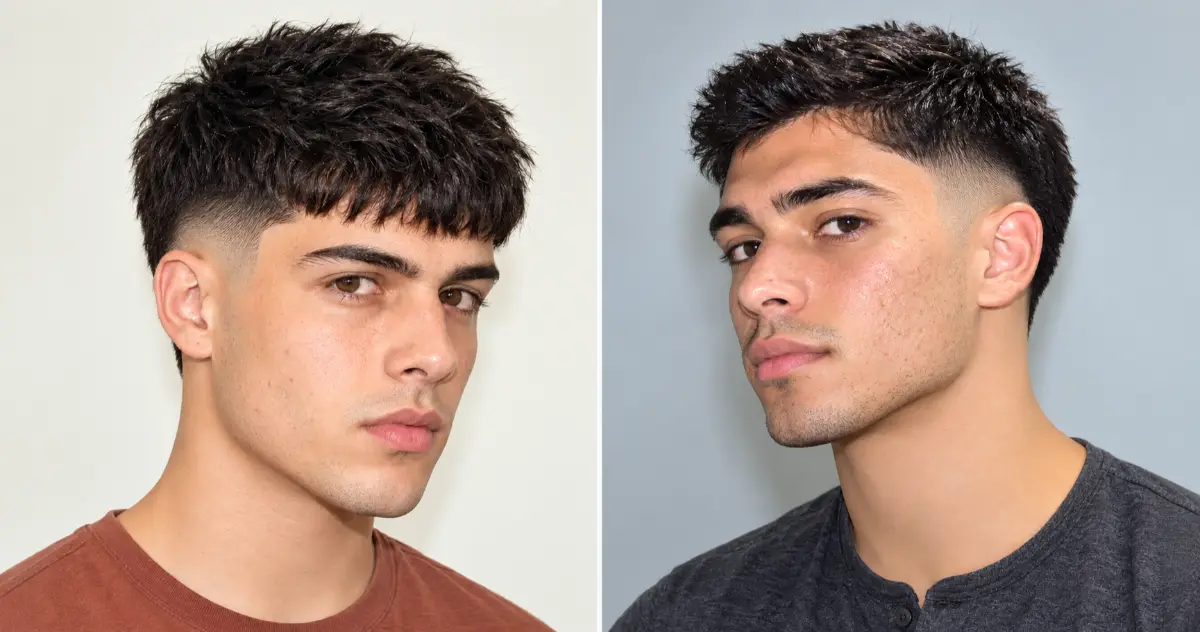
A low burst fade haircut is a fade that curves in a half circle around the ear, starts low near the natural hairline, and leaves the top and back long. Because the curve stays close to the ear, the contrast is soft, which makes it the easiest burst for first-timers, office jobs, and anyone who wants a sharp shape without a loud look.
A request for a low burst fade works best when it comes with three details: how short the shortest point goes (skin or a guard number), how much length stays on top, and what happens at the neckline. Most barber guides suggest a fresh cut every 2 to 4 weeks to keep the curve crisp.
Low burst fade at a glance
| Question | Short answer |
|---|---|
| What is it? | A curved fade around the ear that sits low, with length kept on top and at the back |
| How strong is the contrast? | Subtle to medium, softer than a mid or high burst |
| Best for | First time burst fades, office settings, curls, waves, mullets and textured crops |
| Hair types | Straight, wavy, curly and coily |
| Styling difficulty | Easy to moderate, because only the top needs daily styling |
| Barber visits | Roughly every 2 to 4 weeks, sooner for skin finishes |
| Typical cost | Many US shops charge about $30 to $40 for a fade, with big city prices running higher |
| Skip it if | The barber has never cut a curved fade, or a six week gap between cuts is the plan |
What a low burst fade really is
The word “burst” describes a shape, and the word “low” describes a height. A burst fade keeps its shortest point right behind the ear, then lets the hair grow longer in a curved sweep outward, a bit like a small sunburst. “Low” means that sweep stays close to the ear and the natural hairline instead of climbing toward the temple or crown, so most of the side length stays in place. Luxe Digital and Taper Trends (which cites CADMEN Barber Academy) describe it the same way, and the full burst family (low, mid and high) is covered in this burst fade mullet guide for men who want the longer back.
One detail causes more confusion than any other: what happens at the back of the head. Some barbers leave the nape long, some soften it with a low taper, and a few curve it down like a drop fade. None of those is wrong, but each one looks different in the mirror, so the nape treatment is worth saying out loud in the chair. The table below shows how the low burst compares with the cuts it gets mixed up with.
| Cut | Shape | Where it starts | Nape and back | Contrast | Best for |
|---|---|---|---|---|---|
| Low burst fade | Half circle around the ear | Close to the ear and hairline | Usually kept longer, or softly tapered | Subtle to medium | First timers, curls, waves, mullets |
| Low taper fade | Gradual blend, level line | Sideburns and neckline | Tapered short | Very subtle | Conservative offices, easy grow out |
| Low drop fade | Curve that dips behind the ear | Low behind the ear | Faded down toward the nape | Medium | Men who want a rounder back profile |
| Mid burst fade | Same half circle, taller | Around the temple midpoint | Usually kept longer | Medium to strong | The most requested height, see the mid fade guide |
Who a low burst fade suits
Hair texture is the easiest place to start, because the burst works on all of them. Straight hair shows the curve most clearly, so it needs some texture or direction on top to avoid looking flat. Wavy hair is the friendliest match, since the waves add movement above a tidy side. Curly and coily hair keep their fullness on top while the curve cleans up the sides, and anyone with tight curls should ask the barber to set the arc height while the hair is dry, because curls shrink and can make the arc sit higher than planned. Men with curls who want more ideas can browse the burst fade haircuts for curly hair collection.
Density matters more than face shape. Thick hair holds contrast well and keeps a crisp edge longer, while fine hair usually looks better with a low burst or a soft taper finish than with bare skin. The short haircuts for men with fine hair guide has more advice on choosing the right finish. Face shape works as gentle guidance only: a low burst keeps proportions balanced, while round faces usually pick up extra height from the top rather than the fade, and heart-shaped faces do well with a little volume above a low fade. Age is rarely a limit, and the cut works equally well on gray hair, though men with thinning temples should show the barber where the hair is sparse so the arc is placed to flatter, not to expose. Because the contrast is soft, it also fits most office hairstyles for men, and anyone with a strict dress code should check the policy before choosing a skin finish.
20 low burst fade haircut ideas for men
Every idea below keeps the fade low and curved, so the real choice is what sits on top. Each one gets a quick look at who it suits and how to style it, followed by what to say in the chair, how often to rebook and what to watch for. The suitability notes reflect common barbering practice and the competing guides reviewed for this article, so they work as a starting point, and a barber who has seen the actual hair has the final say.
1. Low burst fade with a textured crop
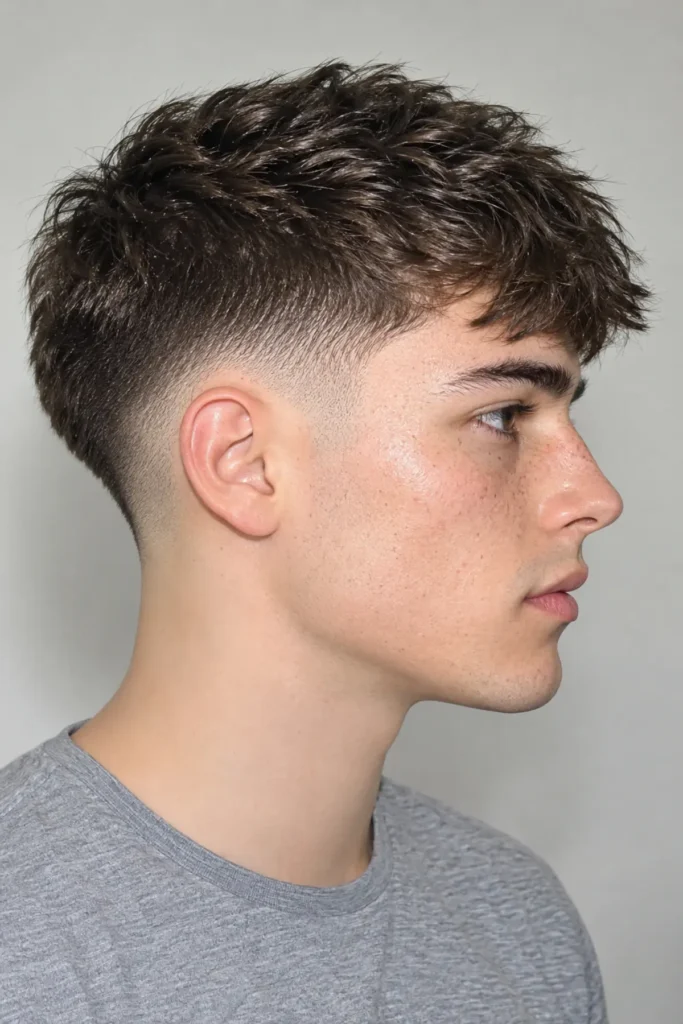
This is the everyday favorite, with about 1.5 to 2.5 inches of choppy hair on top and a soft curve around the ears. It suits straight and wavy hair best, works on most face shapes, and handles medium to thick density well. Styling takes about a minute: work a pea sized amount of matte clay or texture powder through dry hair with the fingers and push it slightly forward. Difficulty is easy.
The barber instruction is simple: “Low burst fade, point cut the top to about two inches, keep the arc tight to the ear.” Plan on a trim every 3 to 4 weeks, because the short top hides growth well even when the fade softens. The main drawback is that very fine, flat hair can look stiff, so texture powder and a little point cutting matter. It grows out evenly, which makes it a safe first burst.
2. Low burst taper with a guard finish
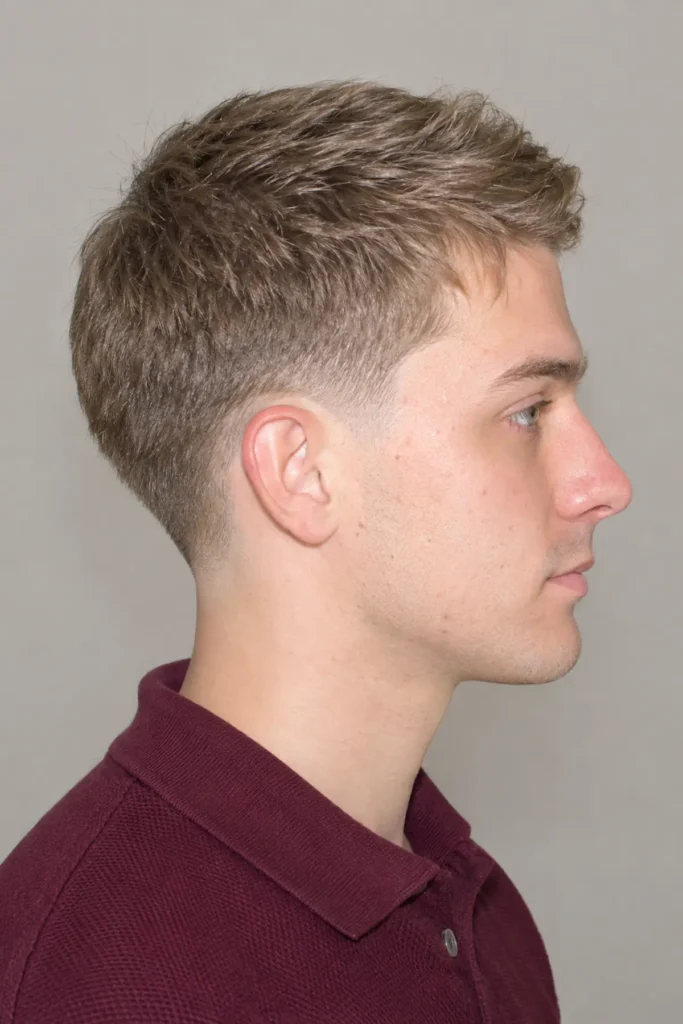
This is the quietest version, where the curve stays but the shortest point stops at a short guard instead of bare skin. It suits men with fine or thinning hair, sensitive skin, or conservative workplaces, and it looks natural on every face shape. Styling is almost nothing: a light cream through damp hair and a quick comb.
The ask is “Low burst taper, no skin, finish the shortest point on a number one or two guard.” Because there is no bare skin to mark regrowth, the cut blurs gradually and can stretch toward four weeks. The tradeoff is a softer curve that some men find too subtle, so anyone who wants the arc to read clearly from across the room may prefer idea 3.
3. Low burst skin fade with a short top
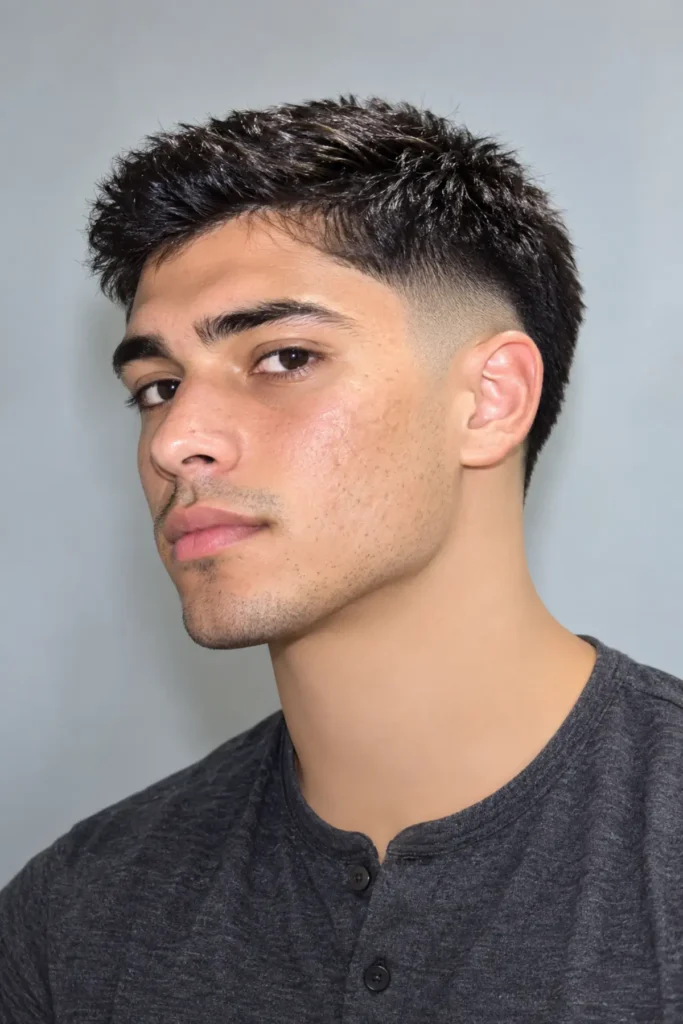
Here the shortest point behind the ear goes to bare skin, which makes the half circle stand out sharply against a short, neat top of about an inch to an inch and a half. It suits thick or medium density hair, oval and square faces, and men who like a clean, athletic look. Styling is a rub of paste or cream, so difficulty is very easy.
The instruction is “Low burst fade to skin right behind the ear, about an inch on top, neckline left natural.” Skin finishes lose their crispness first, so rebooking every 2 to 3 weeks keeps the edge. Close shaving can also irritate some skin, especially with coarse or curly hair, and fine hair can look thinner next to bare skin, so a guard finish is the safer pick for sensitive scalps.
4. Low burst fade with a curly top
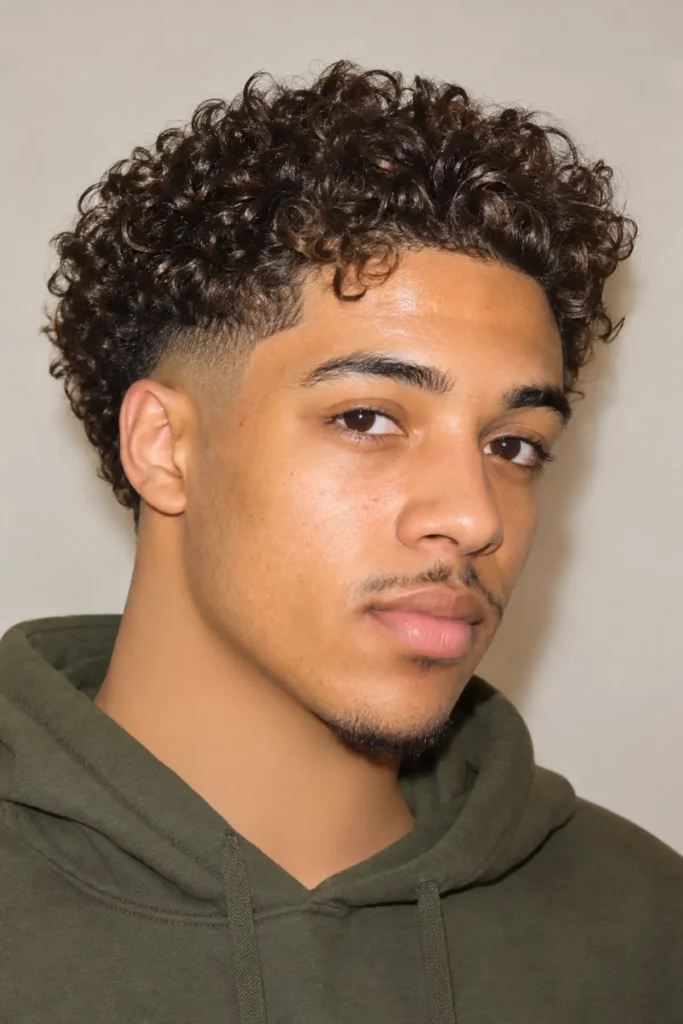
Curls stay full and bouncy on top while the curve clears bulk from around the ears, which keeps the shape from going wide. It suits wavy to curly hair, round and oval faces, and medium to thick density. Styling means a curl cream or light gel on damp hair, then scrunching and air drying or using a diffuser on low heat. The burst fade haircuts for curly hair guide shows plenty more variations.
For curls, the line is: “Low burst fade, curls kept about three inches on top, set the arc height on my dry hair.” Curls hide growth well, so many men stretch it to 3 or 4 weeks. The classic mistake is cutting the curls too short just to show off the fade, which removes the pattern that makes the cut work. It grows out softly and rarely looks messy.
5. Low burst fade with waves
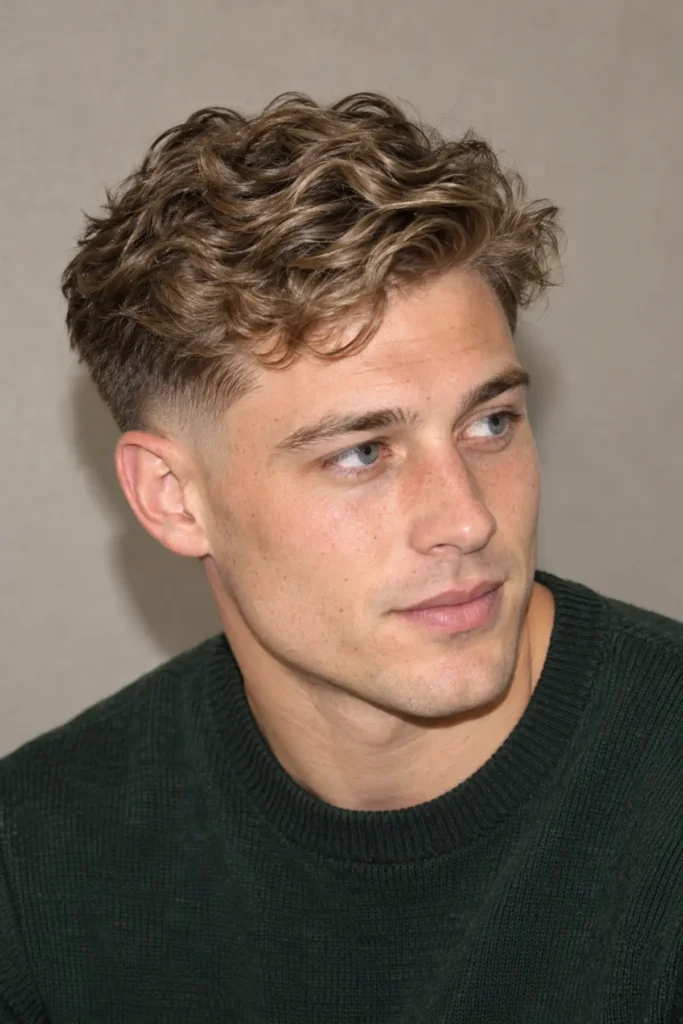
Natural waves add movement above a tidy side, so this pairing looks relaxed but intentional. It suits wavy hair, oval, diamond and heart shaped faces, and medium density. Styling is a sea salt spray or light cream on damp hair, then a finger dry so the waves stay visible and are not flattened.
The barber instruction is “Low burst fade, leave three to four inches on top so the waves can move, blend the arc into the length.” Expect a visit every 3 weeks or so. The drawback is that waves can puff out when left too long without a trim, and men who press them flat lose the best part of the style. Grow out is gentle and easy to live with.
6. Low burst fade with short coils or an afro
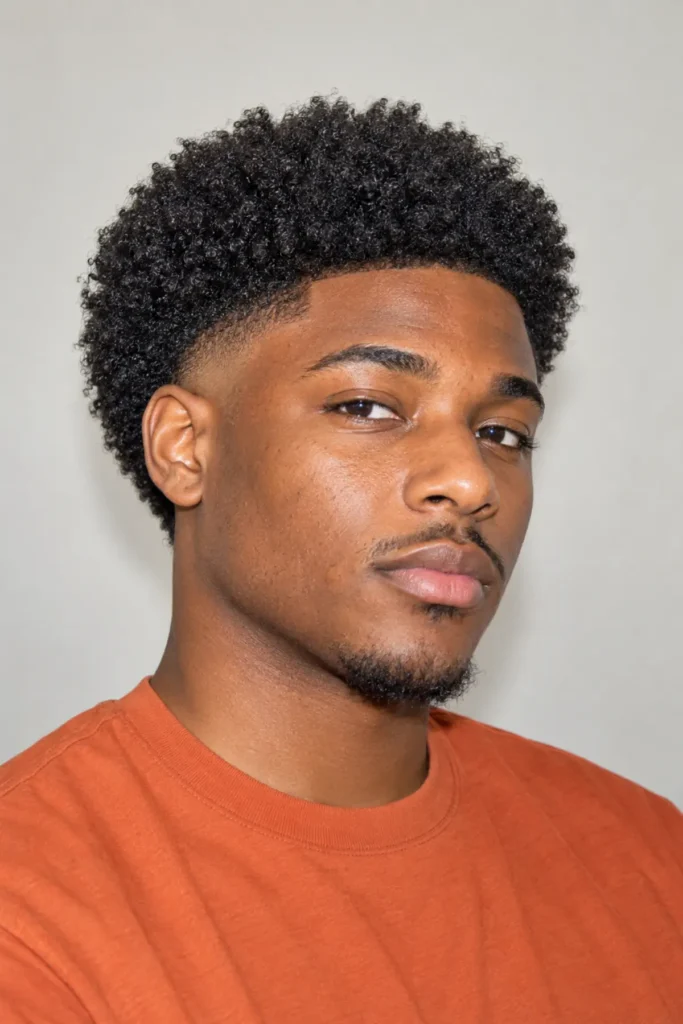
Short coils, a rounded afro or a twist out sit nicely above a low curve, and the fade frames the shape without taking away its height. It suits coily hair, most face shapes and medium to thick density. Styling is a curl sponge or a light moisturizer for definition, then a pick or fingers to even out the height after washing.
A clear line for the barber: “Low burst fade, keep the top natural and full, soft line up at the front, no hard line at the temple.” A line up adds crispness but also needs a visit every 2 to 3 weeks. The drawback is that coily hair can grow wide fast, and razor sensitive skin may prefer a guard finish over bare skin. When it grows out, the rounded top simply gets fuller, which many men like.
7. Low burst fade mullet
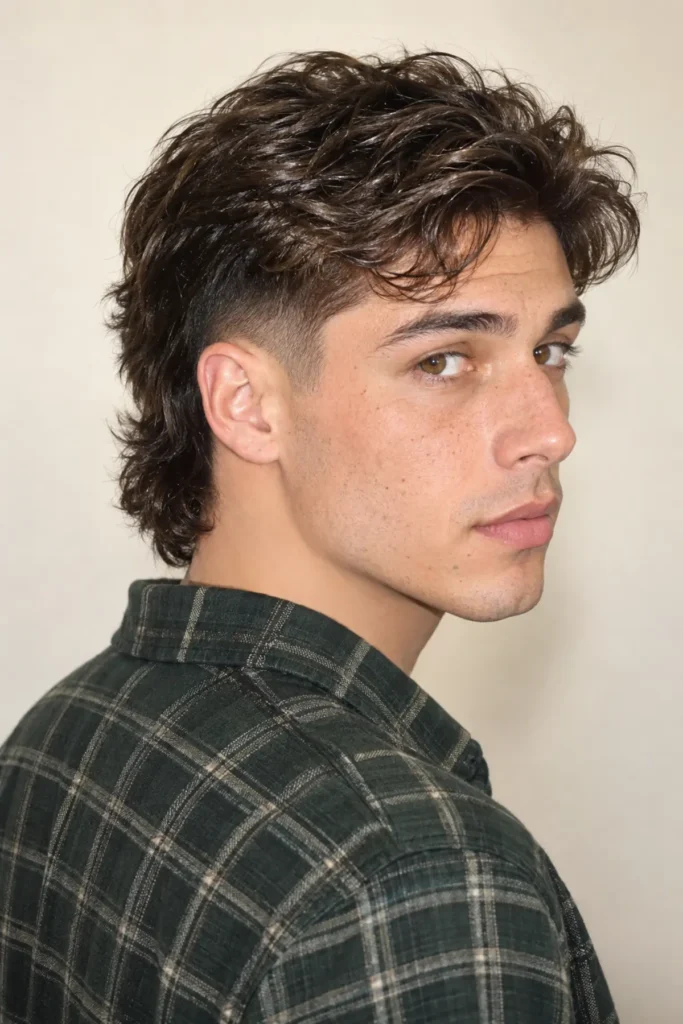
The sides stay tidy while the back keeps real length, which is the modern take on party in the back. It suits straight, wavy and curly hair, oval and oblong faces, and medium to thick density, and the low placement keeps it from looking costume like. Styling means a texture spray or sea salt spray, then a blow dry with the fingers to separate the length. The burst fade mullet guide goes deeper into back length and shaping.
The barber instruction is “Low burst fade on the sides, keep the length at the back, thin out the nape so it does not look heavy.” Rebook every 3 to 4 weeks to stop the sides from fuzzing into the back. The main drawback is a longer wait to grow the length, and a weak or ragged back can make the whole cut look unfinished. It grows out as a longer mullet, so it rewards patience.
8. Low burst fade with a textured fringe
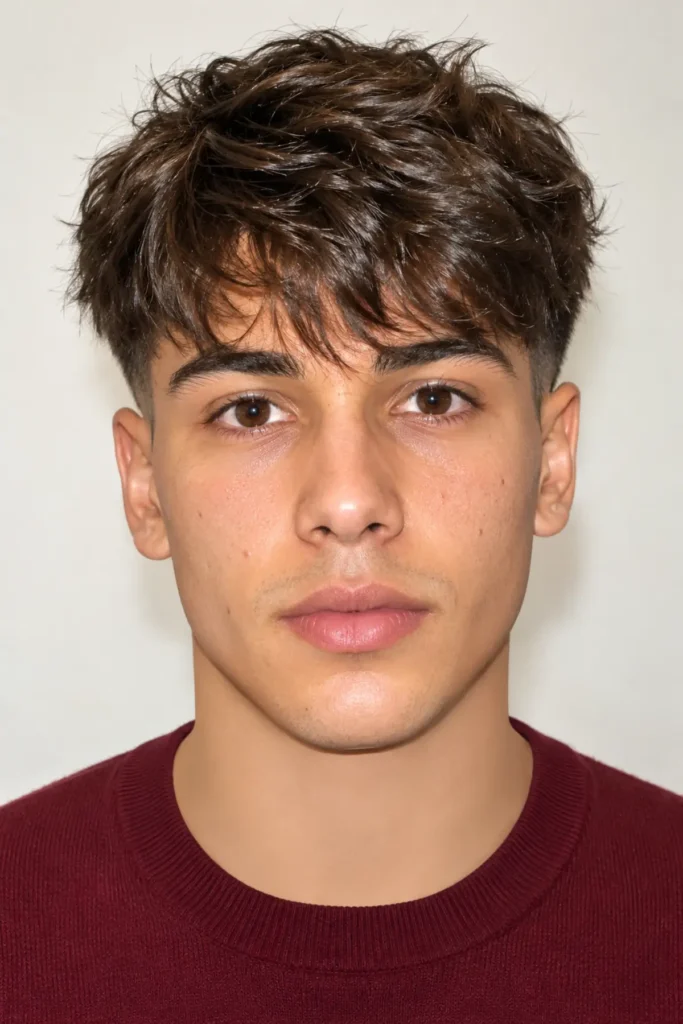
A fringe that falls onto the forehead gives a soft, youthful look, and the low curve keeps the sides clean around it. It suits straight to wavy hair, oval, long and diamond faces, and medium to thick density. Styling is a quick blow dry forward, then clay or paste worked through the ends. For similar looks, the fluffy fringe haircuts for men page has more ideas.
For the fringe, a clear line helps: “Low burst fade, about three inches on top, textured fringe, point cut for separation.” It needs a trim every 3 weeks because the fringe length changes the whole look fast. Men with a very high forehead or a strong cowlick at the front may find it fights them, and a barber can suggest a shorter fringe in that case. Grow out is gradual and the fringe stays wearable the whole time.
9. Low burst fade with a buzz cut
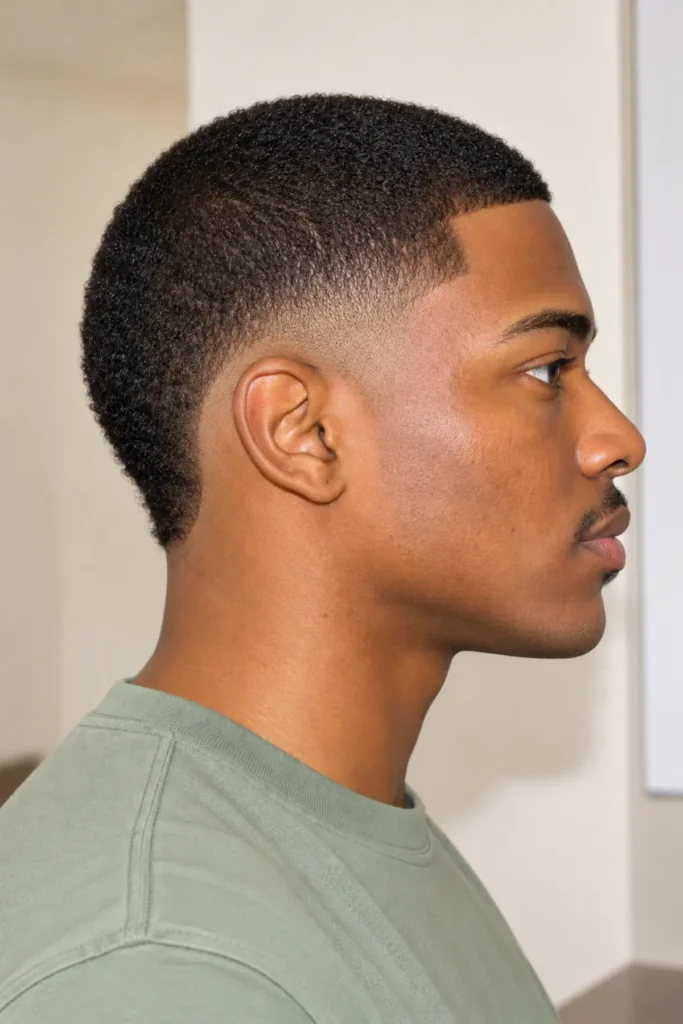
The buzz keeps the routine nearly effortless, and the small curve near the ear stops it from looking plain. It suits almost every texture and face shape, with the top usually on a number two or three guard. Styling is none, so difficulty is the easiest on this list, and a buzz cut fade with a beard is a popular next step.
The instruction is “Number two on top, low burst fade around the ear, leave the back slightly longer.” A short buzz shows fade lines clearly, so rebook every 2 to 3 weeks. Thin or patchy hair can look more sparse at this length, and a very short top can make a skin finish look harsh. It grows out as an even, soft crop.
10. Low burst fade with a side part
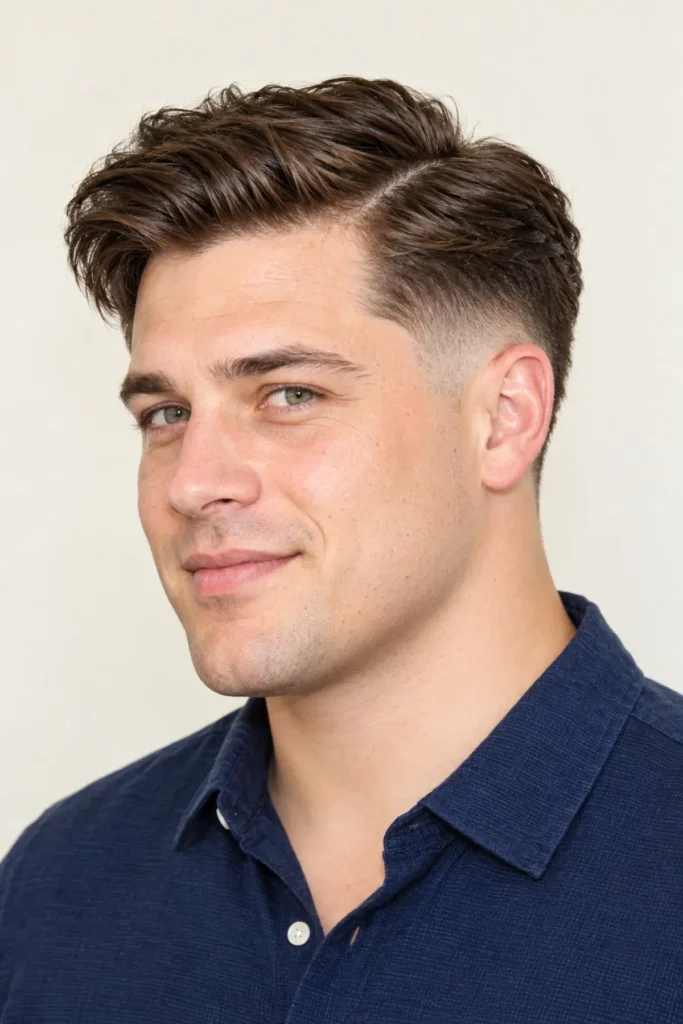
A natural side part with a short curve around the ears is a polished, classic choice that still looks current. It suits straight and wavy hair, oval and square faces, and medium density. Styling takes two minutes: comb the part into damp hair, blow dry in the direction the hair should sit, and finish with a light pomade or cream.
The ask is “Low burst fade, natural side part, about three inches on top, no shaved part line.” Plan on a visit every 3 weeks. The drawback is that straight hair shows regrowth quickly, and the part needs a decent amount of density to hold shape. Grow out is neat and stays office ready for a long time.
11. Low burst fade with a slick back
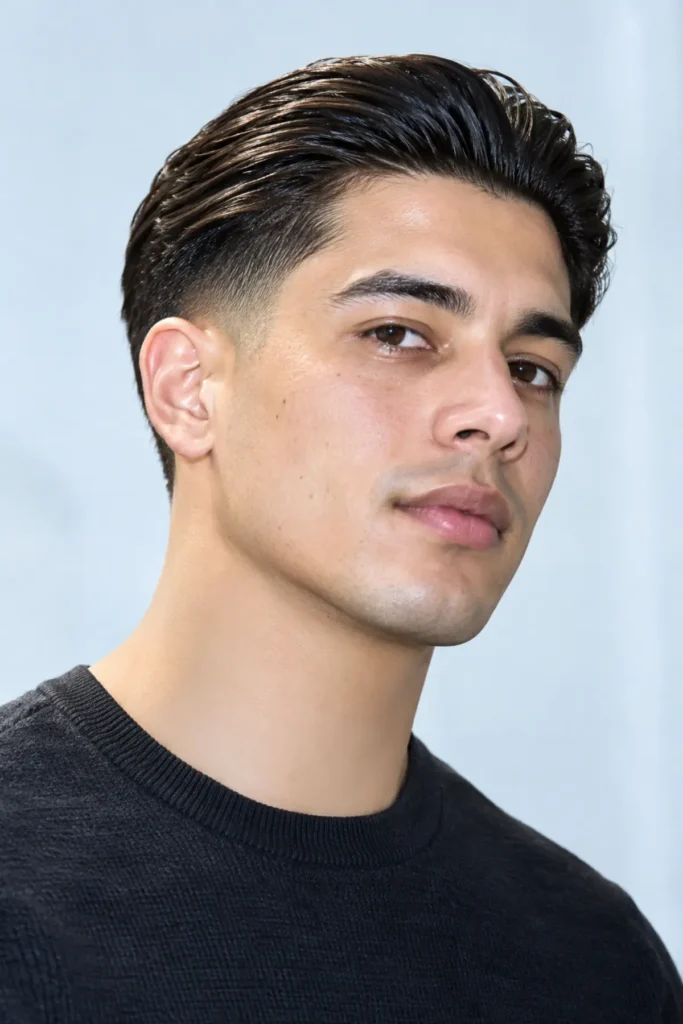
Hair combed straight back with a smooth finish gives the curve a sleek, dressed up feel. It suits straight to slightly wavy hair, oval and oblong faces, and medium to thick density, with three to four inches of length on top. Styling is a blow dry back with a vented brush or comb, then a pomade or light gel, and difficulty is moderate.
For a sleek finish, the script is: “Low burst fade, leave four inches on top for a slick back, keep the sides tight to the ear.” Rebook every 3 weeks to keep the neckline clean. The drawback is that very thin hair can look flat or reveal the scalp when slicked, and heavy shine can look dated. Grow out is easy, and the length simply adds more room to style.
12. Low burst fade with a quiff or pompadour
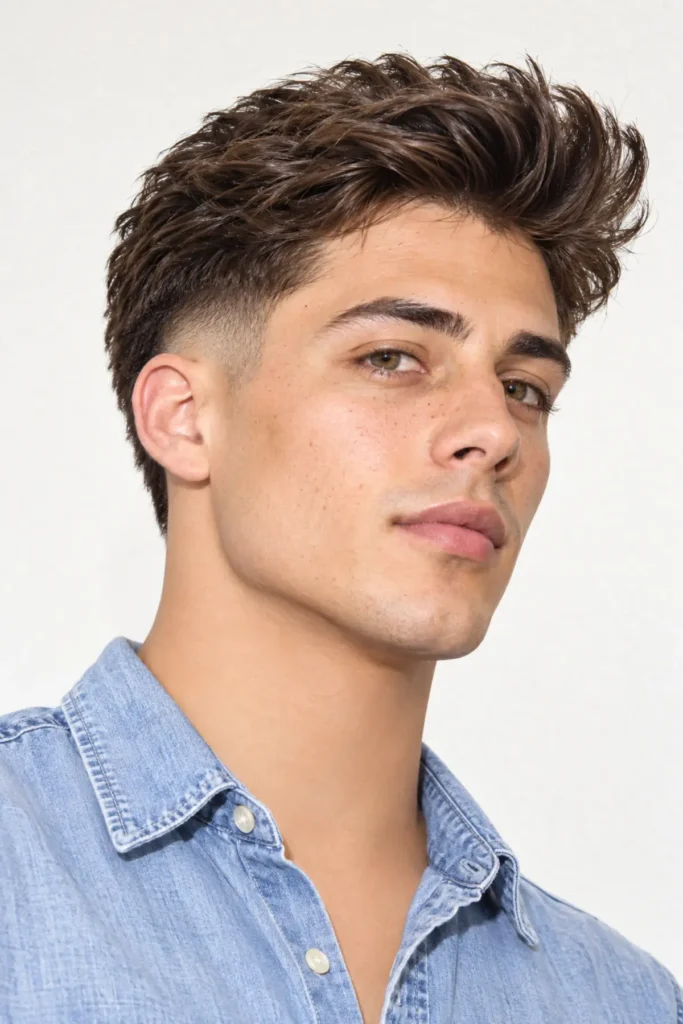
Height at the front and a clean curve below make this the most dramatic choice here while still sitting in the low range. It suits straight and wavy hair, round and square faces that benefit from added height, and medium to thick density. Styling takes five minutes with a blow dry upward, then a strong clay or paste, so difficulty is moderate to high.
Height depends on numbers, so the barber needs something like: “Low burst fade, three to four inches on top for a quiff, shorter toward the crown.” Expect a visit every 3 weeks to keep the shape tidy. It does not suit men who dislike daily styling, because without heat and product it falls flat. Grow out is forgiving, since the extra length can become a longer, softer flow.
13. Low burst fade with a French crop or Caesar
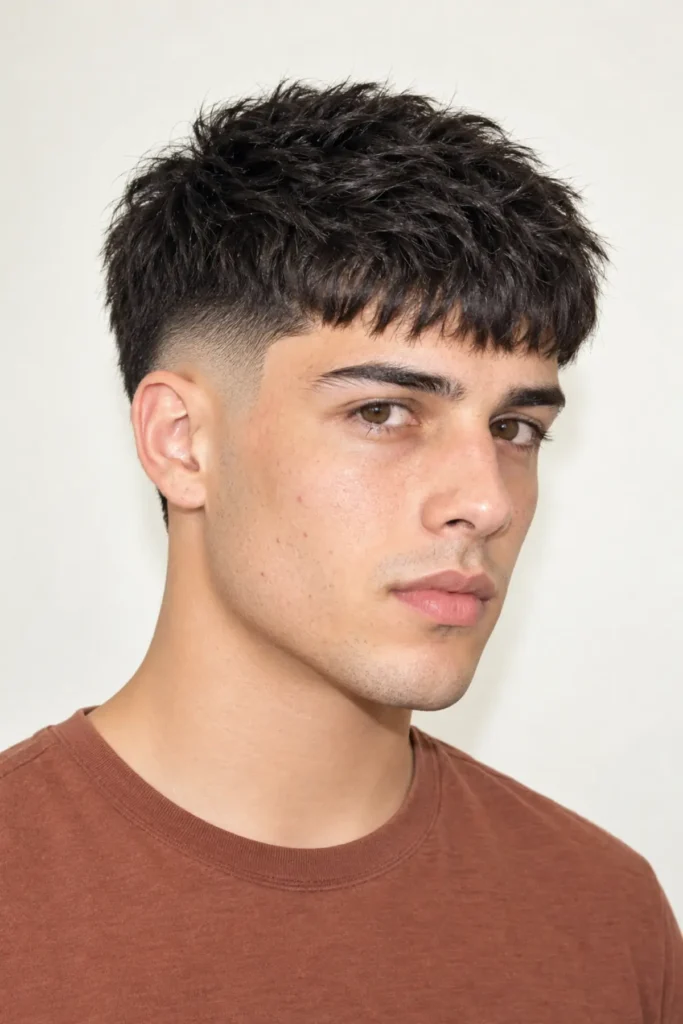
A short, blunt fringe across the forehead sits well above the curve for a clean, low effort look. It suits straight and wavy hair, round and square faces, and medium to thick density, since the front needs enough hair to hold its line. Styling is a rub of paste with the fringe pushed forward, so difficulty is easy.
The instruction is “Low burst fade, French crop on top, blunt fringe just above the eyebrows.” Rebook every 3 weeks, because the front line grows past the brow fast. Thinning at the temples or a receding hairline makes this cut harder to wear, and a barber may suggest a softer fringe. It grows out into a messy crop that is easy to reshape.
14. Low burst fade with a faux hawk
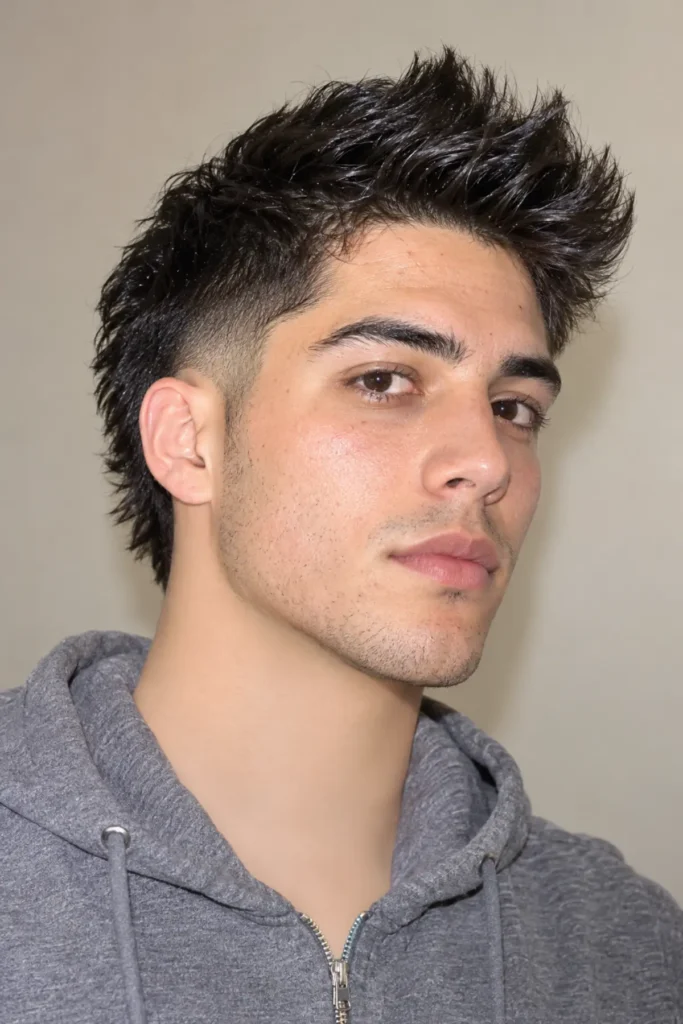
A little height down the middle with tidy curved sides gives some edge without the commitment of a full mohawk. It suits thick, straight or wavy hair, oval and square faces, and men who like an energetic, casual look. Styling is a blow dry upward and a bit of clay or wax at the center, so difficulty is moderate.
To keep it a faux hawk and not a full mohawk, the line is: “Low burst fade, leave the sides longer than a mohawk, about three inches on top peaked in the middle.” Visit every 2 to 3 weeks to keep the shape neat. Stiff, frozen spikes can look dated, and very fine hair may not hold the peak. It grows out into a regular textured top.
15. Low burst fade with a beard
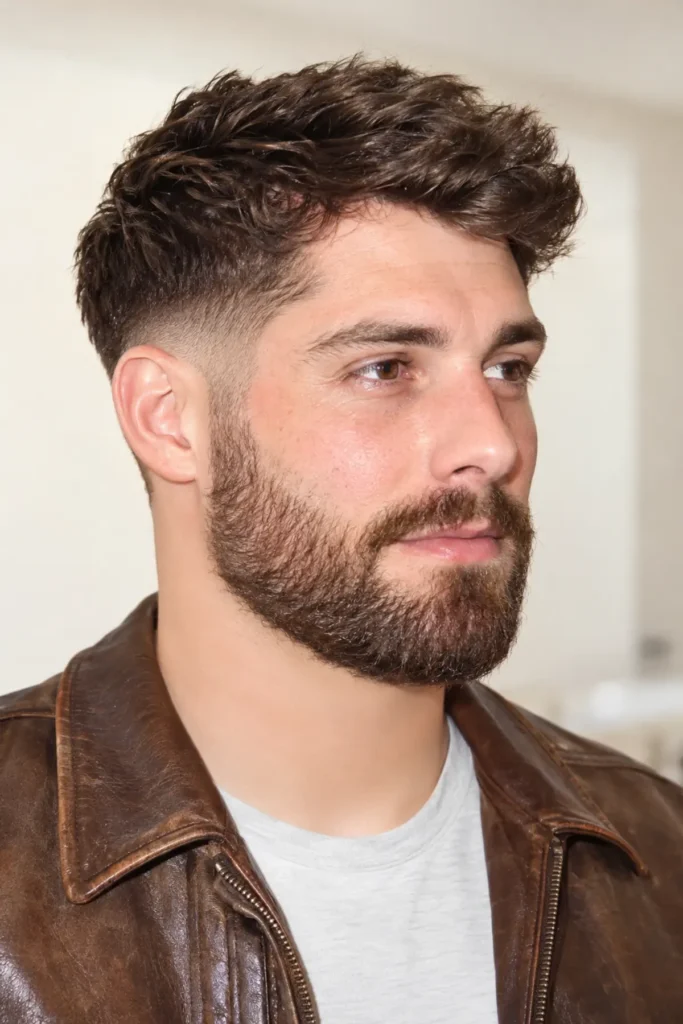
The curve flows down past the ear into the sideburn and beard so the head and the jaw look like one shape. It suits straight to curly hair, oval, round and square faces, and men with a short or medium beard, and the beard also adds weight to the lower face. Styling is a little beard oil and a texture product on top, and the buzz cut fade with a beard page shows a short version of the same idea.
The barber instruction is “Low burst fade, fade the sideburn into the beard, no hard gap, and shape the beard at the same visit.” Most men book the haircut and beard trim together, every 2 to 3 weeks. A hard line where the fade meets the beard is the most common failure, so it is worth saying out loud. Grow out is neat as long as the beard stays tidy.
16. Low burst fade with a medium length flow
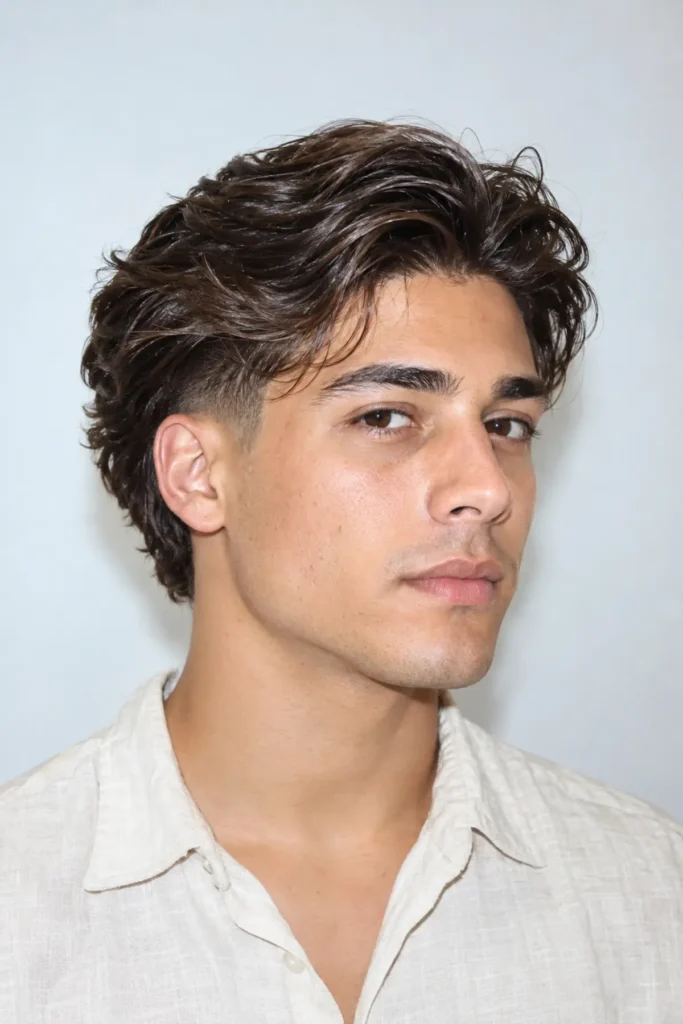
Hair that reaches the ears or collar with a tidy curve beneath it feels relaxed and put together at once. It suits straight, wavy and loosely curly hair, oval, oblong and heart shaped faces, and medium density. Styling is a light cream or sea salt spray, a finger dry and a tuck behind the ear if desired. The medium length haircuts for men guide lists more options for this length.
A line that works for this length: “Low burst fade, keep four to five inches on top, layered so it flows back.” Plan on a visit every 4 weeks, since the length hides growth better than a short top. The drawback is a little more daily effort and the risk of flat, heavy hair if it is not layered. It grows out gracefully and can easily turn into a longer style.
17. Low burst fade with a shaggy top
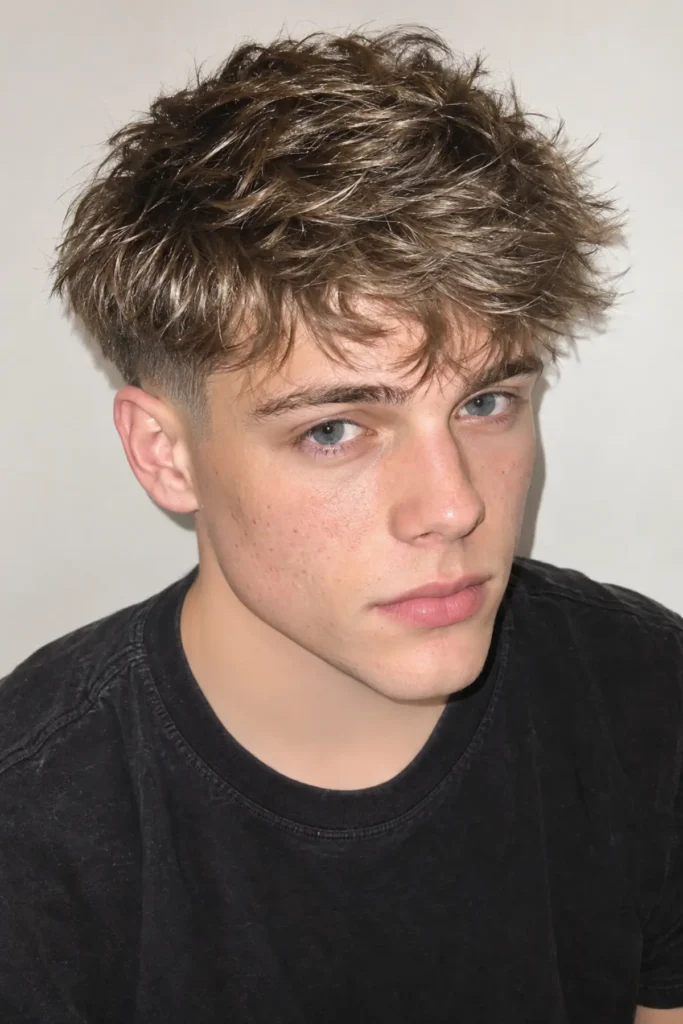
Loose, uneven layers give an easygoing, lived in look, and the low curve keeps the sides from looking bulky. It suits wavy, curly and thick straight hair, most face shapes, and medium to thick density. Styling is minimal: a texture spray, a scrunch and a quick air dry. For more inspiration, see the shaggy haircuts for men collection.
The barber needs to hear: “Low burst fade, choppy layers on top, leave it a little messy, thin the back so it sits flat.” Rebook every 4 weeks. The main drawback is that fine, limp hair can look stringy, and a messy cut still needs a good layer structure to look intentional. Grow out is the easiest on the list, because shaggy hair forgives almost anything.
18. Low burst fade with a wolf cut
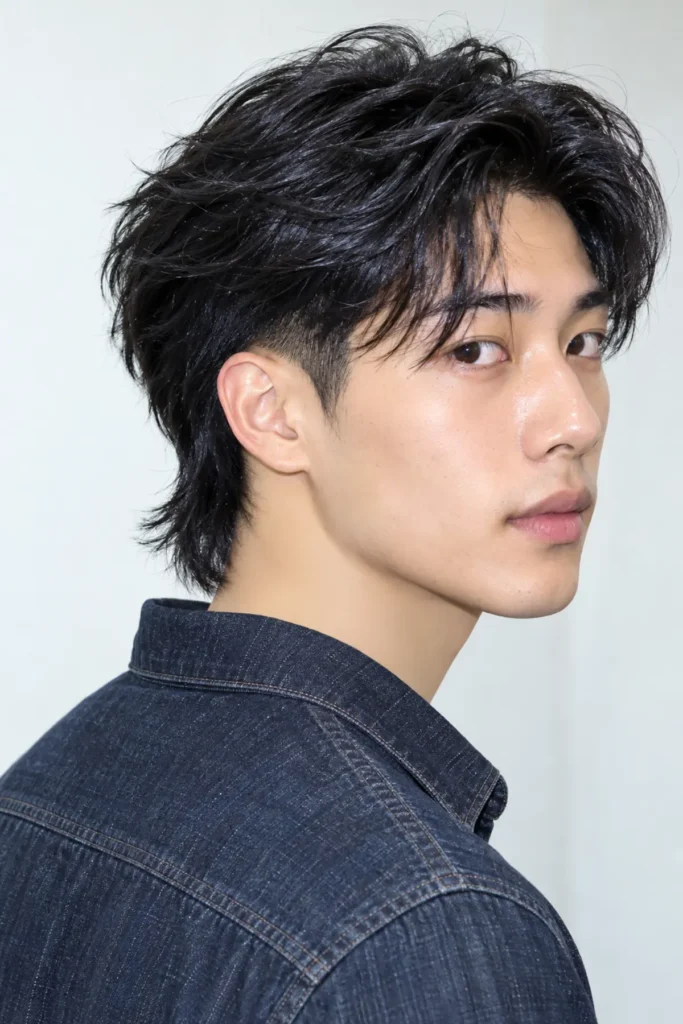
The wolf cut brings volume on top and a wispy back, and the burst fade neatens the sides so the cut does not go oversized. It suits wavy and thick hair, oval and long faces, and men who enjoy styling. Styling means a texture spray, a blow dry with the fingers and a bit of paste, with difficulty at moderate. The wolf cut for men page covers the layers in more detail.
For the layering, the barber needs this line: “Low burst fade, wolf cut layers on top, keep the back long and wispy.” Trims every 4 to 5 weeks hold the shape. The drawback is that straight, fine hair rarely gets enough lift, and the cut needs a barber who knows layering. It grows out into a longer shag shape.
19. Low burst fade with a hard part
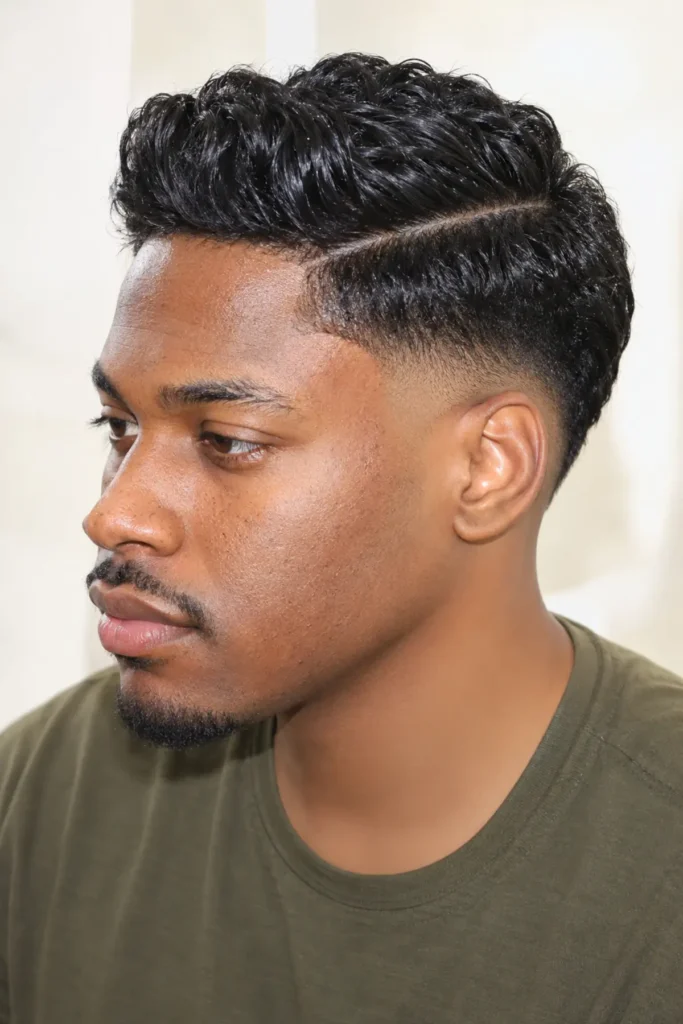
A thin shaved line at the side adds a sharp contrast to the curve and gives the top an instant parting. It suits thick straight or wavy hair, oval and square faces, and men who like crisp details. Styling is a comb and a light pomade, with moderate difficulty because the part has to be kept neat.
The instruction is “Low burst fade, hard part on the left, about an inch back from the hairline.” The line softens quickly, so a visit every 2 to 3 weeks keeps it crisp. The drawback is higher upkeep and a busier look, and an extra design can age faster than the fade itself. Grow out is the least graceful of the group, as the part blurs and may need a reset.
20. Low burst fade with a long layered top
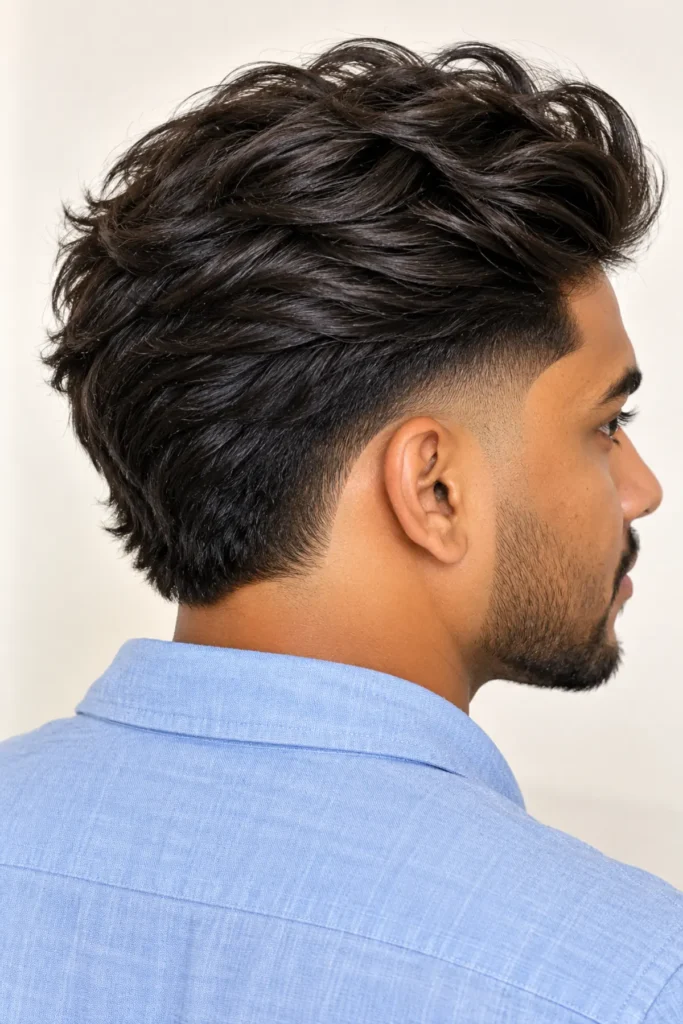
Long layers swept back or to the side look refined and artsy, with the low curve keeping the sides compact. It suits straight to wavy hair, oval and oblong faces, and medium to thick density, and it can be worn down or tied back. Styling is a leave in cream and a brush, and the long layered hair for men guide shows more ways to wear it.
At the chair, the request is: “Low burst fade on the sides, keep the length on top and blend it into the layers.” A trim every 5 to 6 weeks usually works, with a quick fade touch up in between. The drawback is the patience needed to grow the length and a daily care routine. It grows out smoothly, though the fade needs a quick touch up more often than the length does.
What to tell the barber for a low burst fade
The cleanest way to get the cut is to cover four decisions in one short sentence: how high the arc sits, how short the shortest point goes, what happens at the neckline, and how much length stays on top. Barbers use words like “fade”, “taper”, “drop” and “burst” a little differently from shop to shop, so naming each decision removes the guesswork. A reference photo helps even more, and the best ones show the side, the back and a three quarter angle, ideally on hair with a similar texture.
A copy ready script looks like this: “Low burst fade, curved around the ear, shortest point on a number one guard, keep the length at the back, about two inches on top, and fade the sideburn into the beard.” Curly haired men can add “set the arc height on my dry hair.” If the fade starts creeping higher than planned halfway through, a calm “keep it lower, close to the ear” is enough, and a good barber will adjust. It also helps to ask to see the portfolio of curved fades before booking, since a burst is harder to cut evenly than a straight fade.
How to style a low burst fade at home
The curve holds its own shape, so daily styling only involves the top. A simple routine works for most men: start with damp, towel dried hair, work in a light prep such as sea salt spray, mousse or curl cream, blow dry in the direction the hair should sit, then finish with a small amount of clay, paste or cream. Matte clay and texture powder suit short or fine tops, paste suits medium lengths, and curl cream suits waves and curls.
One rule matters more than any product: keep styling product away from the faded sides, because it can make the blend look patchy and draw attention to exactly the spot that should stay quiet. Warm the product between the palms, work it in with the fingers rather than a comb for a natural finish, and use less than seems necessary, since most tops only need about a pea sized amount. Heavy, high shine products usually make a burst look stiff.
Upkeep, grow out and cost
Barber guides disagree a little on timing, and the honest answer is a range. Most put a low burst fade between 2 and 4 weeks, with skin finishes and hard parts at the short end and softer, guard finished versions closer to four weeks. The sides are what show growth first, especially right behind the ear. For perspective, the Cleveland Clinic says hair grows about 4 to 6 inches per year on average, which works out to roughly a third to a half inch each month, and barber guides report that regrowth behind the ear starts to show around the two week mark on a skin finish. Between visits, a quick neckline cleanup is fine, but the curve itself is best left to the barber.
Cost depends on the city and the barber. StyleSeat reports an average men’s haircut of about $29 across the US and fades at roughly $30 to $40, and it recommends tipping 15 to 20 percent. Barbers who specialize in curved fades or work in big cities often charge more, so those figures are best read as a starting point. Grow out is the easy part: a low burst softens gradually instead of looking wrong, and the longer the top and back, the more forgiving it becomes.
Mistakes that spoil a low burst fade
Most disappointments come from the chair, not the hair, and nearly all of them are easy to prevent.
- Saying “fade” only, which often gets a straight line instead of a curve.
- Never naming the nape, so the back is cut shorter or longer than expected.
- Letting the arc creep up from low to mid without noticing.
- Assuming “burst” means skin, when the barber may default to a guard or to bare skin.
- Bringing only a front facing photo, since the curve is easiest to judge from the side and back.
- Setting curl height on wet hair, then seeing it ride higher once the curls dry and shrink.
- Putting styling product on the faded sides, which makes the blend look patchy.
- Waiting six weeks between cuts and expecting the curve to still look crisp.
- Adding heavy designs to a cut that already has a curved detail.
Low burst fade FAQs
What is a low burst fade?
A low burst fade is a fade that curves in a half circle around the ear and stays low near the natural hairline, while the top and back keep their length. It gives a clean shape with a soft contrast.
What is the difference between a low fade and a low burst fade?
“Low” describes where the fade starts, and “burst” describes its shape. A plain low fade runs in a mostly straight line around the head, while a low burst curves around the ear and usually leaves more length at the back.
Is a low burst fade the same as a low taper?
No. A taper is a gradual blend that usually stops at short stubble, while a burst is a curved shape. The two can be combined, which is often called a low burst taper.
How is a low burst fade different from a low drop fade?
A drop fade dips down behind the ear toward the nape, while a burst fade circles the ear and often keeps the back longer. The best way to avoid confusion is to bring a photo from the side and back.
How do I ask my barber for a low burst fade?
Say “low burst fade”, then name the shortest point (skin or a guard number), the length on top, and what should happen at the neckline. Photos from two angles make it easier.
How often should a low burst fade be refreshed?
Most barbers suggest every 2 to 4 weeks. Skin finishes and hard parts need visits sooner, while a taper finish or a curly top can stretch toward four weeks.
Is a low burst fade professional enough for work?
Usually yes, because the low placement keeps the contrast soft. A short or medium top with a guard finish is the most conservative version, and strict dress codes are worth checking first.
Does a low burst fade work on curly or coily hair?
Yes. The curve follows the shape of the head, keeps the curls full on top and cleans up the sides. Curly hair should be measured dry, because shrinkage can change how high the arc looks.
Can men with thinning hair get a low burst fade?
Often yes. A low burst or a taper finish tends to look better than a high skin burst on thin hair, and a barber can place the curve to avoid emphasizing sparse areas.
Can a low burst fade blend into a beard?
Yes. Ask for the sideburn to fade into the beard with no hard gap, and book the beard shaping at the same visit.
What if the barber cuts the burst too high?
It is hard to lower a fade once the hair is gone, so waiting a few weeks for growth is the realistic fix. At the next visit, ask for the arc to be reset lower and closer to the ear.
Final thoughts
A low burst fade earns its popularity by doing two jobs at once. The curve around the ear gives the sides a clean, modern shape, and the low placement keeps the contrast soft enough for the office, the classroom and everything in between. With 20 tops to pair it with, from a quick textured crop to a long layered flow, there is usually a version that fits the hair a man already has instead of forcing a total change.
The best results tend to come from a little preparation. A man who knows the height he wants, the finish at the shortest point and the way the nape should look, and who brings photos from the side and back, gives the barber everything needed to get it right the first time. Men who like the idea but want a bit more edge can look at the mid fade haircuts for men next, and those who love the longer back can head to the burst fade mullet ideas. Either way, a regular trim and a good product for the top are what keep the cut looking fresh.
One thought on “Low Burst Fade Haircut for Men: 20 Ideas, Barber Tips and Upkeep”