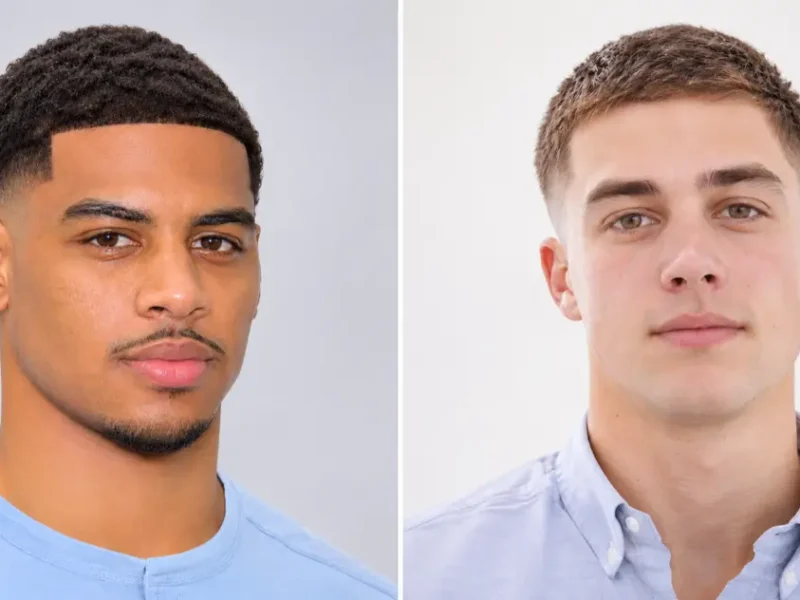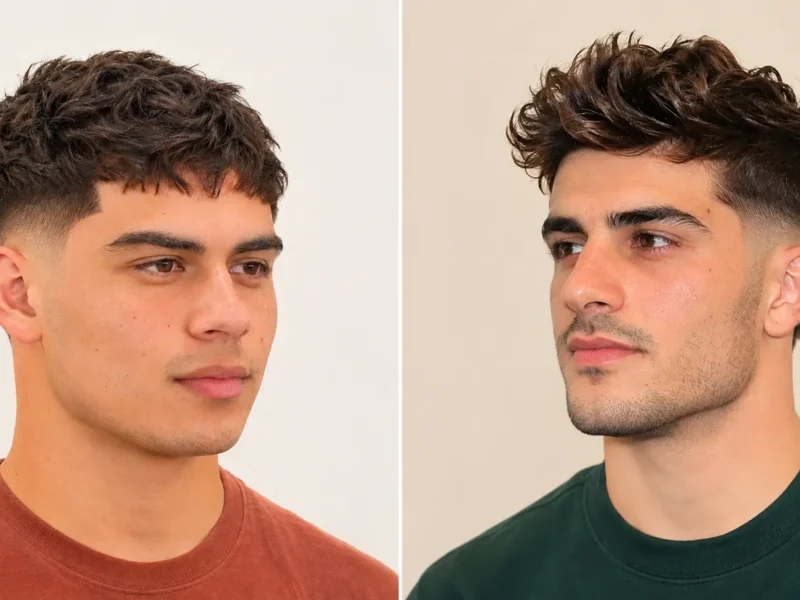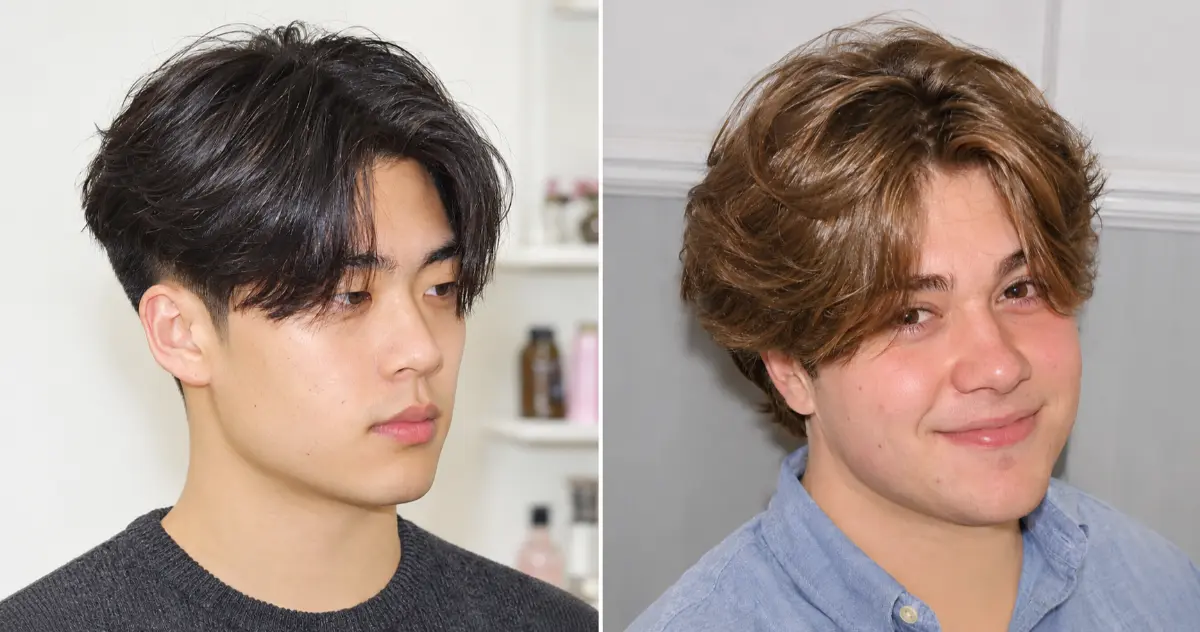
A curtain haircut for men is a longer fringe that splits down the middle, or just off center, and falls to either side of the face like a pair of curtains. The sides and back are usually shorter, whether tapered, faded, undercut, or scissor cut. Most barbering guides put the working length on top at about 4 to 6 inches, long enough for the front to reach somewhere between the eyebrows and the cheekbones.
It suits most face shapes and hair types once the length, layering, and sides are tuned to the individual. Expect a few minutes of daily styling, a trim every 2 to 8 weeks depending on how tight the sides are, and some patience during grow-out, since scalp hair averages about half an inch of growth per month.
| Detail | Quick facts |
|---|---|
| Best length | Fringe from eyebrows to cheekbones, about 4 to 6 inches on top |
| Part | Center or slightly off-center |
| Sides | Tapered, faded, undercut, or scissor cut |
| Best for | Straight, wavy, and loose curly hair; most face shapes with the right tweaks |
| Styling difficulty | Easy to moderate |
| Barber visits | Every 2 to 4 weeks with faded sides, every 4 to 8 weeks with scissor-cut sides |
| Grow-out time | Roughly 2 to 10 months, depending on starting length |
| Biggest dealbreaker | A strong front cowlick that fights the part |
Table of Contents
What Is a Curtain Haircut?
Curtains, Middle Part, and Curtain Bangs: What’s the Difference?
These three terms get tossed around as if they mean the same thing, and they don’t quite. A middle part is simply where the hair splits. Curtains describe what happens next: the fringe falls to both sides and frames the face. So every curtain cut has a middle or near-middle part, but a middle part on its own doesn’t make a curtain cut. ‘Curtain bangs’ is the label more often used for the softer, Korean-inspired version and for the women’s cut, which is why barbers usually hear ‘curtains’ or ‘curtain fringe’ in the chair.
A quick word on vocabulary, since plenty of guides are written outside the US: ‘bangs’ and ‘fringe’ mean the same thing, and so do ‘part’ and ‘parting’. Readers who want a fluffier spin on the idea can look at fluffy fringe haircuts for men, and the blunter, bowl-shaped cousin lives in the pageboy haircut for men guide.
Where the Look Came From and Why It Keeps Returning
As Wikipedia’s entry on curtained hair describes it, the style pairs a long fringe, parted in the center or to the side, with short or shaved sides and back. Centrally parted hair, a descendant of the bowl cut, resurfaced in the late 1980s among new wave and synthpop fans, and the 1990s pushed it into the mainstream through actors such as Brendan Fraser. Ask most people to picture it and they land on a young Leonardo DiCaprio or Johnny Depp.
The current wave borrows from K-pop idols, the TikTok e-boy look, and actors like Timothée Chalamet and Cillian Murphy, and it’s softer and messier than the glossy original. Part of its staying power is practical: it sits between a short fade and truly long hair, so it feels like a change without being a big commitment.
18 Best Curtain Haircut Styles for Men
1. Classic 90s Curtains
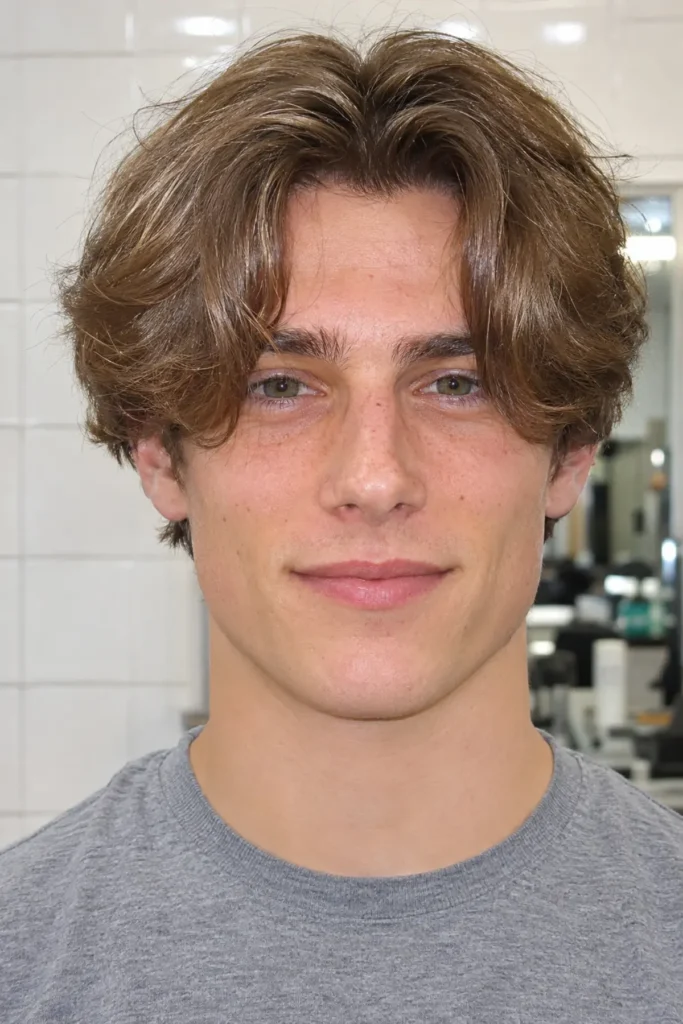
This is the template everyone has in mind: a center-split fringe that falls to the cheekbones, with scissor-cut sides that blend into a soft taper. It flatters oval and square faces most, and it sits happily on straight to slightly wavy hair of medium density. Think of the DiCaprio-era look, and most barbers know exactly what’s being asked for.
Daily effort is low. Blow-dry the fringe away from the face, let it drop into the part, and finish with a light paste. The one trap is a flat, bell-shaped outline, so the sides should stay slimmer than the top. A trim every 4 to 6 weeks keeps the shape, and the grow-out is forgiving.
2. Short Curtains
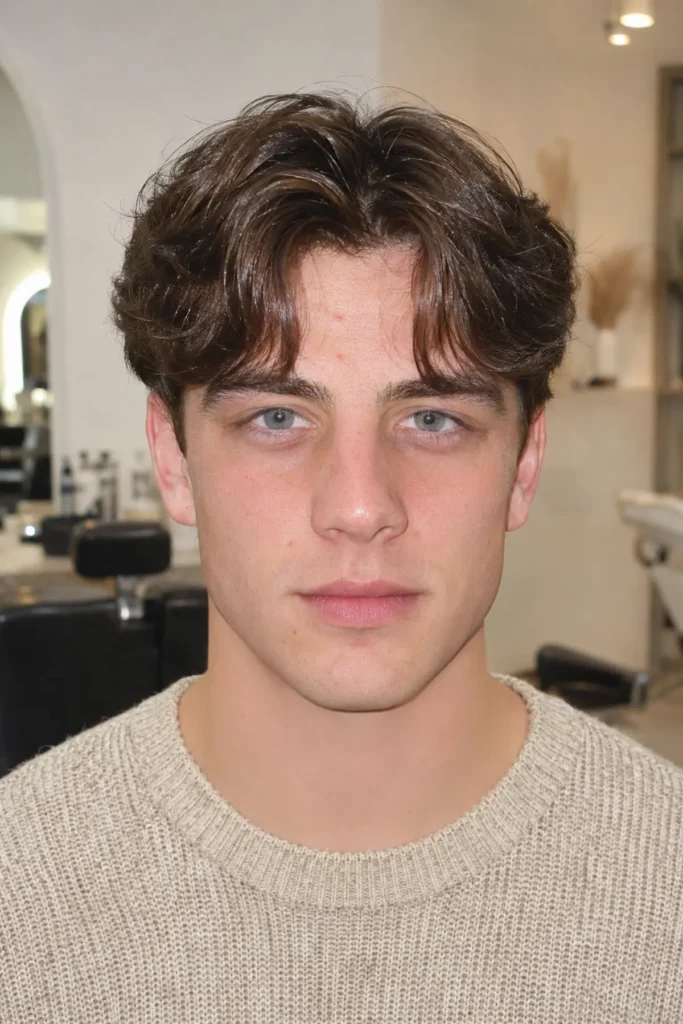
Short curtains stop at the eyebrows or temples and keep the sides short enough that the fringe stays visible. They’re the pick for men who want the look without a long grow-out, and they work best on straight or wavy hair with decent density at the front.
Short doesn’t mean zero upkeep, though. Short sides lose their shape fast, so a visit every 3 to 4 weeks keeps things crisp. The request to the barber is a curtain fringe at brow length with tapered or scissor-cut sides, and a little extra length at the front for control.
3. Curtains with a Taper Fade
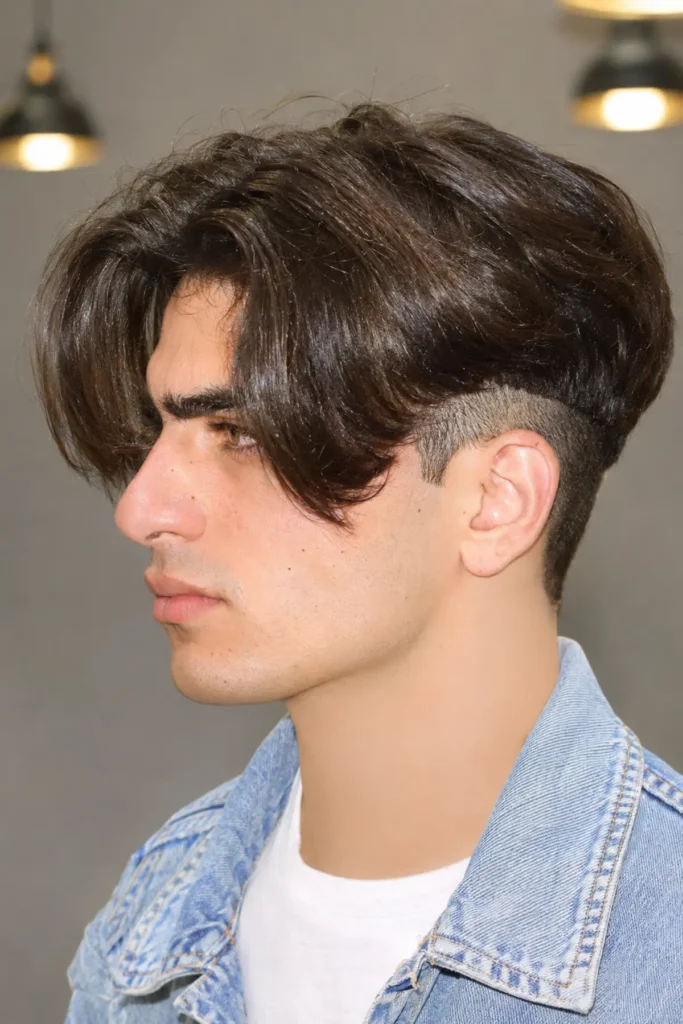
Pairing a curtain fringe with a taper or fade turns the top into the main event and keeps the neckline sharp. It’s a modern, cleaner take, and it works on straight, wavy, or thick hair. Barbers often adjust fade height to face shape, though a proper consultation beats any rule, and the mid fade haircut guide shows how different heights change the look.
The price of that sharpness is frequency: every 2 to 4 weeks keeps the lines clean. Very fine hair can look sparse next to a tight fade, so men with fine strands may prefer softer, scissor-cut sides.
4. Curtains Undercut or Two-Block
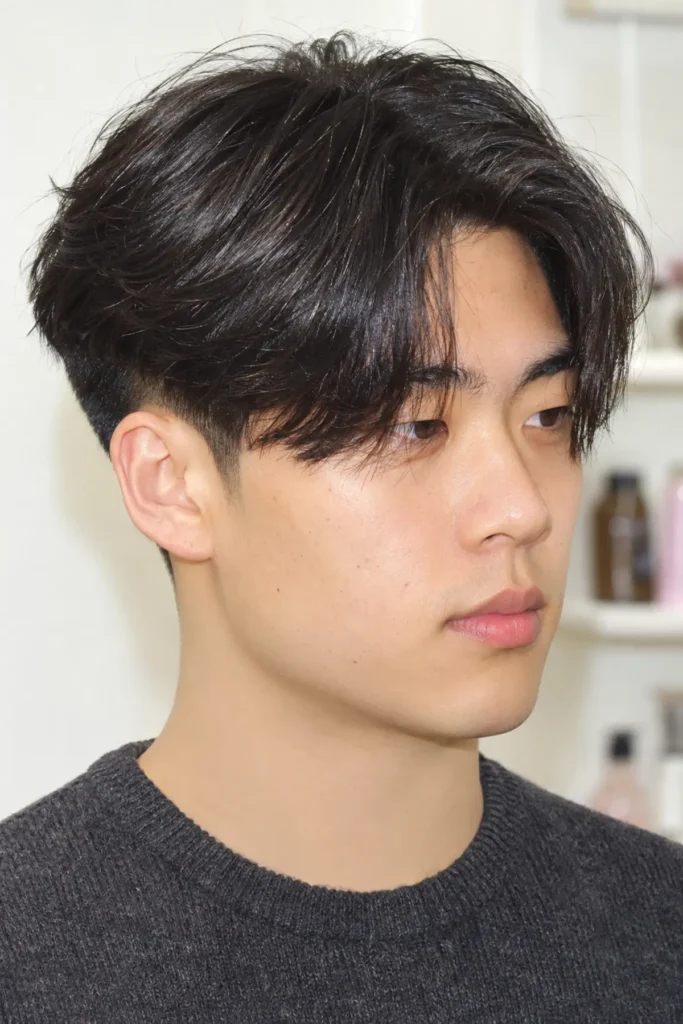
A long curtain fringe sits over closely cut or disconnected sides, with no gradual blend in between. The look is tied to Korean two-block styling and suits thick, straight hair best, since that texture holds the shape on its own. The medium length haircuts for men guide includes a two-block option for comparison.
The contrast grows out visibly, so visits every 3 to 4 weeks matter. Thin or very fine hair can look sparse here, and styling takes a bit more effort, usually a comb or round brush. The ask is a disconnected undercut with a curtain-length top and enough weight left at the front.
5. Long Curtains
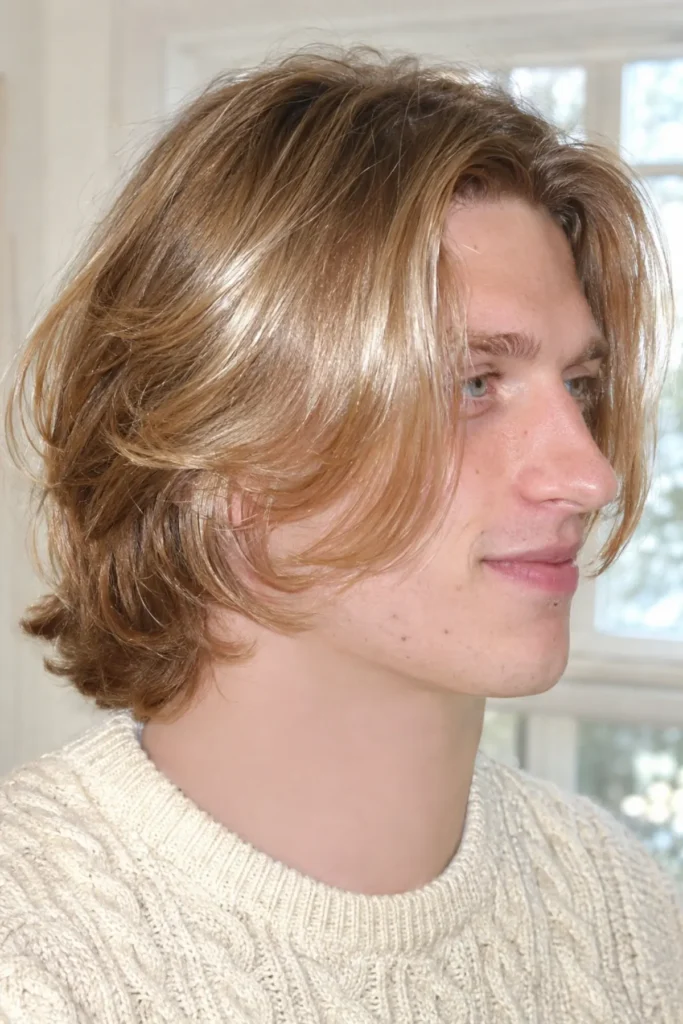
Long curtains run past the cheekbones toward the jaw, usually all scissor, often with long layers. They work on straight, wavy, or curly hair and suit oval, square, and oblong faces when the volume stays at the sides. The long layered hair for men guide goes deeper on layering.
Care here is more about conditioning than clippers: a weekly conditioner, a leave-in product, and a trim every 6 to 8 weeks to keep the ends healthy. On off days a low tie does the job, and the man bun hairstyles guide has options for tying it back.
6. Shaggy Layered Curtains
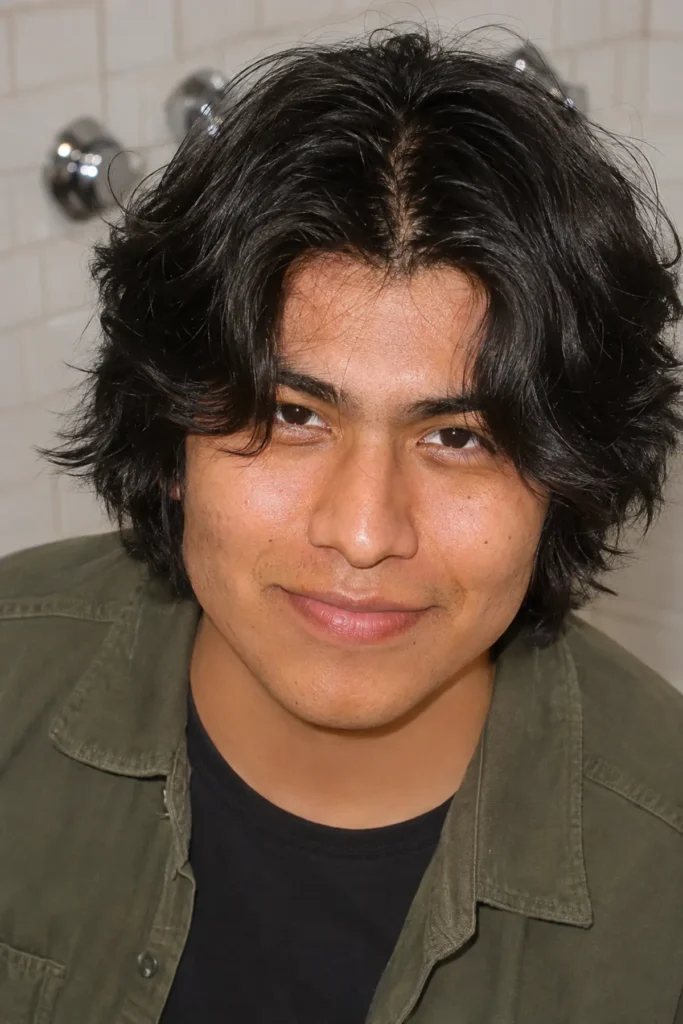
Choppy layers and a center part give this version a lived-in, 70s feel. It flatters wavy and thick hair most, since the layers add shape where the hair already has body. The shaggy haircuts for men and wolf cut for men guides cover the neighboring styles.
It’s easy to style and forgiving as it grows, which is a big part of the appeal. On fine, straight hair the layers can read as wispy instead of textured, so the barber should keep them subtle there. Trims every 6 to 8 weeks stop the shape from going stringy.
7. Wavy Curtains
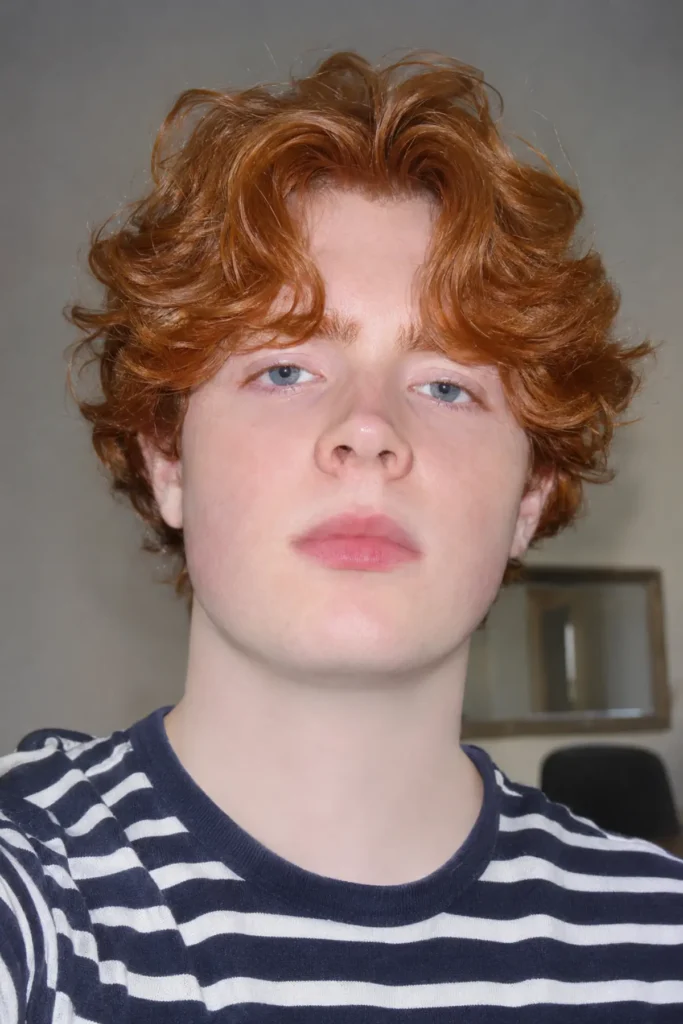
Wavy curtains let the natural bend do the heavy lifting. A mid-length fringe with soft layers falls into the part and flips slightly at the ends, which flatters most face shapes. It works best on medium-density waves that hold their pattern.
A little styling cream on damp hair and a diffuser are usually enough, while straightening or heavy brushing undoes the effect. Trims every 4 to 6 weeks keep the layers from collapsing, and humid days may call for a dab of anti-frizz product.
8. Curly Curtains
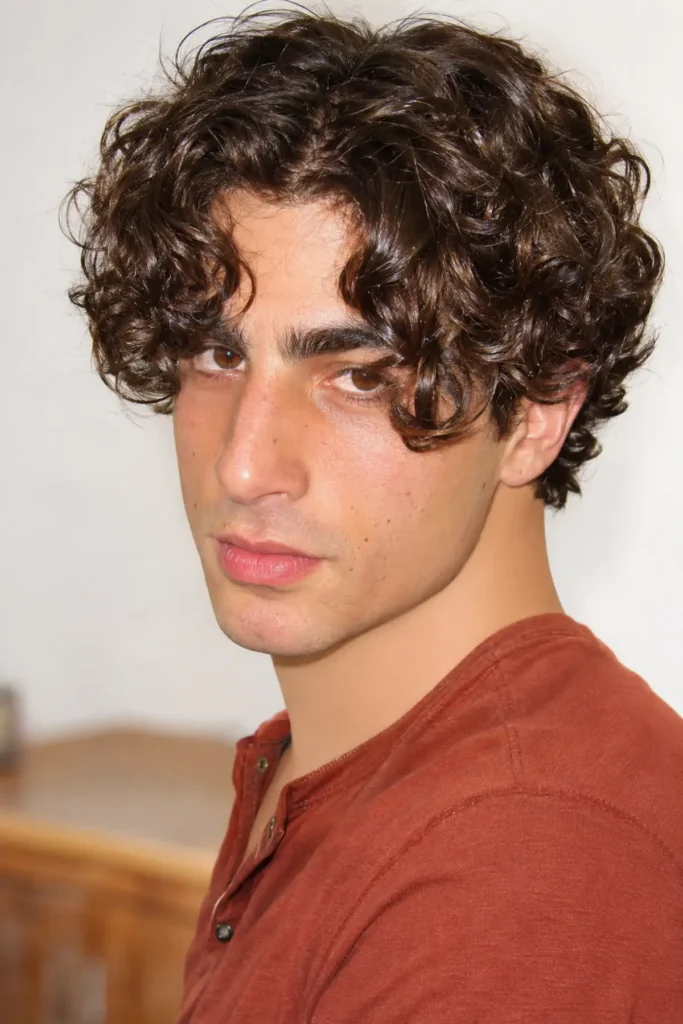
Curly curtains work best with looser curls that fall toward the face instead of puffing out. The fringe is cut to the dry length that clears the eyebrows, with the barber allowing for shrinkage. The result looks soft, frame-like, and very current.
The routine is simple but specific: part while damp, work in curl cream, and dry with a diffuser or in the air. Tapered sides keep everything neat, and a trim every 4 to 6 weeks holds the shape. Brushing dry curls or skipping conditioner leads straight to frizz, and tighter coils call for a different technique, which the coily hair section below covers.
9. Sleek or Wet-Look Curtains
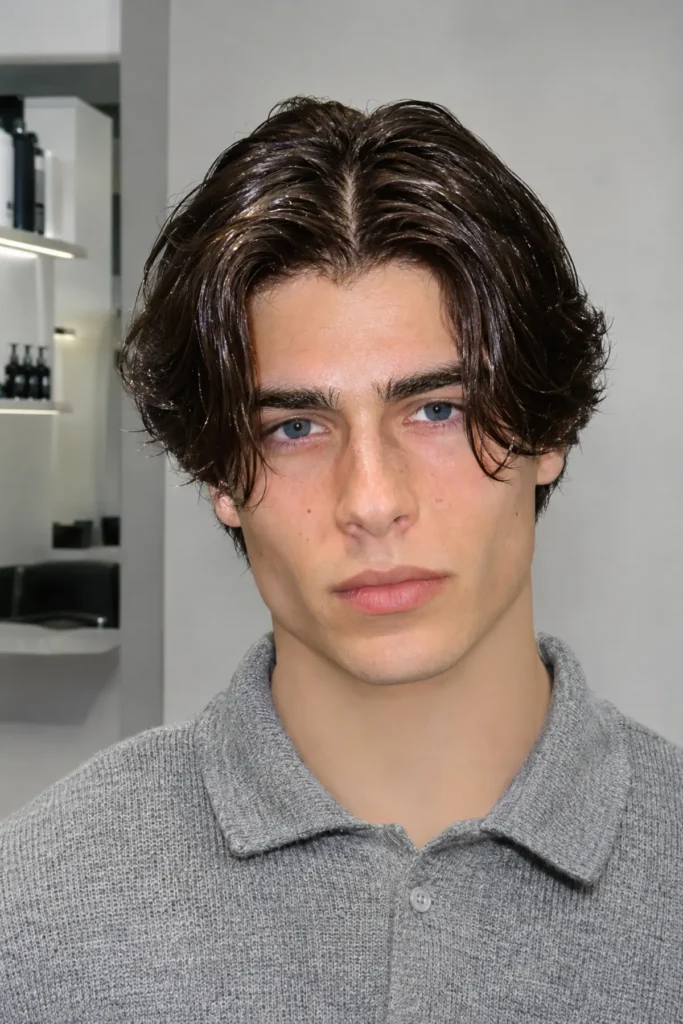
Gel or pomade gives this version a glossy, defined part, and it overlaps with the e-boy look, where a clean split frames the face. It suits straight hair best and shines at dressier events and nights out.
It asks for the most effort of the bunch: comb through while damp, set with a light-hold product, and resist overloading. Fine hair looks greasy fast, so a small amount goes a long way. A trim every 4 weeks keeps the lines tidy, and the polish may feel like too much for casual everyday wear.
10. Soft Off-Center Curtains
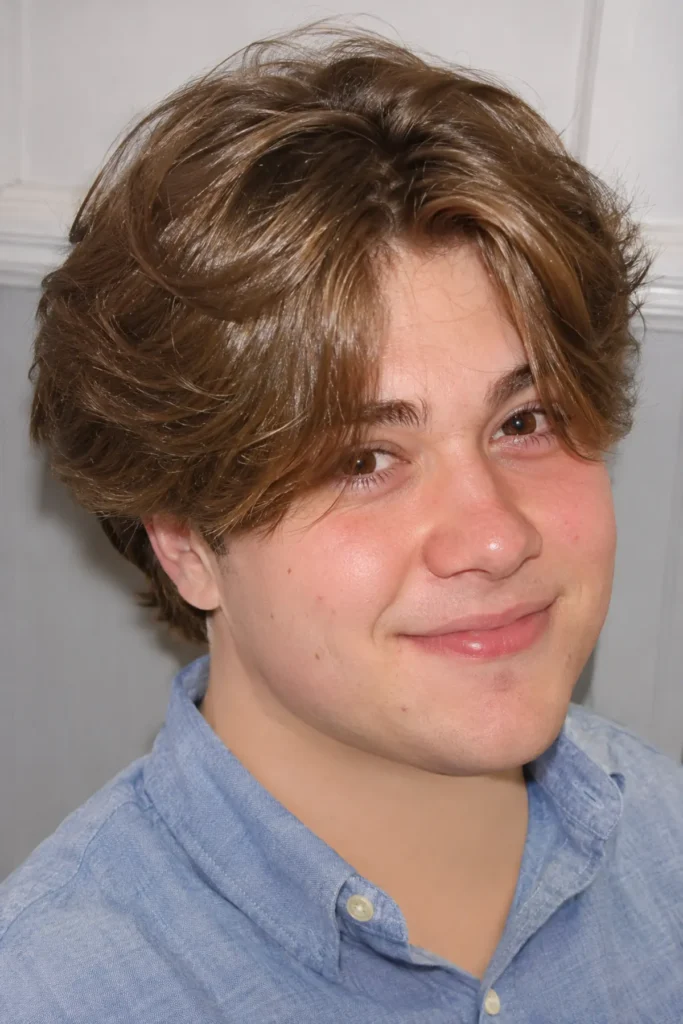
A part that sits slightly off the middle keeps the curtain feel while working around cowlicks, a widow’s peak, or a rounder face. It’s often the easiest fix for men whose hair simply refuses a dead-center split.
It’s also one of the easiest versions to live with. Styling takes minutes, grow-out is forgiving, and most hair types can wear it. A trim every 4 to 6 weeks and a light matte product are usually all it needs.
11. Curtains with a Burst Fade
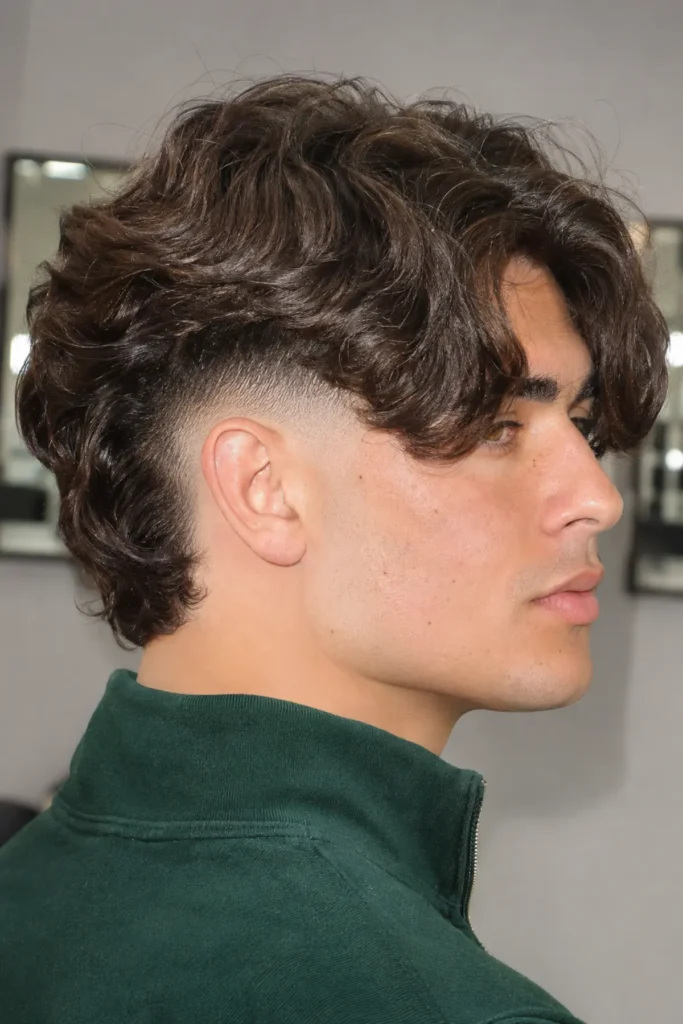
A burst fade curves around the ear and usually leaves the nape longer, which pairs well with a curtain fringe that has some length behind the ear. It suits oval, round, and square faces and works on straight, wavy, or curly hair of medium to thick density. The low burst fade haircut and mid burst fade haircut guides show how the height changes the effect.
Upkeep matches other fades, with a visit every 2 to 4 weeks to keep the curve crisp. The top follows the usual curtain routine, so styling stays easy. Very fine hair can look thinner next to the contrast, and men who dislike frequent barber trips may prefer a softer taper.
12. Wolf Cut Curtains
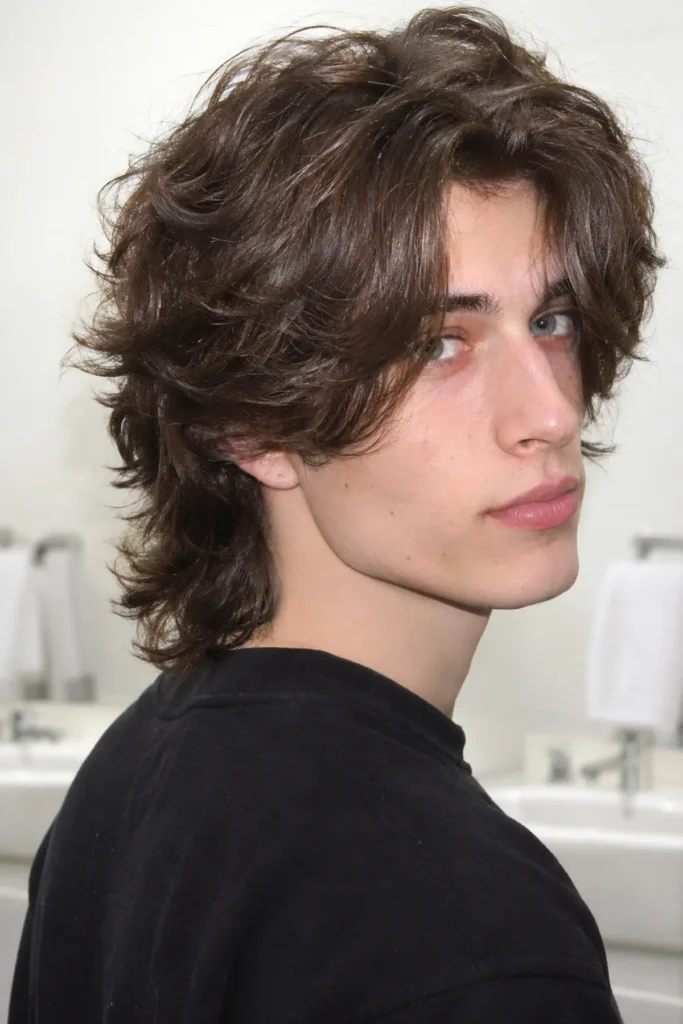
This one blends the heavy layers and shaggy crown of a wolf cut with a center-split curtain fringe. It works best on wavy or thick hair and flatters oval, square, and oblong faces. The site’s guide to a wolf cut with curtain bangs shows how the two ideas combine.
A little texture spray and some finger styling is usually enough. Fine, straight hair can look wispy, so the layers should stay subtle there. Trims every 6 to 8 weeks stop the shape from getting stringy, and the grow-out is forgiving.
13. Permed Curtains
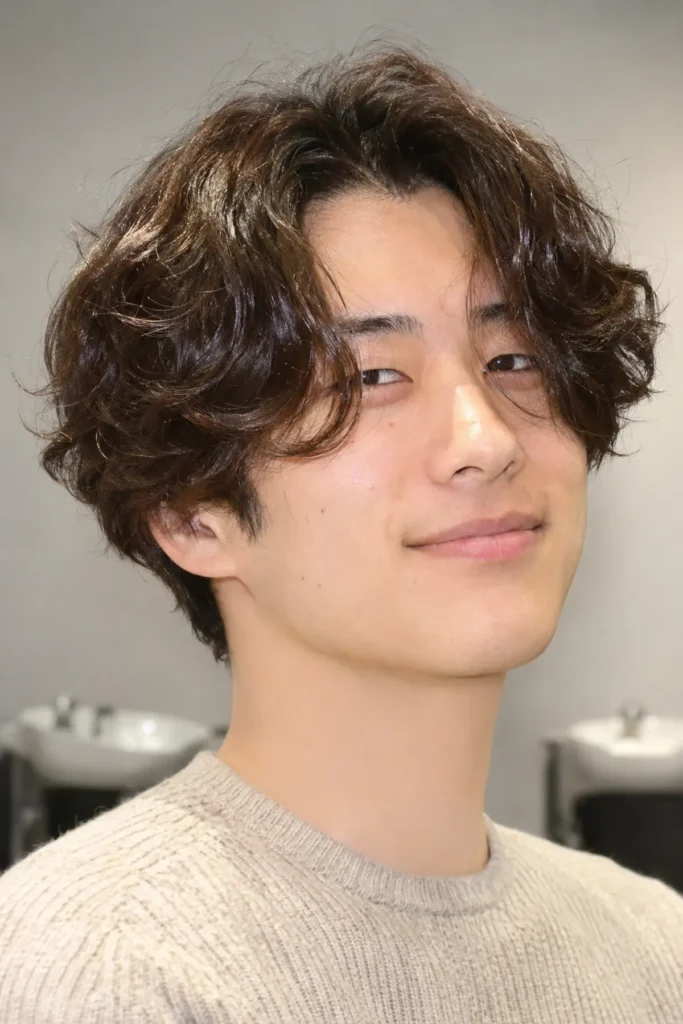
A perm adds soft waves or curls to straight hair, which gives the fringe the bend and body curtains love. It suits men with straight, medium to thick hair who want volume without daily heat styling, and it works on most face shapes. The Korean perm look appears in the medium length hairstyles guide.
A perm is a chemical treatment, so it can dry hair and calls for a skilled stylist, regular conditioning, and a gentle routine. The wave relaxes as it grows out, so a trim every 6 to 8 weeks keeps the shape fresh, and touch-ups may follow. Men with very fine or damaged hair should book a consultation first.
14. Curtain Pageboy
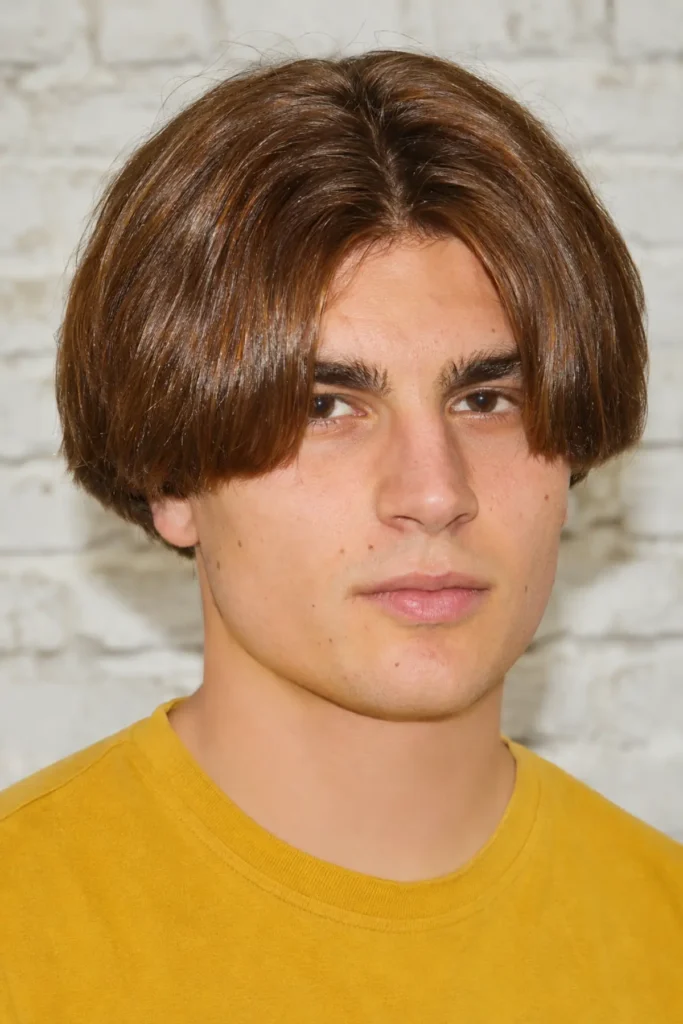
A curtain pageboy keeps the blunt, rounded outline of a classic pageboy but splits the fringe in the middle so it falls to both sides. It suits straight, thick hair and angular faces such as square or oblong, where the soft lines add balance. The pageboy variations on the site include a curtain version.
The shape depends on clean, even cutting, so a barber comfortable with blunt lines matters. Styling is simple, usually a little smoothing cream and a quick blow-dry, and trims every 4 to 6 weeks keep the edges neat. A very short fringe can look severe, and round faces may prefer softer layers.
15. Curtains with a Beard
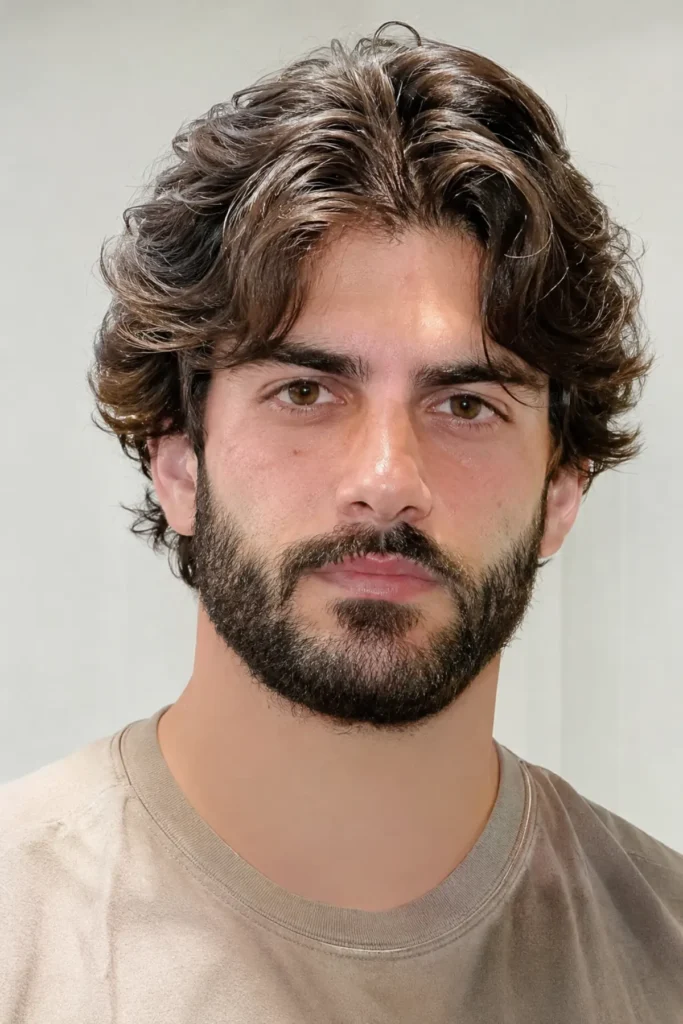
Curtains and a beard make a balanced pair when proportions are managed: a fringe that frames the face and a beard kept neat enough not to compete. A fuller beard adds weight to a longer face, while light stubble suits sharper looks. The pairing works across most hair types.
The barber should blend the sideburns into the beard line so the transition looks intentional, and tapered sides give a cleaner shape than bulky ones. Upkeep means beard trims alongside haircuts, usually every 2 to 4 weeks for a neat finish. Very long curtains with a very long beard can look heavy, so one of the two is usually kept shorter.
16. Blonde or Highlighted Curtains
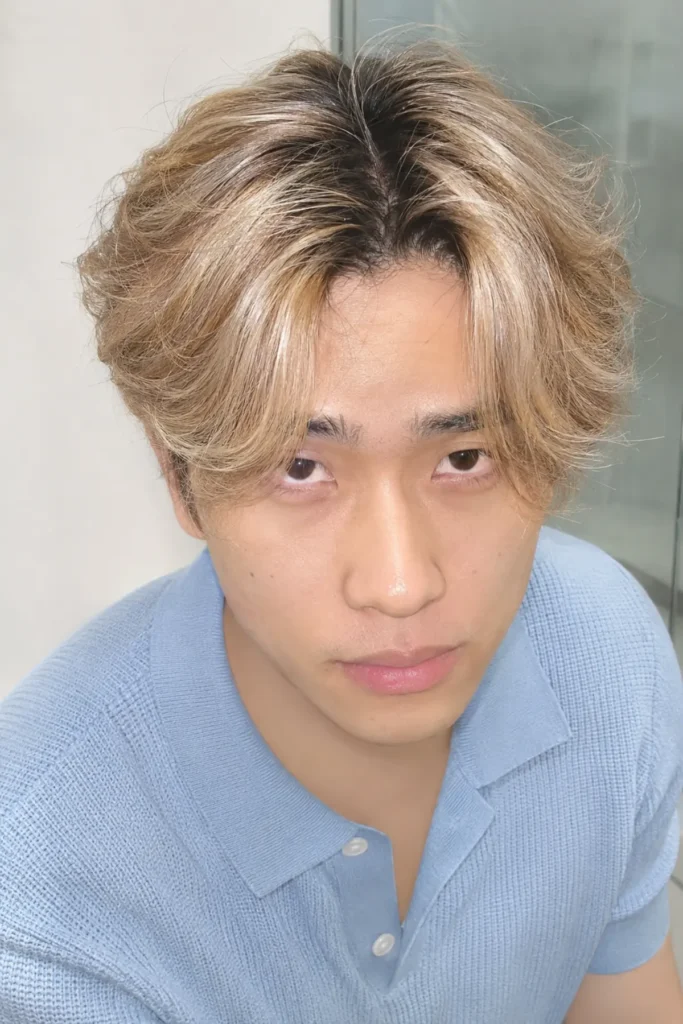
Lightening the fringe with highlights or all-over blonde adds dimension and makes the part stand out. It suits straight and wavy hair best, since color shows off the texture, and it works on most face shapes. Subtle face-framing highlights are an easy way in.
Bleach makes hair drier and more fragile, so conditioning and gentle products come with the territory, and roots show as the hair grows. A colorist should handle the lightening, with a trim every 4 to 6 weeks to keep the ends healthy. Men with dry or damaged hair may prefer a toner or lowlights instead.
17. Silver or Salt-and-Pepper Curtains
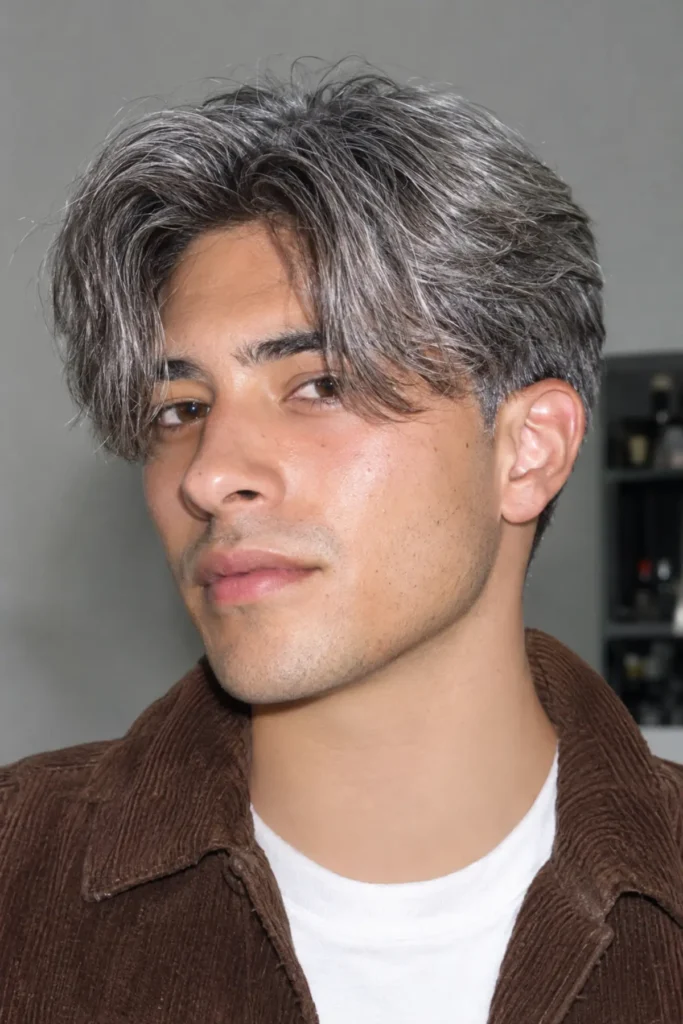
Gray and silver hair can look striking in a curtain cut, especially in a slightly shorter, off-center version that keeps the shape tidy. It suits oval and square faces and works on straight or wavy hair. Gray strands can feel wirier and less predictable, so a barber may add texture to help them lie properly.
A matte product keeps the look modern, and an occasional toning shampoo can keep yellowing in check. Trims every 4 to 6 weeks maintain the outline, and a clean taper at the sides keeps the cut sharp instead of shaggy.
18. Half-Up Curtains
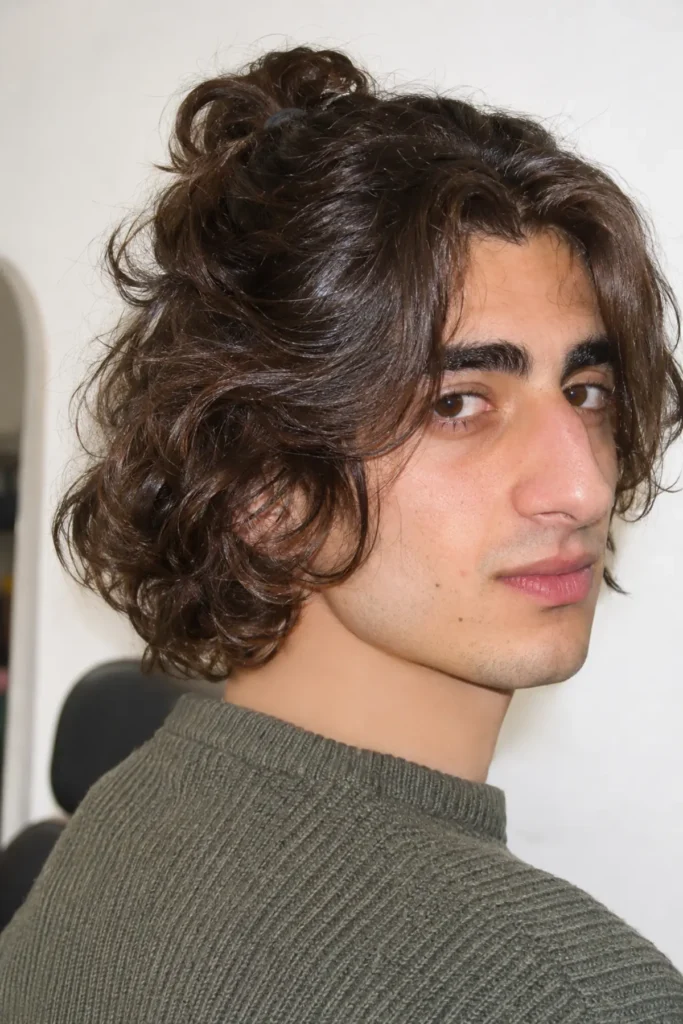
Half-up curtains keep the fringe loose while the top and back are gathered into a small knot or tie, the same idea behind a half man bun. The look suits longer hair, from straight to curly, and it doubles as a grow-out solution, since it keeps hair off the face while still showing the fringe. The man bun hairstyles guide shows more ways to tie longer hair back.
Soft elastics are the safer choice. Very tight styles worn all the time can strain the hairline, a condition known as traction alopecia, so a loose hold protects the hair. Trims every 6 to 8 weeks keep the loose fringe shaped, and a quick comb through the front finishes the style.
Is a Curtain Haircut Right for Him? A Quick Readiness Test
How Long Hair Needs to Be
Most barbering guides put the starting point at about 4 to 6 inches on top. A short version reaches the eyebrows or temples, a medium one lands around the cheekbones and ears, and a long one goes past that. What counts is the length at the front, not the crown, and it should be judged on dry hair, since wet hair stretches and fools the eye.
Texture bends the math. Curly and coily hair can look a lot shorter than it is because of the spiral pattern, even though it grows at the same pace as straight hair. A man with tight curls may need extra length before the fringe actually reaches his eyebrows, while fine, straight hair can start working sooner but turns wispy if it goes too long.
Natural Part and Cowlicks
Here’s a simple test: after a shower, comb the hair straight back, let it fall forward, and watch where it splits on its own. That’s the natural part, and a good curtain cut follows it instead of fighting it. A cowlick is a strong swirl at the hairline that sends hair off in different directions, and it can’t be removed, only worked with.
Barbers usually handle it one of two ways. A front cowlick tends to calm down under a longer fringe, since the extra weight holds it in place, and a crown cowlick calls for leaving some length there. When the swirl is strong enough to fight a dead-center split, a slightly off-center part usually reads as intentional rather than forced.
Hairline and Forehead
Curtains frame the forehead, so the hairline matters. A high forehead usually does well with a fringe that reaches the eyebrows, since the hair covers and balances the extra space. A low hairline often looks better with a lighter, shorter fringe, because heavy bulk up front can feel crowded.
A widow’s peak can nudge the part slightly off-center, and that’s fine. Light texturizing through the front softens the point and lets the hair fall naturally. Receding temples deserve a bit more thought, and the thinning hair section further down covers them in detail.
Who May Want to Skip It
A few situations make curtains more trouble than they’re worth: a workplace with strict grooming rules, a stubborn front cowlick that fights every split, and zero interest in styling. The grow-out can also test patience around the halfway point, when the fringe is too long to ignore but too short to part.
None of these is a dealbreaker, and each has an easy workaround. Men who prefer short and tidy can look at a mid fade haircut, and those with fine strands will find solid options in the guide to short haircuts for men with fine hair.
Best Curtain Haircut by Face Shape
| Face shape | Best curtain adjustment | Why it works |
|---|---|---|
| Oval | Classic center part, cheekbone-length fringe | Balanced proportions handle almost any version |
| Round | Slightly off-center part, tighter sides, a little height at the front | Adds length and structure to a softer outline |
| Square | Soft, textured fringe with some length at the sides | Softens a strong jaw |
| Oblong | Fringe to the brows, extra width at the sides, little height on top | Shortens the look of a longer face |
| Heart | Longer, side-swept or off-center fringe with some fullness near the jaw | Balances a wider forehead and narrower chin |
| Diamond | Soft fringe across the forehead, sides kept neat near the cheekbones | Keeps attention off wide cheekbones |
| Triangle | Fuller fringe and volume up top, tidy sides | Balances a wider jaw |
Treat these as starting points rather than laws. A barber’s read on the jawline, cheekbones, and forehead counts for more than any chart, and the same fringe can look very different on two men who share a face shape.
For deeper breakdowns, the site has dedicated guides to round face shape haircuts for men, oblong face hairstyles for men, heart face shape hairstyles, and triangle face shape hairstyles for men. The oblong, heart, and triangle guides all include curtain-style fringes worth comparing.
Best Curtain Haircut by Hair Type and Density
Straight Hair
Straight hair makes the split line obvious, which is why it’s the easiest texture for a classic curtain look. The flip side is that it falls flat, so a bit of layering and a touch of texture spray bring movement. Blunt, sleek curtains look especially good here.
The risk is a limp finish on fine strands or a heavy, helmet-like shape on thick ones. Light point cutting through the ends keeps the fringe airy, and a matte paste or texture spray gives grip without shine.
Wavy Hair
Waves and a middle part are one of the most natural pairings in men’s hair. The wave gives the fringe bend and body, and the part frames it, so a mid-length cut with soft layers usually shows the pattern off best.
The styling rule is mostly to leave it alone. A little sea salt spray or styling cream on damp hair, a diffuser or air drying, and minimal brushing once dry keep the shape. Straightening a wavy fringe defeats the point of the cut.
Curly Hair
Looser curls drop down the sides of the face and suit curtains well, while tighter curls tend to puff outward instead of falling flat. A barber who understands curl-friendly layers can shape the fringe so it frames the face rather than stacking into a triangle.
Curls do best when the part is set while damp, a curl cream goes in, and the hair dries naturally or under a diffuser. Brushing dry curls is the fastest route to frizz. Faded or tapered sides keep the outline tidy, and the guide to burst fade haircuts for curly hair shows several ways to pair them.
Coily Hair and Locs
Curtains can work on coily textures when the top is stretched, twisted, braided, or worn in locs with a clean center part. The result looks different from the straight-hair version, rounder and fuller, and fringe length is hard to judge because of shrinkage.
A barber with real experience in coily hair is worth tracking down, since technique counts for more than any single product. Moisture, a sharp shape-up around the edges, and regular trims help the style look deliberate instead of overgrown.
Fine or Thin Hair
Fine hair can wear curtains well as long as the length stays moderate. Very long, fine strands tend to look stringy, so a fringe that stops around the cheekbones with light layers usually looks fuller. Sea salt spray and texture powder add grip and lift without much weight.
Product weight is where things go wrong. Heavy pomades flatten fine hair quickly, so a small amount of something lightweight works better. Men whose hair is also thinning should read the dedicated section further down, because the part line needs extra care.
Thick or Coarse Hair
Thick hair makes curtains look dramatic, but all that bulk can turn the shape into a mushroom or a bowl. The fix happens in the chair: a barber removes weight with point cutting or texturizing instead of leaving it to product. Thick, straight strands, a common texture among Asian men, follow the same rule.
Matte clay or a lightweight wax holds the fringe without making it stiff. Thick hair also grows fast and expands outward quickly, so trims tend to come a little sooner than they do for fine hair.
Curtain Haircut by Age and Lifestyle
Teens and College Guys
Younger guys usually gravitate to the looser, messier versions: eyebrow-length curtains, textured ends, and a relaxed part. They need little product and forgive uneven grow-out, which suits a busy schedule. Bringing a reference photo and asking for a fringe that stays out of the eyes during sports keeps things practical.
Hats, helmets, and gym sessions flatten the shape, but a quick finger comb or a splash of water brings it back. Haircuts every 4 to 6 weeks keep the sides from turning shaggy.
Office and Professional Settings
Curtains can work in plenty of offices when the proportions stay tidy: a fringe at the brow or cheekbone, tapered sides, a matte finish, and ears either cleared or neatly framed. Tucking the fringe behind the ears reads more polished than a loose flop. The office hairstyles for men guide covers more business-friendly cuts.
Dress codes vary, so a quick read of the workplace culture saves guesswork. In stricter settings, shorter curtains with a clean taper are the safest middle ground.
Men in Their 40s and 50s
Curtains have no age limit, but proportions matter more over time. A shorter fringe, a clean taper, and soft texture look current without chasing a teenage version of the trend. Gray or silver hair often looks best with a matte finish and a slightly off-center part.
Thinning at the temples is common in this age range, and a good barber adjusts the fringe to suit it. The thinning hair section further down explains how.
How to Ask the Barber for a Curtain Haircut
Words That Get the Right Result
A clear request covers four things: fringe length, part, sides, and texture. For example, a man can ask for a curtain fringe that reaches the cheekbones, a center part, scissor-cut sides blended into a soft taper, and light texturizing through the ends. Mentioning daily styling time or a job dress code helps the barber decide on length and layering.
Photos beat adjectives every time. Front, side, and back reference pictures show the shape, and a photo of what to avoid is just as useful. It also helps to say how long the hair has been growing and whether a grow-out is underway, so the barber can plan the shape instead of chopping the fringe.
| Barber term | What it means |
|---|---|
| Fringe or bangs | The hair at the front that falls over the forehead |
| Part or parting | The line where the hair splits |
| Taper | Sides that gradually shorten toward the neckline |
| Fade | Sides that blend down to very short or skin |
| Scissor cut | Sides cut with scissors for a softer finish |
| Point cutting | Snipping into the ends for texture |
| Texturizing | Removing bulk or adding movement with cutting tools |
| Disconnected | A sharp length contrast between top and sides |
| Shape-up or line-up | Clean edges at the hairline and temples |
What to Skip Saying
Vague phrases like ‘long on top’ or ‘just a trim’ leave too much to interpretation, since the same words can describe a dozen different cuts. Asking for thinning shears on fine hair without discussing it first can also backfire, because too much removal leaves the fringe see-through.
During the awkward grow-out stage, asking the barber to chop the fringe ‘to fix it’ resets the clock. A better request keeps the fringe length, shapes the sides, and tidies the neckline.
How to Style Curtain Hair Step by Step
The Daily Routine
| Step | What to do |
|---|---|
| 1 | Start with damp, towel-dried hair, not soaking wet |
| 2 | Find the natural part with a comb or fingers |
| 3 | Work a small amount of product through the mid-lengths and ends |
| 4 | Blow-dry the fringe away from the face, then let it fall into the part |
| 5 | Finish with a light-hold product and leave it alone |
A round brush gives a cleaner, sleeker curtain shape, while fingers give a softer, more relaxed finish. The easiest mistake is too much product, so it’s smarter to start small and add only if the hair needs it than to end up with a stiff, greasy fringe.
Training the hair to part in the middle takes consistency. Parting it damp after every shower, blow-drying the fringe away from the face, and repeating that for a couple of weeks helps it fall that way more naturally, and a light styling product holds the shape in the meantime.
Best Products by Hair Type
| Hair type | Product to try | Tip |
|---|---|---|
| Fine | Sea salt spray, texture powder | Light hand, avoid heavy pomade |
| Thick | Matte clay, lightweight wax | Remove bulk through the cut |
| Wavy | Styling cream, light sea salt spray | Diffuse and avoid brushing dry |
| Curly | Curl cream | Part while damp, never brush dry |
| Long | Leave-in conditioner, styling cream | Keep ends healthy |
| Sleek | Pomade or gel | Comb through while damp |
Sea salt spray is popular for texture, but salt can pull moisture out of hair, so daily use isn’t ideal, especially on dry or curly hair. It also works better on damp hair than on soaking wet hair, and hydrating formulas suit drier textures.
On day two, a pinch of dry shampoo at the roots absorbs oil, and a light mist of water on the fringe resets the shape. Stacking fresh product on yesterday’s builds up fast, so a rinse on wash day beats layering more on top.
Growing Out a Curtain Haircut
How Long It Takes
Dermatologists, including those at the American Academy of Dermatology, commonly put average scalp hair growth at about half an inch per month, or roughly six inches per year. That makes planning simple, and the table below does the math.
| Starting length on top | Time to about 4 inches | Time to about 6 inches |
|---|---|---|
| 1 inch | About 6 months | About 10 months |
| 2 inches | About 4 months | About 8 months |
| 3 inches | About 2 months | About 6 months |
Treat these as averages, since genetics, age, and overall health can shift them. Curly and coily hair can look slower than it is because of shrinkage, so progress is easier to judge by how the fringe falls than by a ruler.
Surviving the Awkward Stage
The middle months are the hardest, when the fringe is too long to ignore and too short to part. A barber can keep the sides tidy and shape the front without taking length, which makes the grow-out look planned. Clips, a light headband, or a short tie keep hair off the face in the meantime.
Flipping out around the ears is common, and the fix is usually a tapered or blended side rather than cutting the top. Resisting the urge to chop the fringe at month three is the single best thing a man can do for the final result.
Maintenance: How Often to Trim
Trim Schedule by Version
| Version | Typical barber visit |
|---|---|
| Faded or tapered sides | Every 2 to 4 weeks |
| Short curtains | Every 3 to 4 weeks |
| Medium scissor-cut curtains | Every 4 to 6 weeks |
| Long curtains | Every 6 to 8 weeks |
Most barbering guides land on similar ranges: fades every 2 to 3 weeks, medium-length cuts every 4 to 6 weeks, and long styles every 6 to 8 weeks. Curtains sit in the middle, so the tightness of the sides decides the schedule more than the top does.
A handy trick is to alternate visits: a quick tidy of the sides and neckline every few weeks, with a full cut less often. That keeps the shape fresh without cutting into fringe length more than necessary.
Time, Cost, and Home Care
There’s no flat price for curtains, and costs vary by shop and city. Layered scissor work often takes longer in the chair than a simple clipper cut, so asking about pricing up front avoids surprises, and faded versions add up over time because of the extra visits.
At home, longer versions benefit from a weekly conditioner and the occasional clarifying wash to clear product buildup. A clean neckline between visits makes a grown-out cut look sharper, and a quick check in natural light catches uneven sides early.
Curtains for Thinning Hair and Receding Hairlines
Can Curtains Work With Thinning Hair?
Partly, and it depends on the pattern. The American Academy of Dermatology notes that male pattern hair loss often begins as a receding hairline or a bald spot on top, and that by age 50 more than half of white men show a visible sign of it. Because a center-split fringe parts exactly where thinning tends to show first, curtains can highlight receding temples instead of hiding them.
That doesn’t take the cut off the table. Shorter, textured versions with a soft off-center part can look fuller, while long, heavy strands can make thin areas more visible. A barber who knows the pattern can keep length at the front and shape the temples so the hair frames them naturally.
Smart Adjustments
Light point cutting keeps the fringe airy without thinning it out, and a matte product adds grip without weighing hair down. Heavy gels and pomades are better skipped, since they can separate strands and expose the scalp, and a slightly off-center part hides a widening split better than a razor-straight one.
Hair loss that is sudden, patchy, or fast deserves a dermatologist’s opinion, not just a haircut change, and the AAD points out that treatment tends to work best when started early. This guide covers styling, not medical advice.
8 Common Curtain Haircut Mistakes
Four mistakes show up again and again. Too much product weighs the fringe down and kills movement, which is worst on fine hair. Over-thinning with shears leaves the fringe see-through. Cutting the sides too short too soon makes the top look bulky. And forcing a dead-center part against a cowlick sets up a daily fight that the hair usually wins.
The other four are about timing and care. Chopping the fringe mid grow-out resets progress. Skipping trims lets the sides lose their shape. Brushing curly hair dry invites frizz. And cutting curly hair at stretched length instead of dry length gives a fringe that bounces up too short.
Curtains stand apart because the split is the whole point: the fringe is built to fall evenly on both sides. A wolf cut or shag shares the texture, but the layering is heavier and the front is less defined, while a bro flow skips the split and sweeps back.
In the end, the choice comes down to upkeep and personality. Men who want a cleaner, more intentional frame tend to land on curtains, and those who like a messier, rock-inspired shape often prefer a shag or wolf cut.
Curtain Haircut for Men FAQs
What is a curtain haircut for men?
A curtain haircut is a longer fringe parted down the middle, or slightly off-center, that falls to both sides of the face like curtains, usually over shorter tapered or scissor-cut sides.
It ranges from short, eyebrow-length versions to long, jaw-length ones, and it works on straight, wavy, and loose curly hair.
How long does hair need to be for a curtain haircut?
Most barbering guides put the working length at about 4 to 6 inches on top, with a fringe that reaches somewhere between the eyebrows and the cheekbones.
Curly and coily hair may need more length because shrinkage makes the fringe look shorter, while fine straight hair can start working sooner.
Is a curtain haircut the same as a middle part?
Not exactly. A middle part describes where the hair splits, while curtains describe a longer fringe that falls evenly on both sides and frames the face.
Every curtain cut has a part, but a middle part haircut can be shorter or less defined, so the two terms overlap without matching perfectly.
What face shape suits a curtain haircut best?
Oval faces handle nearly every version, and most other shapes work with a few adjustments. Round faces tend to do well with an off-center part and tighter sides, while square faces gain from a soft, textured fringe.
Oblong faces suit a fringe that reaches the brows with extra width at the sides, and heart or triangle faces benefit from balancing the forehead and jaw with fringe length and volume.
Can men with curly or coily hair get a curtain haircut?
Yes. Looser curls fall toward the face naturally, and tighter curls or coils can be stretched, twisted, braided, or worn in locs with a clean center part.
A barber experienced with the texture matters, and the fringe should be cut to the dry length, since shrinkage hides how long it really is.
Do curtain haircuts work with thin or thinning hair?
Sometimes. Shorter, textured versions with a soft off-center part can look fuller, but long, heavy strands and a dead-center split can emphasize thinning at the temples.
Sudden or patchy hair loss is better discussed with a dermatologist, since the American Academy of Dermatology notes that treatment tends to work best when it starts early.
How should a man ask a barber for a curtain haircut?
A clear request names the fringe length, the part, the sides, and the texture, for example a curtain fringe to the cheekbones, a center part, scissor-cut sides blended into a soft taper, and light texturizing.
Reference photos from the front, side, and back make the request clearer, and a photo of what to avoid helps as well.
How long does it take to grow out a curtain haircut?
With average growth of about half an inch per month, hair that starts at 1 to 2 inches on top needs roughly 4 to 10 months to reach a 4 to 6 inch curtain length.
Genetics, age, and health change the pace, and a barber can shape the sides along the way so the grow-out looks planned.
How often should a curtain haircut be trimmed?
Faded or tapered sides usually need a visit every 2 to 4 weeks, while scissor-cut medium versions can wait 4 to 6 weeks and long versions 6 to 8 weeks.
The tightness of the sides sets the schedule more than the top does, and alternating quick tidy-ups with full cuts keeps the fringe length intact.
How can hair be trained to part in the middle?
Part the hair while damp after every shower, blow-dry the fringe away from the face, and set it with a light styling product.
Repeating this for a couple of weeks helps the hair fall that way more easily, though a strong cowlick may still call for a slightly off-center part.
Final Takeaway
The curtain haircut works best when it’s built around the hair that’s actually there: the natural part, the texture, the density, and the hairline. Matching length and sides to those details matters far more than copying a photo exactly, and a clear request in the barber’s chair does most of the heavy lifting.
Anyone still deciding can browse more medium-length ideas or compare the look with a wolf cut before booking. A simple grow-out plan, a patient barber, and a few minutes of daily styling are all it takes to make the cut look easy.